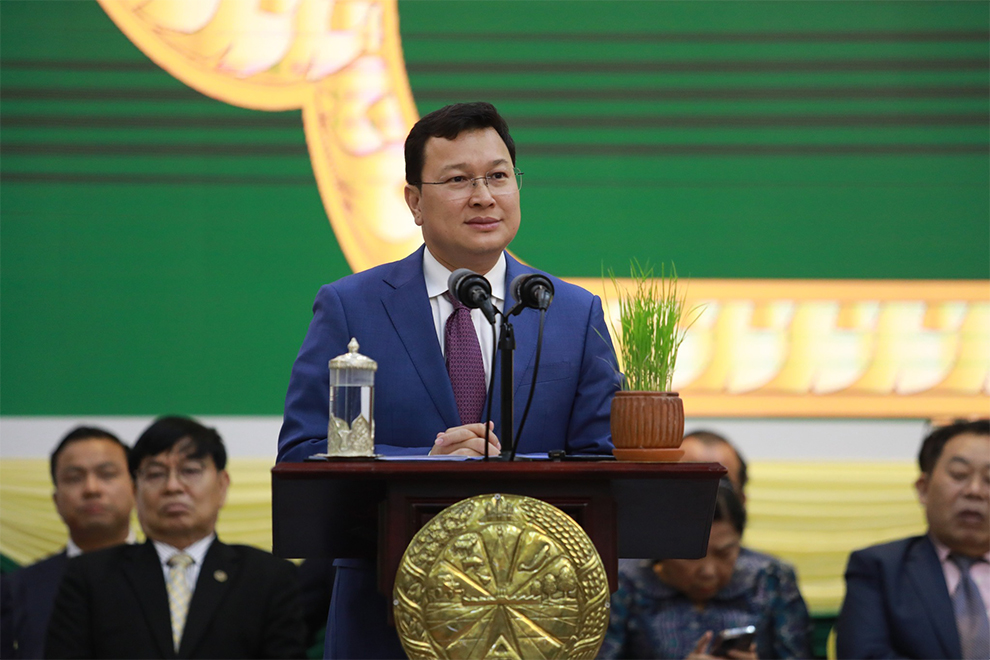
Despite numerous global and regional challenges, Cambodia’s agricultural sector has demonstrated resilience and notable progress, playing a vital role in ensuring food security, creating jobs and supporting national economic growth, according to Minister of Agriculture, Forestry and Fisheries, Dith Tina.
He declared that the sector is expected to continue achieving new milestones in improving farmers’ livelihoods and promoting sustainable economic growth.
Tina shared his remarks as he addressed the ministry’s March 19 annual review and action planning meeting.
According to the ministry, the agricultural sector contributed approximately 16.1% to the Kingdom’s gross domestic product (GDP) in 2025, with an annual growth rate of 1.2%, bringing the sector’s total value added to over $8.3 billion. Agricultural exports in 2025 reached nearly $6.5 billion (an increase of more than $320 million compared to 2024), with crop production accounting for the largest share at over $5.6 billion.
Rice production exceeded 15 million tonnes, with a surplus of more than 9 million tonnes, while rice exports reached nearly 950,000 tonnes. This was a source of national pride, as Cambodian rice won the “World’s Best Rice” award for the seventh time in 2025.
The ministry also highlighted key achievements, including the successful opening of export markets for durian and live crocodiles to China, rice exports to the Philippines and the signing of an agreement with Laos to facilitate the transit of agricultural products to China.
Tina expressed his appreciation and gratitude to all ministry leaders and officials for their strong sense of responsibility, efforts in addressing farmers’ challenges and commitment to further strengthening their work. He also urged continued efforts to enhance cooperation with relevant institutions to better serve the public and national interests.
He added that to further modernise, diversify and strengthen the resilience of Cambodia’s agricultural sector, leaders and officials must prioritise several key areas.
They must maintain price stability and expand modern agricultural communities by linking farmers to markets and strengthening the capacity of commune-level agricultural officers.
They should also strengthen law enforcement to prevent on fisheries, forestry, and wildlife crimes. It is also essential that they ensure sustainable management of state land, and promote greater agricultural exports.