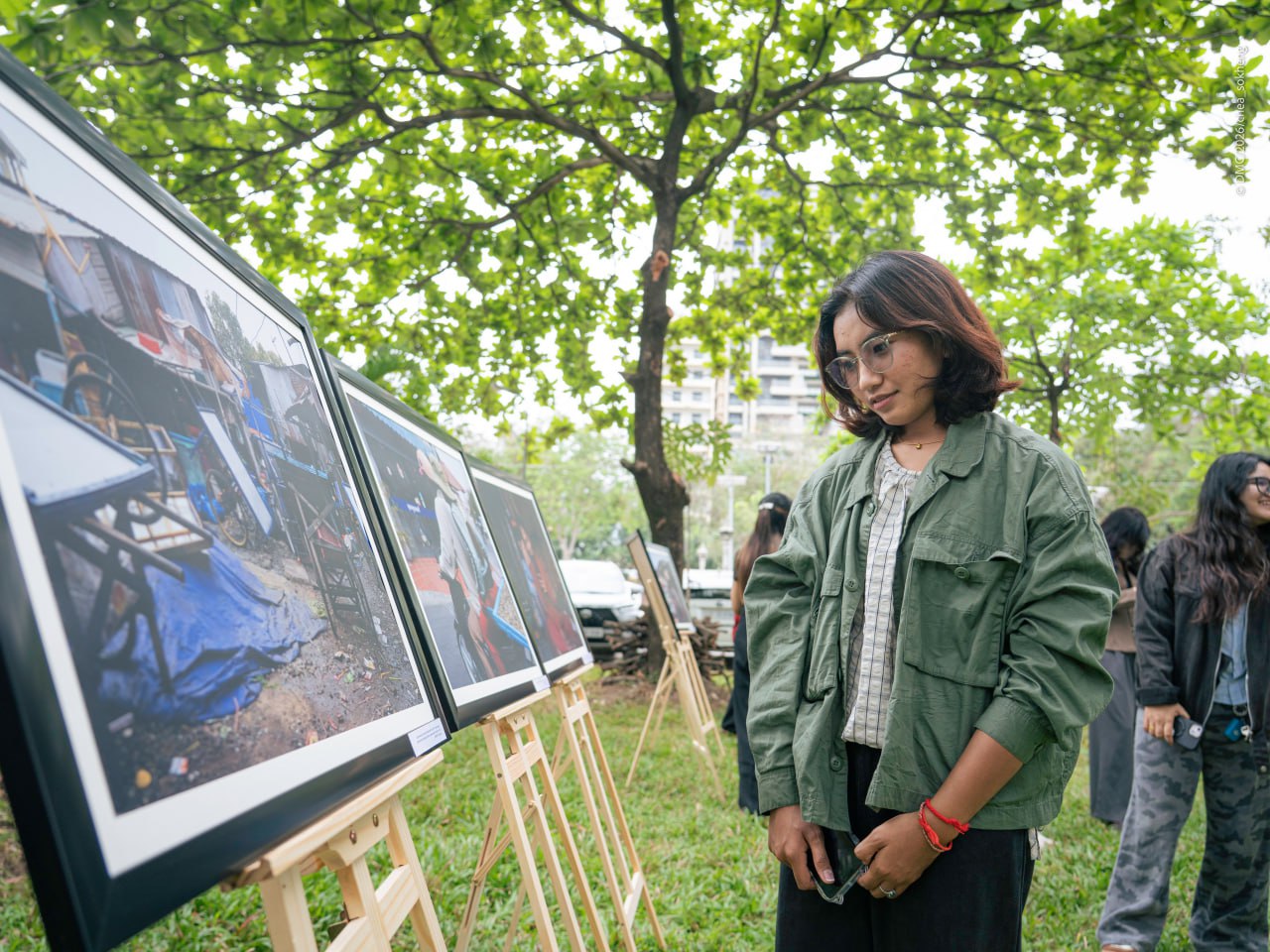
A new photo exhibition in the capital is placing the spotlight on the growing digital divide in Cambodia, as young student photographers document how internet access — or the lack of it — shapes the lives of children and communities.
The exhibition marks the conclusion of the 2026 Giga Photo Mentorship Programme, a joint initiative by UNICEF and the International Telecommunication Union under the global Giga programme, in partnership with the Department of Media and Communications (DMC) at the Royal University of Phnom Penh.
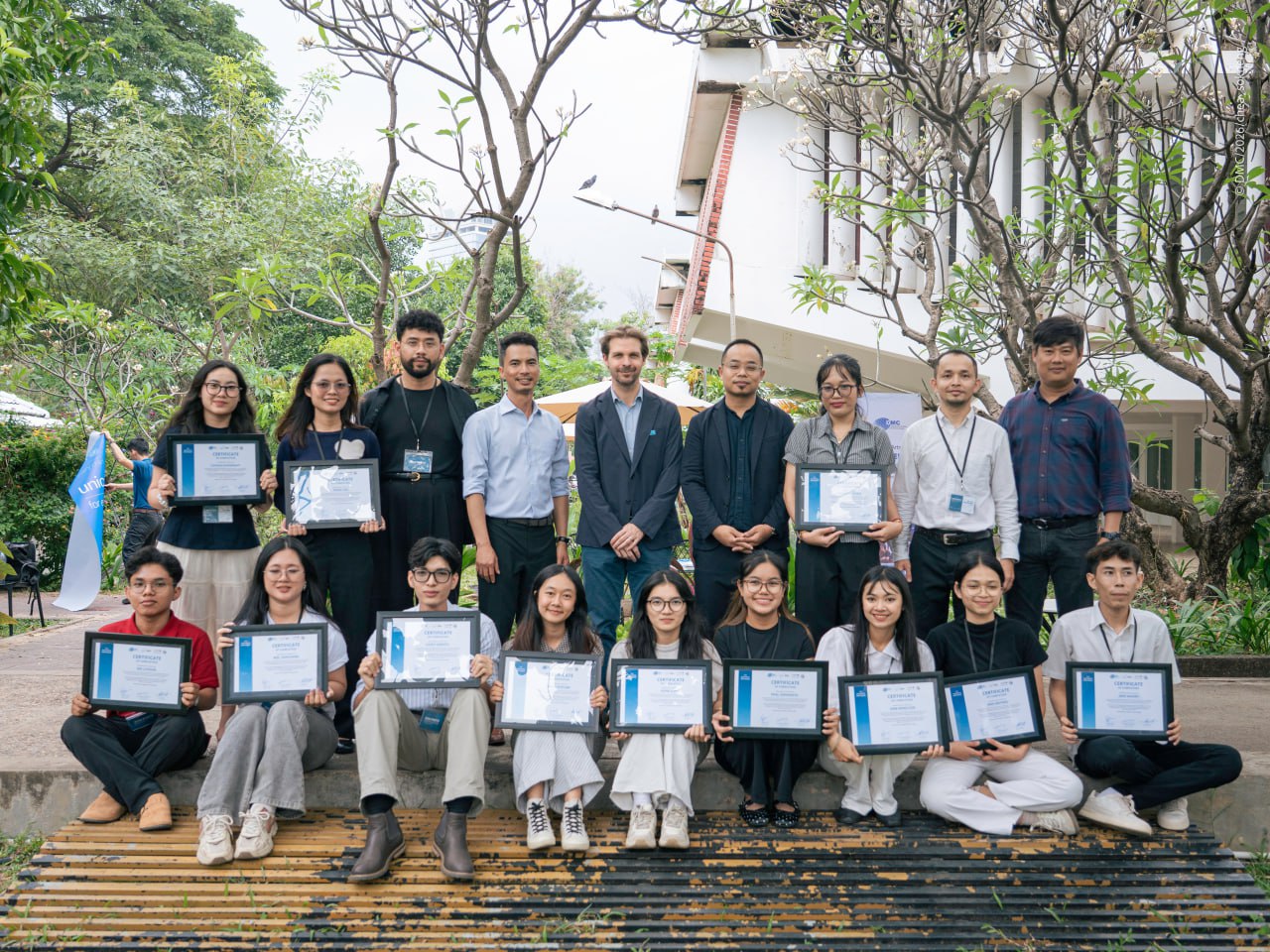
Held from February 23 to 27, the five-day intensive training brought together 12 DMC students, equipping them with skills in participatory photography, ethical storytelling, narrative development and field documentation.
The programme emphasised child rights, particularly the right to access information, participation and development — rights increasingly linked to equitable digital connectivity.
UNICEF Cambodia representative Will Parks described digital access as no longer optional.
“Digital connectivity is no longer a luxury. It is a fundamental enabler of children’s rights,” he said, adding “When young people lack access to information and digital learning, they are denied opportunities to participate, develop skills and shape their futures.”
“Through this mentorship, these talented Cambodian youth have shown us what connectivity means in real communities, and why bridging the digital divide is essential for every child,” he continued.
During the programme, participants received mentoring from prominent Cambodian photographers Phan Phearith, Lim Sokchanlina and Sansitny Ruth, who are affiliated with DMC and the Angkor Photo Festival.
Students engaged in fieldwork under professional guidance before curating and preparing their final photo essays for public display.
Ung Bun Y, DMC director, said the initiative strengthens both technical and ethical standards among aspiring journalists and visual storytellers.
“At DMC, we are committed to nurturing young storytellers who can document the realities of Cambodian society with integrity, creativity, and respect,” he explained.
“This partnership with UNICEF and Giga not only strengthens our students’ technical and ethical skills but also amplifies their voices on an issue that affects every young person today — access to meaningful digital connectivity,” he added.
Daniel Ginsianmung, Giga Photo award coordinator, said the students’ work reflects the urgency of expanding internet access, particularly in fragile and fast-changing contexts.

“The stories created this week powerfully illustrate the urgency of connectivity,” he said. “Behind every school without internet access, there are young people whose potential is limited.”
The mentorship programme contributes to Giga’s global mission to connect every school in the world to the internet.
Launched in 2019 by UNICEF and the International Telecommunication Union, Giga focuses on mapping schools, mobilising financing and supporting infrastructure to ensure reliable connectivity.
The students’ photo stories will become part of a global collection supporting advocacy campaigns and future Giga publications.
Building on the success of the 2025 edition, which drew more than 3,400 submissions worldwide, the 2026 Giga Photo Award has opened its global call for entries.
Journalists, photographers and youth visual storytellers are invited to submit works documenting how connectivity shapes life in crisis-affected or fragile settings.
An international jury will review submissions in late March at the Giga Connectivity Centre in Geneva. Selected works will be exhibited in Geneva in June and October 2026, culminating in an awards ceremony co-organised with the City of Geneva and cultural partners.
Awards include the Giga Photo Fellowship, mentorship opportunities and an invitation for winners to attend the ceremony in Geneva.