After more than a decade of transformative work, World Vision International in Cambodia has announced the conclusion of its flagship Area Programmes in Baribour (Kampong Chhnang), Chikraeng (Siem Reap), and S’ang (Kandal), marking the end of an 18-year partnership that has transformed the lives of over 100,000 people, including thousands of children.
Supported by World Vision offices in Hong Kong, New Zealand and Canada, the programmes focused on health, education, child protection and community empowerment — leaving what officials describe as a “strong foundation” for continued progress led by local communities.
Major gains in health and hygiene
All three districts have now achieved open defecation-free status, thanks to widespread access to household latrines and behaviour change campaigns.
“Exclusive breastfeeding in Baribour rose from just 13% to 94%, and child stunting dropped by more than half,” according to World Vision.
In Chikraeng, skilled birth attendance improved from 15% to full coverage, while S’ang achieved near-universal access to clean drinking water and significant reductions in child malnutrition.
“Our collaboration with World Vision has led to meaningful improvements in community health,” said Tam Rany, chief of the Health Center in Pech Changvar commune, Baribour district.
“All pregnant women now access health care from trained professionals, and our health centres have upgraded both staff skills and facilities.”

Education and youth development
The World Vision said education outcomes also showed remarkable progress.
In Chikraeng, Grade 3 students’ reading comprehension levels more than doubled, while S’ang reduced its once-high dropout rate from 63% to below 3%. Nearly 90% of Baribour’s Reading Camps now meet recognised quality standards.
“Primary schools in Svay Proteal and S’ang Phnom communes have undergone major upgrades,” said Eng Tharin, deputy chief of the District Education Office in S’ang district
“Thanks to World Vision, aging buildings were refurbished and essential facilities added,” said Tharin.
Youth participation became a pillar of the programmes. In Chikraeng, child protection mechanisms now operate in every village, while S’ang’s youth clubs launched 16 community-led projects on domestic violence, climate change and hygiene.
All three programmes emphasised inclusive governance and youth empowerment. In Chikraeng, child protection mechanisms are now fully functional in every village, and youth participation in local decision-making has increased, contributing to the reduction of domestic violence.
In S’ang, youth clubs launched 16 community-led projects addressing domestic violence, climate change and hygiene, taking ownership to address issues in their communities.
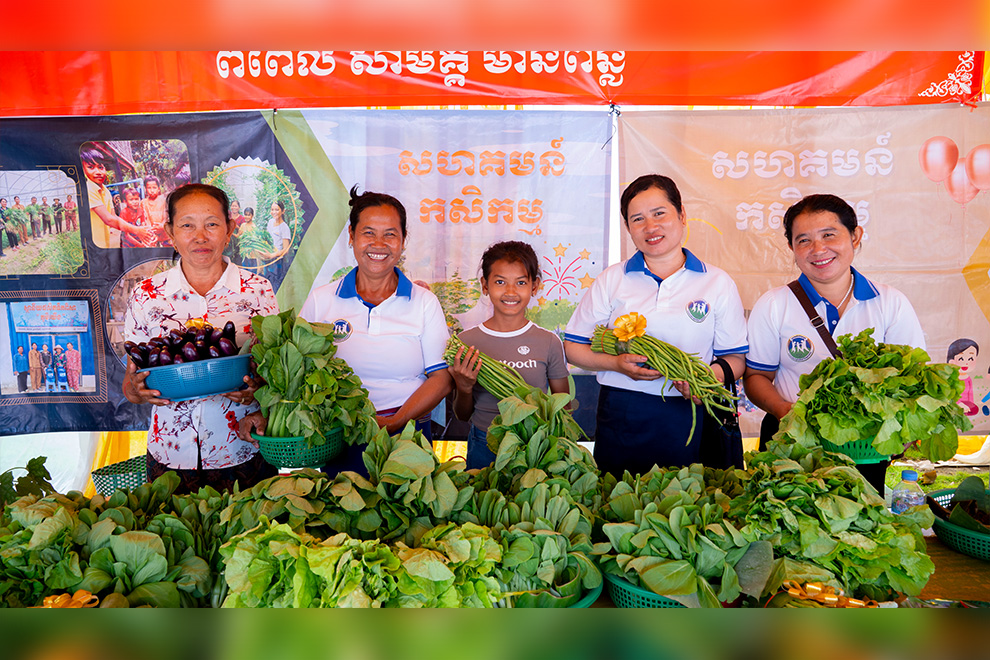
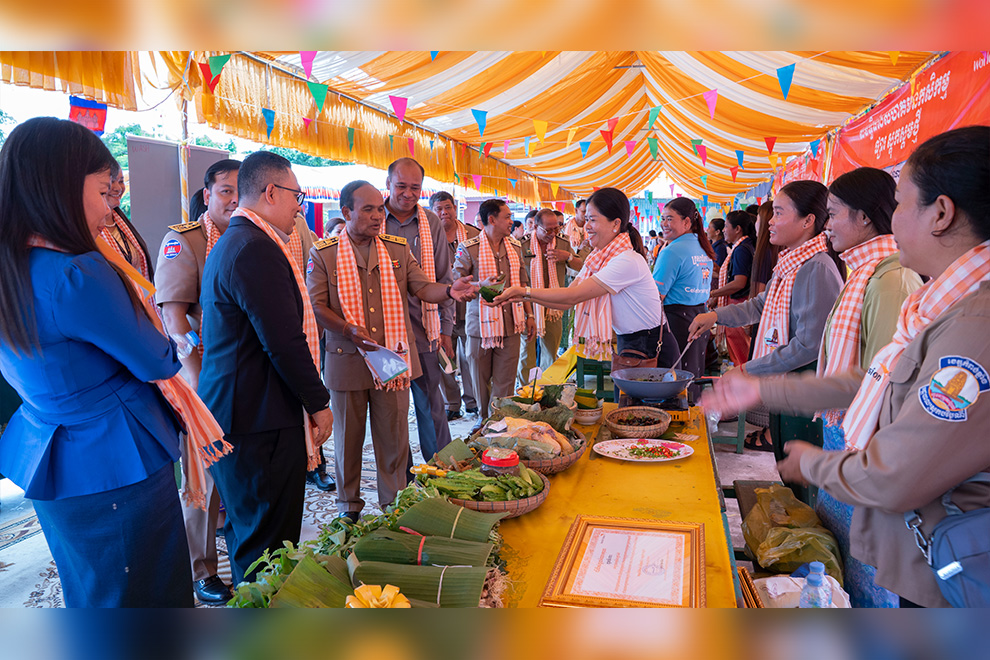
“Our agricultural cooperative not only supports disadvantaged children but drives broader development. Even as World Vision exits, we are committed to sustaining these efforts,” said Kong Malai, Anlong Samnor Agriculture Cooperative leader, in Chikraeng district.
Local leadership and sustainability
S’ang district governor Cheu Kimhai praised the long-standing partnership with World Vision, which began in 2007 and covered two communes — Svay Pratal and Sa Ang Phnom — reaching 14 villages with a population of 28,457, including more than 10,000 children.
“The vision of the district administration and World Vision is to ensure children and youth have good health care, quality education and life skills so they can become good citizens and capable leaders contributing to sustainable development, in line with the policy programmes of the Head of the Royal Government of Cambodia,” he said.
Kimhai highlighted key projects over the years, including clean water and sanitation, health and nutrition, food security, education, life skills and youth participation.
“We hope World Vision and its programmes will continue to support S’ang in the future, contributing to development in line with the Five-Point Policy Programme of the Prime Minister,” he added.
A future built on local strength
Service providers have improved support for vulnerable groups, while communities are now more aware of their rights, resulting in better health practices, higher school enrolment and greater demand for birth certificates.
Local governments have reinforced these gains by funding social accountability activities, with leaders and youth groups taking ownership to sustain progress as World Vision phases out.
“These achievements are not just milestones — they are the foundation for continued progress,” said Janes Imanuel Ginting, national director of World Vision International in Cambodia.
“Children will continue to thrive because communities are now leading the way,” Janes concluded.
Partnerships with local authorities, churches, schools, agricultural cooperatives and youth clubs have equipped communities to independently maintain child well-being and development outcomes.
Commune councils have even allocated budget for social accountability activities within the Commune Investment Plan, ensuring the legacy of the programme endures.