Chinese President Xi Jinping and senior Chinese leader Wang Huning have expressed strong support for the Cambodia-Thailand ceasefire agreement, the ASEAN-led observation mechanism under Malaysia’s coordination and the early establishment of the ASEAN Observer Team (AOT).
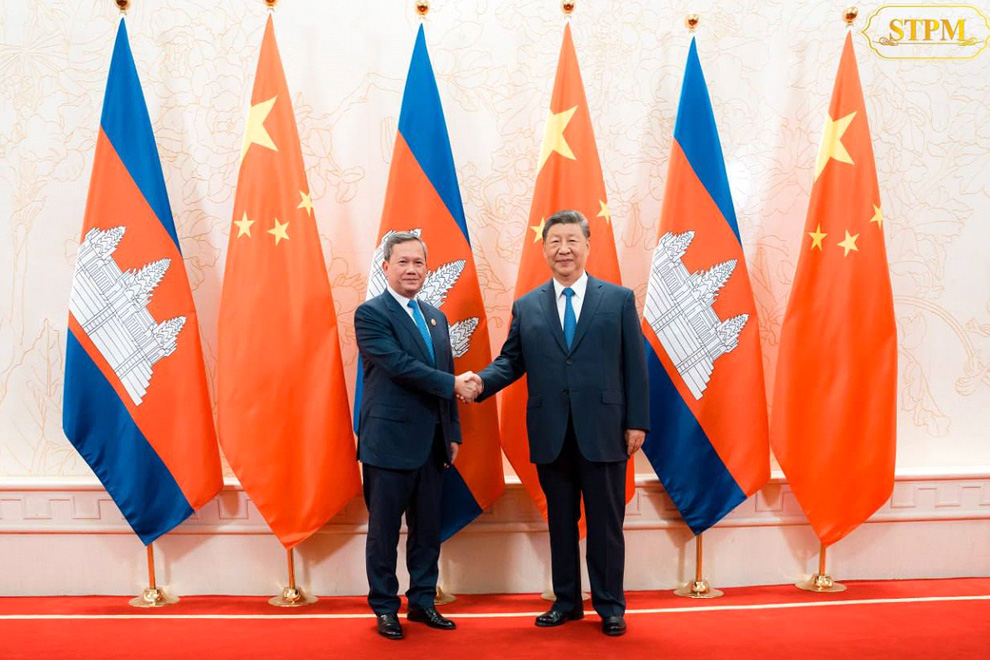
Prime Minister Hun Manet had bilateral talks with President Xi Jinping on August 30, on the sidelines of the Shanghai Cooperation Organization Plus Summit in Tianjin, China, according to a statement from the Ministry of Foreign Affairs and International Cooperation.
The prime minister was quoted as saying that “China’s steadfast support for the full implementation of the ceasefire, the ASEAN monitoring mechanism and the early establishment of the AOT is indispensable to restoring peace, stability and normalcy along the border”.
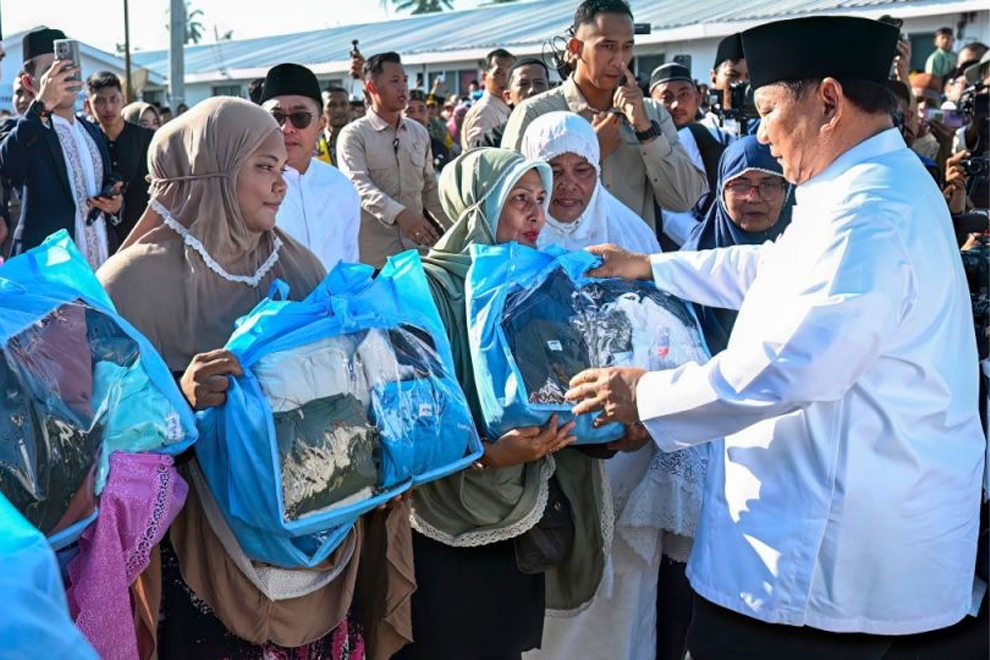
He further announced humanitarian assistance from China to support the communities affected by the border conflict.Manet expressed his gratitude, describing China’s involvement as “constructive and instrumental” in facilitating dialogue with Thailand.
“At the same time, His Excellency the President also supported and provided humanitarian assistance to Cambodia to help repair the damage and ease the suffering of the people affected by the armed conflict in late July,” Manet said, via social media.
Separately, during a courtesy meeting with Manet, Wang Huning, chairman of the Chinese People’s Political Consultative Conference, echoed Beijing’s support for Malaysia’s role in brokering regional peace.
Wang encouraged Cambodia and Thailand to normalise relations as swiftly as possible.
The prime minister requested China’s assistance in urging both parties to avoid the use of military force and to resolve ongoing border issues, particularly in residential areas, through existing mechanisms and based on bilateral agreements, relevant treaties and international law.
“Whether inside or outside the country, [Cambodian] leaders consistently conduct active diplomacy to safeguard Cambodia’s sovereignty and territorial integrity, never forgetting the hard-earned and invaluable peace for the nation and Cambodian people,” explained the foreign ministry statement.
The ministry emphasised that Cambodia continues to engage Thailand through established bilateral frameworks, including the General Border Committee (GBC), Regional Border Committee (RBC) and the Joint Boundary Commission (JBC) under the 2000 MoU.
“Cambodia has lodged formal protests against Thailand’s unilateral actions, such as erecting razor wire fencing and threatening to remove Cambodian civilians, which Phnom Penh maintains violate the MoU,” according to the statement.
Cambodia was an active participant in peace talks facilitated by Malaysian Prime Minister Anwar Ibrahim, in his capacity as ASEAN chair, with US. and Chinese support.
These talks led to the July 28 ceasefire and the adoption of a 13-point agreement on August 7.
Cambodia agreed to host ASEAN observer teams along its side of the border, coordinated by Malaysia, to monitor compliance and strengthen military communication.
The Cambodian government has also sought urgent engagement with the UN and other multilateral platforms.
Within 24 hours of the outbreak of hostilities, Cambodia requested an emergency meeting of the UN Security Council.
“Cambodia has also sought other international platforms, such as the Ottawa Convention on the Anti-Personnel Mines, and its partnerships with international humanitarian organisations, as well as the UN agencies, to mobilise support for demining, protection of civilians and humanitarian relief,” added the ministry.
Phnom Penh has since kept the UNSC, the UN secretary-general and UN member states updated on developments, emphasising Thailand’s violations of the UN Charter and calling for full implementation of the ceasefire agreement.
Foreign minister Prak Sokhonn has also briefed diplomatics and humanitarian organisations on the humanitarian consequences of the clashes.
On August 22–23, more than 60 representatives from embassies, UN agencies and NGOs visited the affected areas, where they witnessed the plight of displaced families and the risks posed by landmines firsthand.
The ministry described the ceasefire as a humanitarian necessity, urging Thailand to honour its commitments.
“Its full and effective implementation not only protects lives but also allows displaced families to return safely and humanitarian agencies to deliver life-saving assistance,” it added.
The development of the Funan Techo Canal
Amid the tense border situation, both leaders underscored the importance of long-term development projects for stability.
Xi and Manet reaffirmed their commitment to deepening Cambodia-China relations under the “All-Weather Community with a Shared Future in the New Era” framework.
“President Xi Jinping reiterated China’s strong support for Cambodia’s development, modernization, and regional integration,” said the ministry.
Xi highlighted China’s continued support for Cambodia’s development, regional integration and major infrastructure initiatives, including the Funan Techo Canal and Integrated Water Management Project.
The Funan Techo Canal, a flagship Cambodia-China infrastructure project, was singled out as a priority for timely implementation.Manet reaffirmed the canal’s strategic role in strengthening Cambodia’s economic resilience and regional connectivity.
President Xi encouraged close coordination between relevant institutions to ensure the project delivers “tangible benefits to the peoples of both countries”.
The meeting closed with both sides pledging to elevate Cambodia-China ties to greater heights, anchoring the relationship in peace, stability and shared prosperity across the region.