Thailand’s February 2026 general election delivered a decisive victory for Prime Minister Anutin Charnvirakul and his Bhumjaithai Party. But beneath the numbers lies a sobering reality: by re-electing Anutin, the Thai people have chosen confrontation over peace.
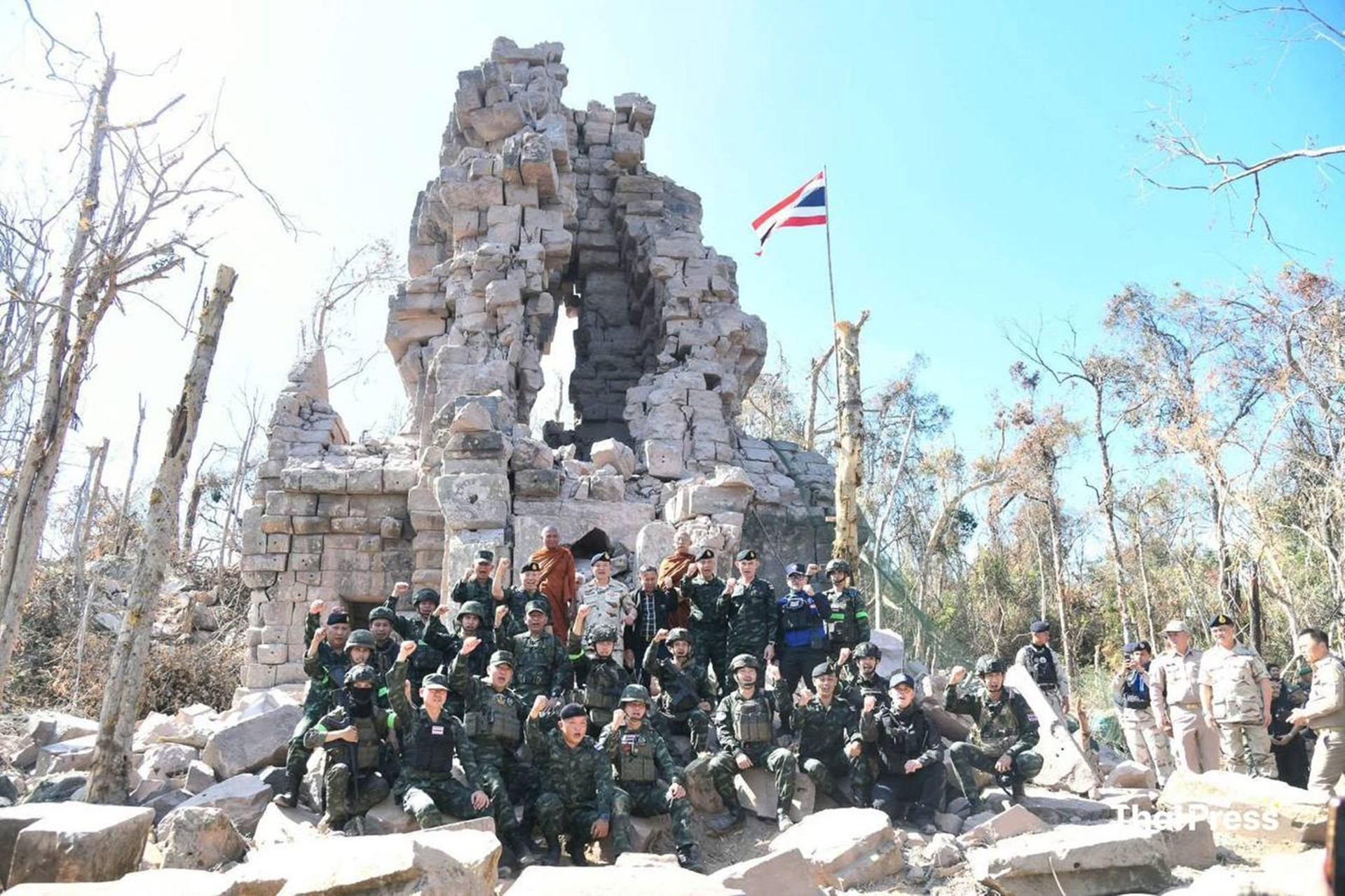
While Cambodia has repeatedly called for dialogue, negotiation and calm along the border, the election outcome signals popular support for a government willing to escalate tensions militarily. Over the past year, Thai forces have entered Cambodian territory, placing razor wire and shipping containers in villages, cutting off homes and farmland, and justifying their actions with unilateral self-drawn maps — territorial claims that Cambodia has never recognised.
Throughout the campaign, Anutin leaned heavily on nationalist rhetoric, portraying himself as the protector of Thai sovereignty. This message resonated with voters, and the election has effectively become a referendum on confrontation. While it would be simplistic to claim every voter directly endorsed war, the result reflects a willingness among Thai citizens to back aggressive, militarised policies, even as Cambodia appeals for restraint and peace. In essence, Thai ballots have sent a clear signal: the Thai nation prefers escalation over diplomacy.
The human consequences are immediate. Cambodian villagers have been physically cut off from their homes and fields by shipping containers and coils of razor wire, turning political disputes into daily suffering. Thailand’s actions — rooted in contested maps rather than internationally recognised borders — are seen in Cambodia as a blatant invasion. Cambodia’s repeated calls for peace highlight the contrast starkly: one side pushing for dialogue, the other emboldened by popular support to fortify and occupy disputed territory.
Thailand now faces a critical juncture. Anutin’s victory reflects legitimate popular support, but democracy does not absolve leaders from responsibility for the consequences of their policies.
The election has empowered a government willing to escalate conflict, effectively turning the people’s choice into a mandate for war rather than peace.
Neang Sopheap is a Phnom Penh-based geopolitical analyst. The views and opinions expressed are his own.