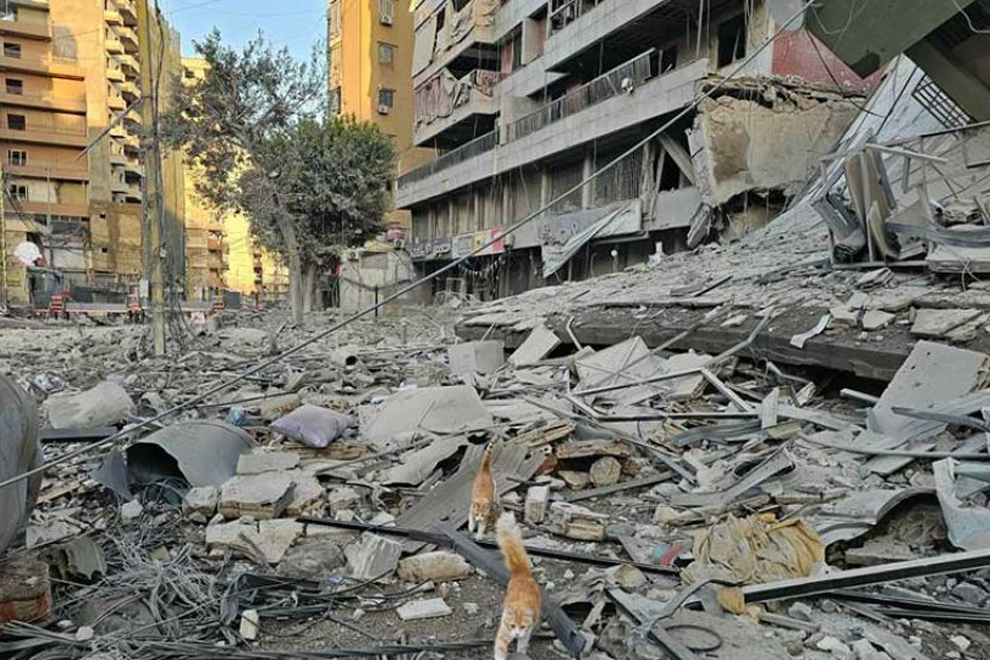
Dozens of Cambodian civilians have died and thousands more have fled their homes. These figures have been acknowledged by the Ministry of National Defence and reported through national outlets such as Kampuchea Thmey Daily. Cambodian soldiers also remain in Thai custody, days after a ceasefire was signed. These are not interpretations. They are observable truths found in the absence of our men, in the silence from their families, and in the names not yet returned.
Yet the Thai government now presents this tragedy as Cambodian aggression. We reject this framing not in anger, but in the name of accuracy. Cambodia did not start this fire. And we will not allow the truth to burn with it.
The ceasefire agreement, witnessed and affirmed by ASEAN monitors led by Malaysia, and observed by the US and China, forbids any troop rotation or encroachment within fourteen kilometres of the contested corridor. The ink was barely dry when Thai forces repositioned near Phnom Trap (referred to on Thai military maps as “Phu Makua”). Cambodia did not respond with escalation, but with restraint. Still, Thai media labelled us the aggressor. A ceasefire only holds when both sides observe it. Cambodia did. Thailand did not. Peace does not mean surrender. It means symmetry. And that symmetry has not been honoured.
Thailand’s recent attempt to invoke UNESCO by accusing Cambodia of politicising heritage is both misleading and dangerous. In 1962, the International Court of Justice ruled that the Temple of Preah Vihear lies “in territory under the sovereignty of Cambodia”. In 2013, the Court reaffirmed its position and ordered Thai forces to withdraw from the promontory surrounding the temple. These judgments are binding. If Thailand respects international law, let it speak through the language of rulings — not revision.
Beyond Preah Vihear, Thai military forces are positioned at the Ta Mone Thom, Ta Mone Touch and Ta Krabey temples — temples on which the ICJ has not yet ruled. Cambodia awaits that legal clarity while continuing to honour the 1907 Franco–Siamese border treaty. Thailand, however, invokes that map when advantageous and discards it when inconvenient. We do not romanticise treaties shaped by colonial history. But we remember. Our soil remembers. And the law remembers with us.
This confrontation is not confined to military or diplomatic spheres. It has spilled into digital space. Civil society monitors, including the Safenet network, recorded a 400 per cent increase in hate speech targeting Cambodians during the escalation. That speech did not stay online. It translated into withheld wages, arbitrary firings and fear among over half a million Khmer migrant workers in Thailand. Cambodia does not treat Thai residents within its borders as threats. We ask for the same principle to be applied in return.
This escalation is also political. A fragile coalition in Bangkok is facing internal pressure over controversial memoranda, including the MoU-44 on maritime zones. In such moments, the seduction of nationalist distraction returns. Cambodia has often been assigned the role of convenient adversary. We reject that role — now and going forward.
Cambodia’s position is clear:
- The immediate return of all Cambodian soldiers still held across the border is non-negotiable. Peace is not possible while hostages remain.
- All heritage zones must be demilitarised. Temples are sacred cultural sites, not strategic footholds.
- Ceasefire monitoring reports should be released hourly, not weekly. Transparency is the foundation of trust.
- Digital hate speech targeting Khmer people must be removed within 24 hours, a standard Cambodia already enforces.
- A bilingual digital archive, in Khmer and Thai, containing the 1907 treaty and both ICJ rulings should be established. Let future generations argue from fact, not fever.
To the Thai public: this is not an indictment. It is an invitation. Ask why the return of Cambodian soldiers is not being reported. Ask why troop movements after the ceasefire are not being addressed. Ask why history is only invoked when it flatters your position. We do not question your dignity. We question the silence.
To the international community, particularly those viewing this conflict only through the lens of trade negotiations, we say: this border predates your tariffs. It is not a collateral line in a broader geopolitical game. Cambodia will not exchange sovereignty for access, nor its people for convenience. The border is not an opportunity. It is a scar still healing. It deserves protection, not commodification.
When rain falls on Preah Vihear, it settles in the bullet holes left a century ago. Those stones know who fired first. They also know who returned carrying bodies, not blame. Cambodia is not a perfect nation. But we are a nation with a long memory. We do not erase grief. We do not glorify conflict. We hold pain and maps with equal precision.
Peace remains our chosen language. But we speak it in a tone shaped by sovereignty, not submission. When the border speaks, it names the truth. And the world should listen.
Ponley Reth is a Cambodian writer and commentator based in Phnom Penh. The views and opinions expressed are his own.