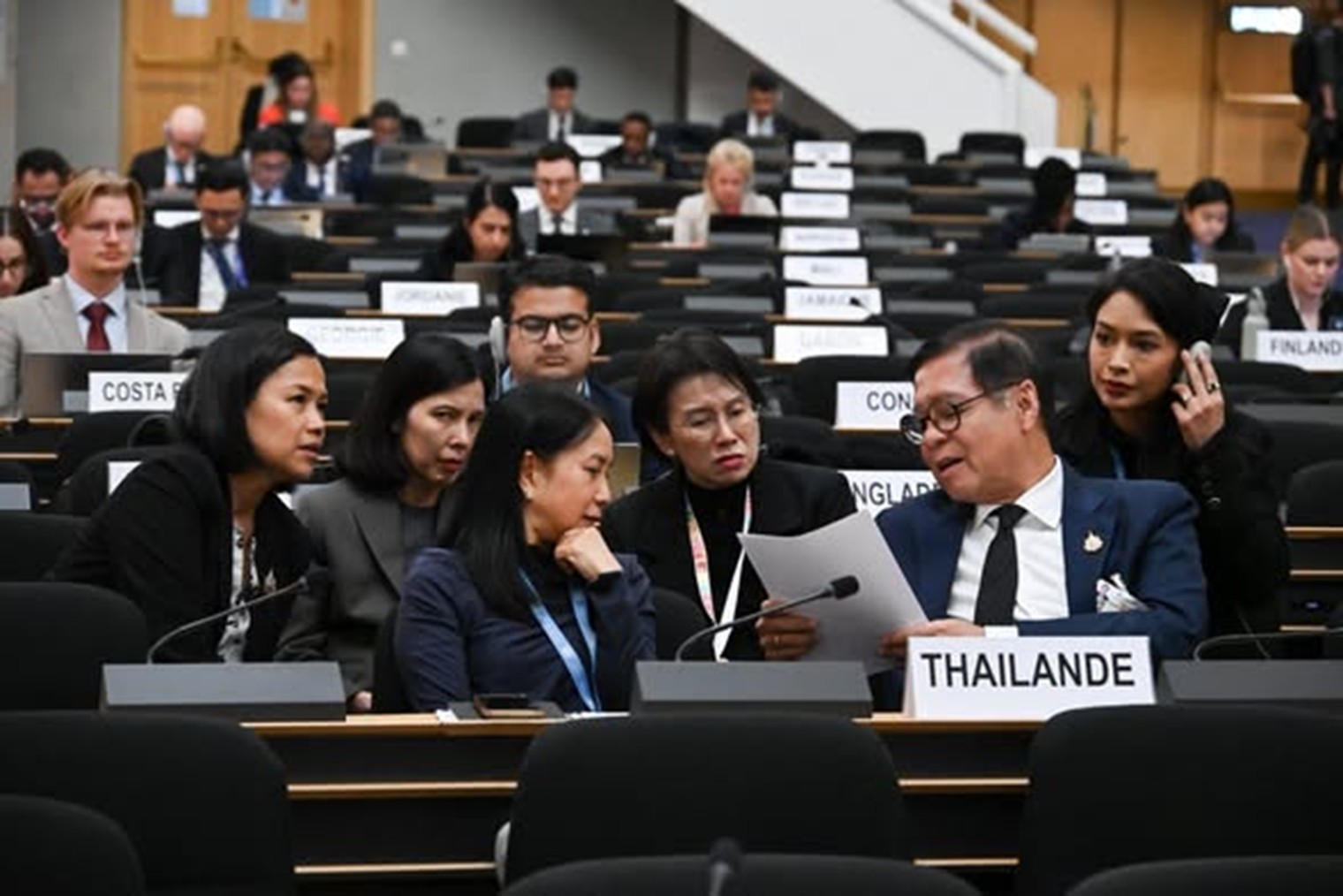
Thai foreign minister Sihasak Phuangketkeow recently warned Cambodia in front of Thai media that repeatedly telling the international community that Thailand invaded first is “not a solution”. He further suggested that such repetition would only make the world grow tired of Cambodia.
This framing is deeply flawed.
The issue is not repetition. The issue is whether an act of aggression occurred. When sovereignty is violated, the injured party does not become obligated to lower its voice for the sake of regional comfort.
If Thailand believes the claim is inaccurate, it should refute it with evidence and law — not with appeals to international fatigue.
Border disputes are not resolved by managing headlines. They are resolved by addressing facts. Cambodia has maintained a consistent position: that Thai military actions crossed into Cambodian territory. That position has been communicated clearly to bilateral partners and to the wider international community. Not because Cambodia seeks attention — but because sovereignty is not negotiable in silence.
To suggest that raising such concerns repeatedly is counterproductive is to imply that persistence weakens legitimacy. In reality, persistence demonstrates seriousness.
International law does not function on the basis of how often an issue is mentioned. It functions on documentation, treaties and conduct. If a state believes its territorial integrity has been compromised, it has every right — indeed, a duty — to inform the world. Transparency deters escalation. Silence invites it.
The notion that the world will “grow tired” of Cambodia’s position assumes that global actors prioritise convenience over principle. That underestimates both the international system and the gravity of border sovereignty.
The global community may tire of conflict. It may tire of instability. It may tire of nationalist rhetoric. But it does not tire of lawful clarity.
Cambodia has not mobilised inflammatory language. It has not threatened retaliation. It has not abandoned diplomatic channels. Instead, it has chosen legal mechanisms and peaceful engagement. That is not the conduct of a country seeking confrontation. It is the conduct of a country asserting its rights responsibly.
What would truly damage de-escalation is not Cambodia’s communication. It would be the normalisation of cross-border military pressure followed by demands for silence.
If Thailand wishes to move beyond repetition, the solution is straightforward: address the substance of the allegation directly. Clarify the incidents. Reaffirm respect for established boundaries. Engage in structured, fact-based dialogue through recognised mechanisms.
Telling Cambodia to speak less does not resolve a border dispute. It only sidesteps it.
Sovereignty disputes cannot be reduced to messaging strategy. They concern land, law and the fundamental principle that borders matter. If that principle is diluted because one party fears diplomatic fatigue, the precedent would extend far beyond this bilateral tension.
Cambodia’s position is not about narrative dominance. It is about legal clarity. And legal clarity does not expire because it is repeated.
If defending territorial integrity requires stating the same facts more than once, then repetition becomes an obligation, not a flaw.
Fatigue does not erase facts. Volume does not determine validity. And silence does not create peace.
Peace is built on acknowledgment, legality and mutual respect for sovereignty.
Until those conditions are met, Cambodia will continue to speak — not to provoke, but to uphold a principle that underpins the international order itself.
Roth Santepheap is a Phnom Penh-based geopolitical analyst. The views expressed are his own.