



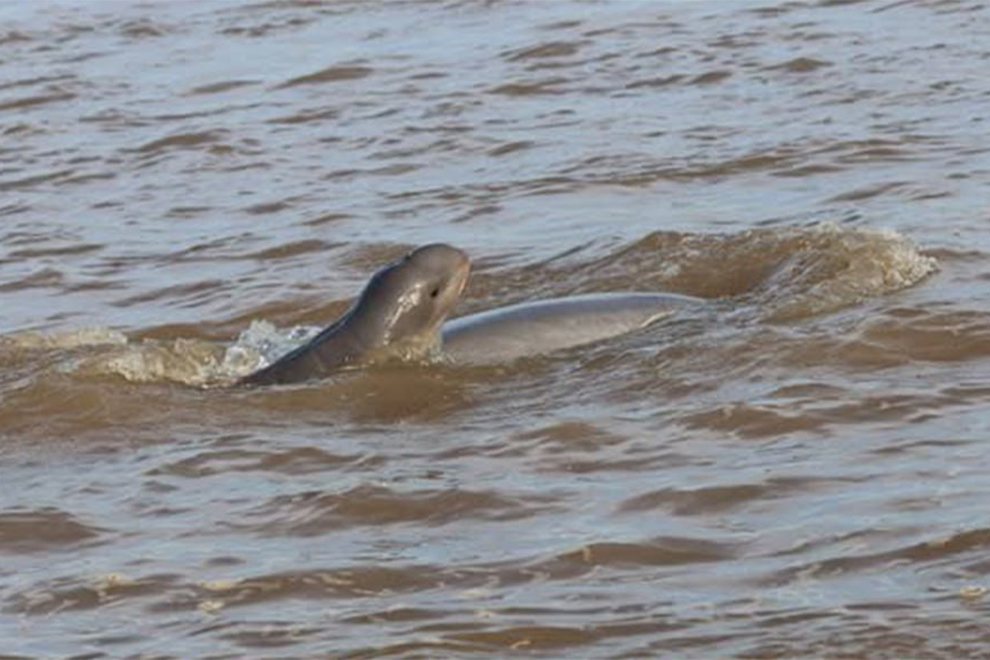
As part of its 2026 plans to increase Cambodia’s freshwater dolphin population, the Ministry of Agriculture, Forestry and Fisheries and partner conservation organisations are discussing the use of drones and security cameras to modernise the monitoring of dolphin conservation areas. It I hoped that this will reduce the incidence of illegal fishing activities.
The number of Mekong River dolphins in Cambodia now stands at 112, following the discovery of a new calf in Kratie province in December. The year 2025 marked a historic first for Cambodia, with no recorded dolphin deaths throughout the entire year. This represented an unprecedented conservation success in more than 20 years, since monitoring and record-keeping began in 2002.
Agriculture ministry undersecretary of state Im Rachna led discussions on enhancing the effectiveness of management, protection and conservation of the Mekong River dolphins in 2026, with participation from conservation experts and fisheries offices from Kratie and Stung Treng provinces, according to a January 10 statement from the ministry.
The working group discussed plans to establish a central information room for live video monitoring, remote surveillance systems and drone operations in 2026. This initiative will be carried out with financial support from WWF Cambodia and technical support from the Institute of Hydrobiology (IHB) of the Chinese Academy of Sciences.
“The use of remote monitoring system aims to observe the daily activities of dolphins and, in particular, illegal fishing activities within dolphin conservation areas through the installation of automatic cameras and the deployment of drones,” the ministry stated.
During the meeting, Rachna noted that dolphin conservation efforts, carried out jointly by relevant officials, river guards and WWF Cambodia, have produced positive and effective results through a shared commitment.
She described the dolphins as the “breath of the Mekong River”, a priceless national treasure. Rachna emphasised the need to encourage and recognise this work, including awarding certificates of commendation to individuals who have performed exceptionally well.
“The application of technology in the new year also provides an opportunity for river patrol officers to learn new skills, enabling them to carry out their duties more effectively and efficiently,” she said.
She praised and expressed her gratitude to all stakeholders for supporting the ministry’s additional mechanisms aimed at protecting and conserving fisheries resources for future generations.
