



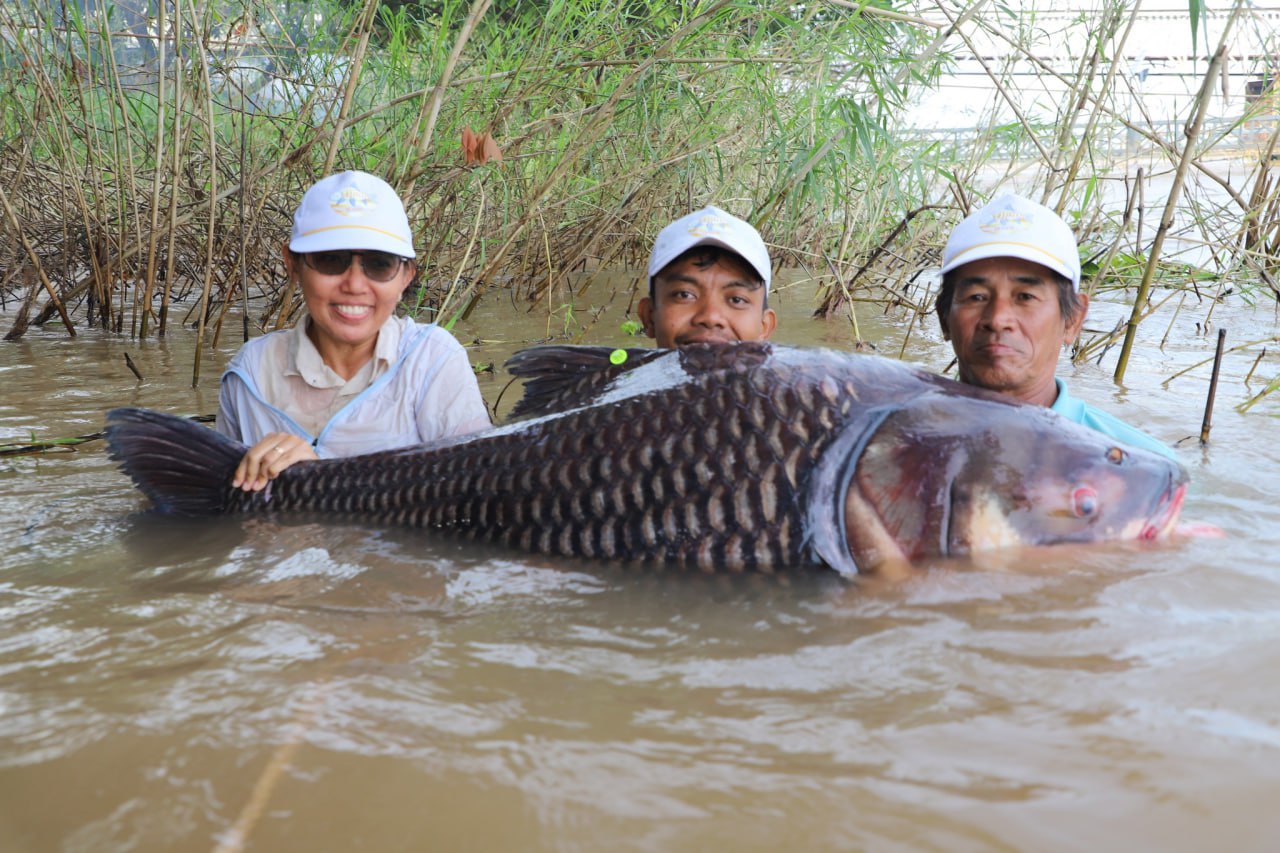
Since November 18, a specialist endangered fish team has tagged and released 13 Mekong giant barbs, a critically endangered freshwater fish species, back into their natural habitats over the past month.
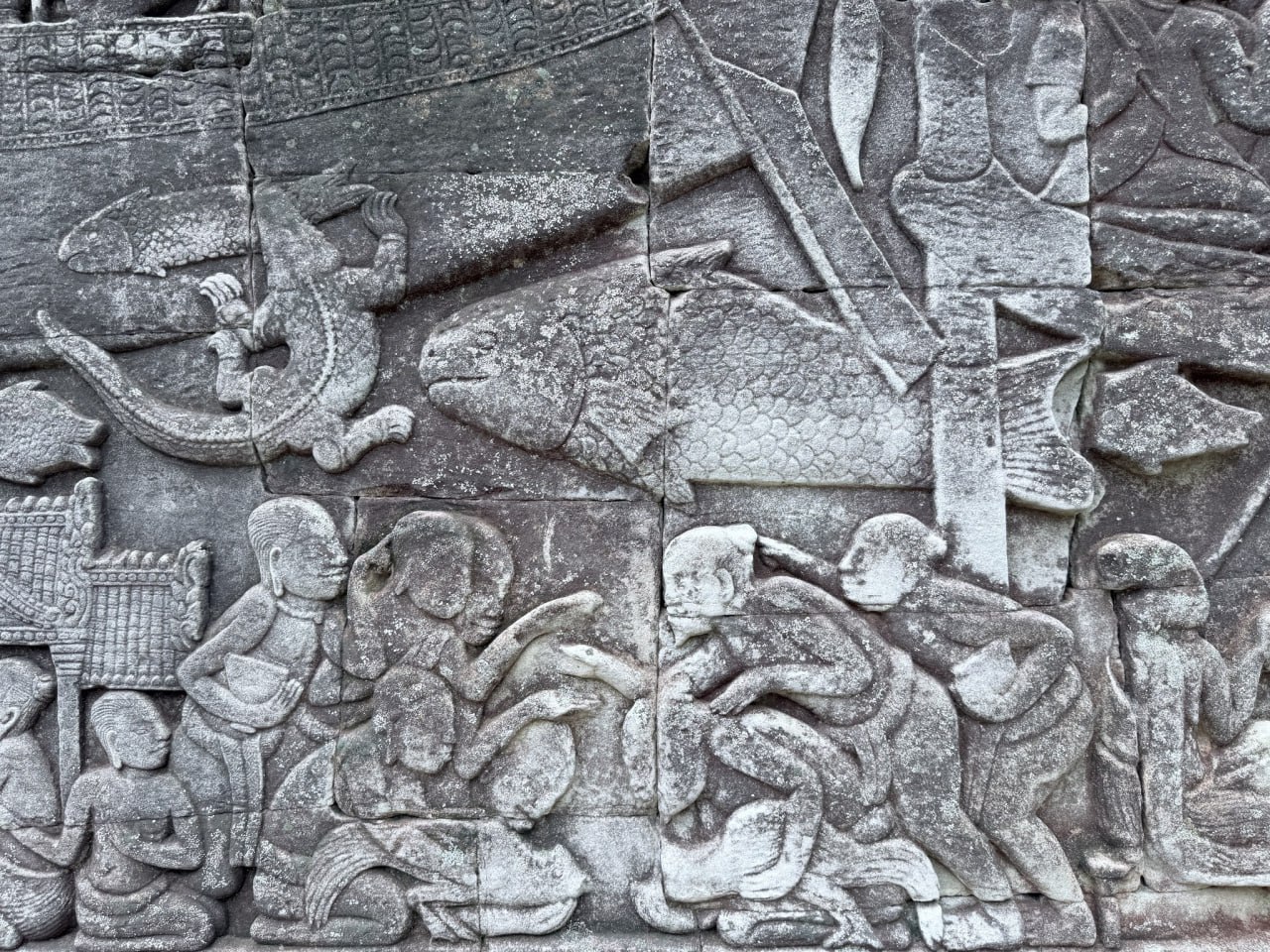
This conservation work has been described as “protecting Cambodia’s national identity and ancestral heritage”, as images of the fish are carved in the bas-reliefs of the Bayon and Angkor Wat temples.
Recognising the urgent conservation need, the Inland Fisheries Research and Development Institute (IFReDI) of the Fisheries Administration, in cooperation with the Wonders of the Mekong project, established a Rapid-Response Team. The team works closely with Dai owners (fishing operators) and riverine fishing communities along the Mekong River, Tonle Sap Lake and Tonle Sap River.
The fish weighed between 7kg and 78kg, with lengths ranging from 69cm to 147cm, according to the Wonders of the Mekong.
The giant barb was officially designated Cambodia’s national fish species by Royal Decree in March 2005, and listed as endangered on the IUCN Red List in 2011.
The project noted several major reopening threats, including Illegal fishing gear, overfishing, climate change and habitat loss.
“Protecting Cambodia’s national fish and the Mekong’s remaining giants is more than conservation. It is an act of defending our ancestral legacy and the irreplaceable freshwater biodiversity upon which millions depend. Together, we hold the future of this heritage in our hands,” it stated.
On December 19, the team tagged and released a giant barb weighing 6.2kg and measuring 67cm after it was accidentally caught by Nhoek Siyorn, 58, a dai owner in Russey Keo district, Phnom Penh.
The team thanked fishing communities nationwide for actively assisting with reporting, rescuing, tagging and releasing endangered fish back into the wild.
The Tonle Sap Lake, described as the “heart of Cambodia”, is vital for freshwater fisheries, food security, nutrition, the economy, culture and social life.
The giant can grow up to 3 metres in length and weigh up to 300kg. It feeds mainly on algae, fruits and aquatic plants.
From June, as the rainy season begins, giant barbs migrate from deep pools in the upper Mekong in Stung Treng and Kratie, where they spawn. Eggs and larvae drift downstream into Tonle Sap Lake and floodplains to feed and grow. By October–November, when the dry season arrives and water flows back into the Mekong, the fish migrate from Tonle Sap back to the Mekong — many reaching Phnom Penh around the time of the Water Festival (Bon Om Touk).
This is a source of national pride, and fishing communities across the country are increasingly aware and actively cooperating to protect and conserve endangered fish species and Cambodia’s freshwater fisheries for future generations.
