



Two young entrepreneurs have achieved sales growth of nearly 100%, particularly in international markets, amid the ongoing Cambodian public boycott of Thai products.
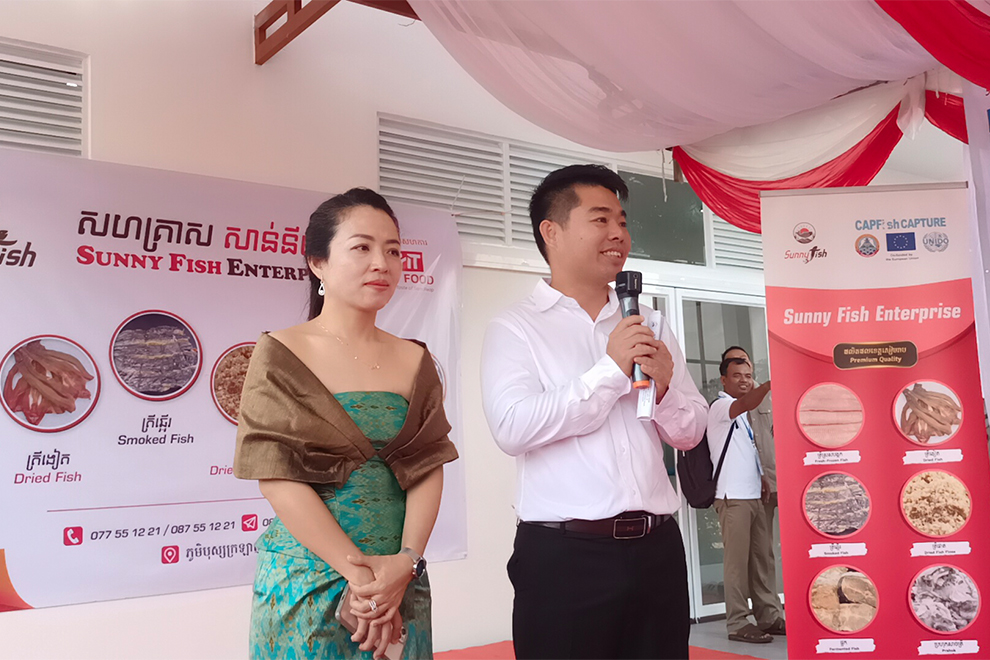
Sim Chhunluy co-invested with Sim Sereyroth, owner of Home Taste Food Enterprise, to establish the “Sunny Fish” processing business in Siem Reap province’s Bos Kralanh village, in Chreav commune. Their goal was to respond to the growing demand for fishery exports. The investment combined resources, knowledge and technical skills to enhance quality and enable exports to international markets.
Support from the CAPFISH-Capture programme has allowed the business to implement food safety standards, increase sales volume by 93%, raise income by 41%, create new jobs by 38% (73% of whom are women) and expand its domestic and international distribution network to 9 markets.
In addition, the enterprise is preparing to meet HACCP standards and has already exported 8.5 tonnes of processed fish products, including dried, frozen and semi-processed fish, to Australia, in two shipments.
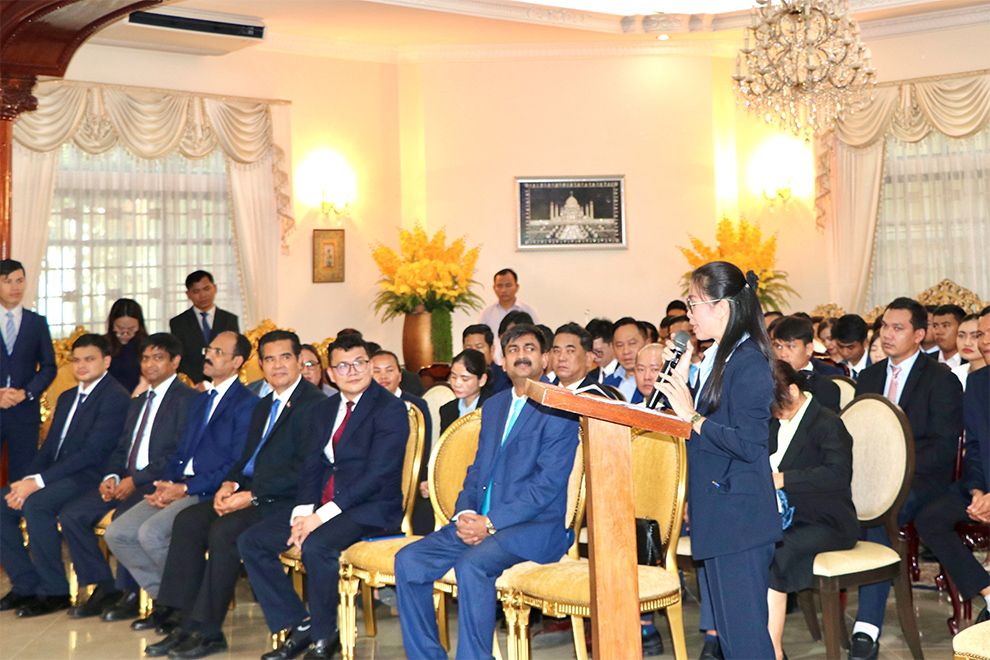
On Wednesday, September 10, a delegation of around 90 participants from the Ministry of Agriculture, Forestry and Fisheries, the EU, UNIDO and local journalists toured the Sunny Fish facility.
Sereyroth explained that, during the current boycott of Thai products by Cambodians, the business has received many orders, particularly from overseas markets such as Canada and the US.
“This should go hand in hand with business expansion. It’s a huge opportunity, not only for us but also for Cambodians in general, such as the fish farmers, suppliers and our almost 40 employees, who now have steady incomes which circulate within our local economy,” she said.
She added that previously, exports were limited to only one or two containers. Now, however, there are orders for up to four containers of dried fish per year. Each container carries 8 tonnes of processed dried fish.
To meet demand, a large amount of fresh fish is required. For instance, one tonne of fresh fish, after cleaning, yields only about 250 kilogrammes of dried fish. The enterprise has also expanded to include frozen fish exports.
She added that thanks to technical support, Sannifès Enterprise is preparing to receive a certification of quality and safety from the EU.
Agriculture ministry undersecretary of state Im Rachna, who led the visit, described Sunny Fish’s exports abroad as “a success for Cambodia”, attributing this to improved product quality, competitiveness and food safety standards in Cambodia.
She stated that the ministry will continue to work with the fishery processing enterprises and handicrafts that have received support from the CAPFISH Capture project, which will be completed by the end of 2025.
Thanks to its reputation and expertise, Sunny Fish has consistently met international demands in terms of volume, safety, and quality, with Australia as a primary destination.
Due to growing demand from markets such as Australia, the US, and potentially France, the business is planning to expand its processing facilities and adopt new equipment.
Their three main fish and fishery products-frozen, smoked, and fermented fish (prahok and mam) are ready to comply with international food safety standards, including HACCP. The enterprise aims to increase its annual sales from 38-40 tonnes, targeting both domestic premium markets and internal exports. With HACCP approval, the owners expect to fetch prices around 10% higher than current market rates.
Under the Investment Support Facility (ISF) of the CAPFISH-Capture project, Sunny Fish received a co-financing package and bank loan that enabled it to upgrade its processing site and equipment in line with HACCP requirements. This has enhanced production capacity, improved packaging and boosted the quality of its products.
The enterprise invested about $185,000 under CAPFISH-Capture, covering 76% of total investment, combining programme support with bank loans and its own capital. This improved infrastructure and new equipment, including cold storage rooms, were vital to comply with HACCP standards and focus on exports.
The CAPFISH-Capture program’s interventions have not only generated income, reduced poverty, and created jobs, but also played a crucial role in addressing food safety, protecting public health and contributing to Cambodia’s domestic value chain.
The study tour was jointly organised by the agriculture ministry, the EU and UNIDO through the Post-Harvest Fisheries Development Project (CAPFISH-Capture). The programme is funded by the EU and implemented by the Fisheries Administration with support from UNIDO.
