



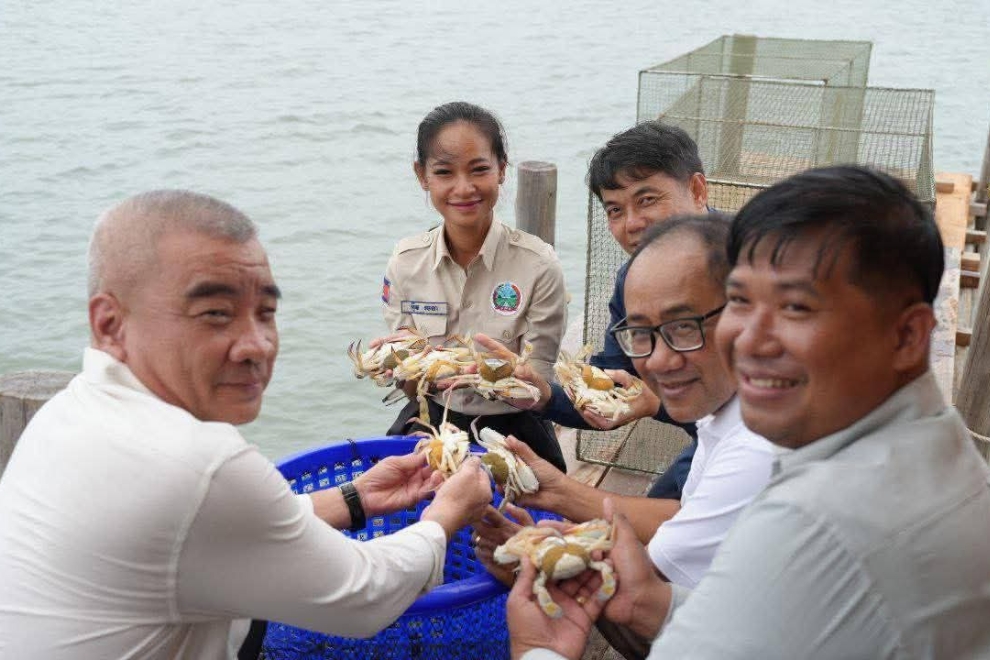
A single gravid (egg-bearing) crab, Kdam Seh, can carry about one million eggs externally during the breeding season. If left alone, up to a thousand baby crabs will make it into the ecosystem. Fisheries officials are urging the public not to catch, consume or trade female crabs with eggs attached under the shell.
Ouk Vibol, director of the Fisheries Conservation Department at the Ministry of Agriculture, Forestry and Fisheries, stated that while one female can carry around a million eggs, around 1,000 mature crabs will return to the ecosystem within 9 to 10 months, based on a survival rate of just 0.1%.
“Releasing one female crab with eggs could eventually yield up to a million crabs. These egg-bearing females are not even tasty — when boiled, people tend to peel off and discard the egg-laden section. That’s very sad,” he said.
He appealed to the members of public to join in conserving the crab population. For fishermen concerned about losing income by releasing such crabs, they suggested temporarily holding the egg-bearing females in cages or pens until the eggs are released, before selling them. This way, conservation and livelihoods can both be maintained.
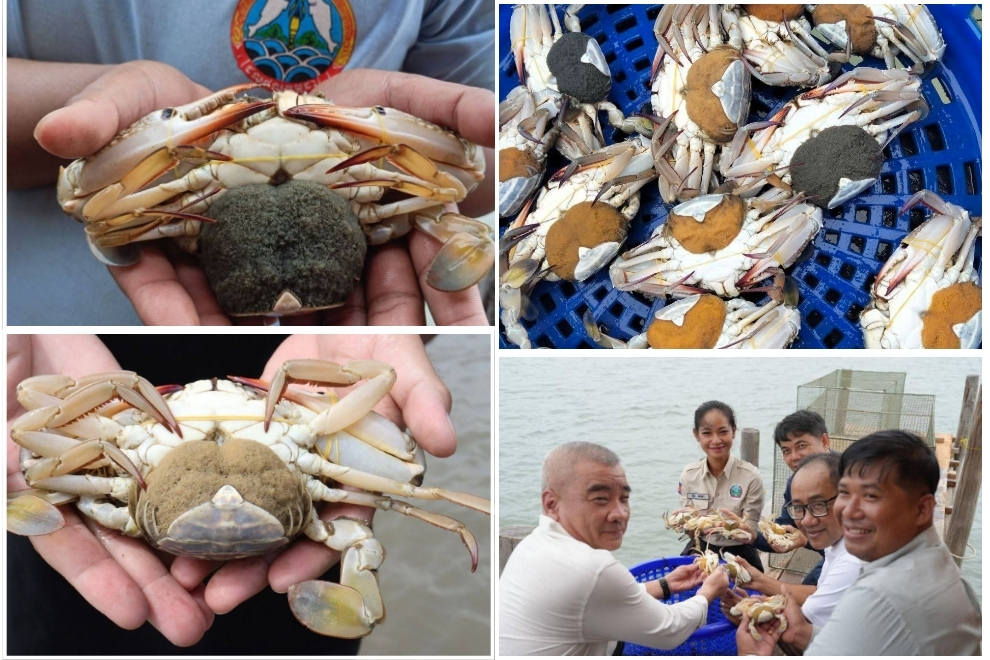
The call to action follows a recent visit to Kampot by Vibol and ministry undersecretary of state Im Rachana. They met with relevant officials and community representatives from Kampot, Kep and Preah Sihanouk provinces to discuss the protection of threatened marine fisheries resources. During their visit, juvenile and egg-bearing female crabs were released back into the sea.
The Kampot Provincial Fisheries Administration also emphasised that naturally egg-bearing crabs do not taste good when consumed, and noted that people often throw away the egg sacs, which is effectively like killing tens of thousands of baby crabs — a loss to this vulnerable species that must be conserved.
It urged the public to follow the “4 Don’ts” for egg-bearing females: Don’t catch, Don’t buy, Don’t sell and Don’t eat. And instead follow the “4 Dos”: Respect the law, Release them, Participate in conservation and Be a role model.
“Let’s join together in conserving and releasing breeding female crabs. Say no to eating egg-bearing crabs. Protect them — for all of us. Releasing just one crab with external eggs equals saving tens of thousands of baby crabs,” it stated.
In the first half of 2025, Kampot province recorded over 10,000 tonnes of fisheries yield — an increase of about 5% compared to the same period in 2024.
According to the Kampot Provincial Information Department, Kampot harvested 10,205 tonnes of fish in the first half of 2025, consisting of 1,946 tonnes from freshwater fisheries and 8,259 tonnes from marine fisheries.
To sustain this growth in the years ahead, provincial authorities, technical experts and partner organizations are working on multiple initiatives to support communities — especially those who earn a living by fishing — through conservation efforts, aquaculture development and job creation.
Marine fishing in Kampot currently involves a total of 1,053 large and small vessels. However, some fishers continue to use illegal fishing equipment. In the first half of this year alone, fisheries officers confiscated and destroyed illegal gear in 20 cases, amounting to 604 items.
