



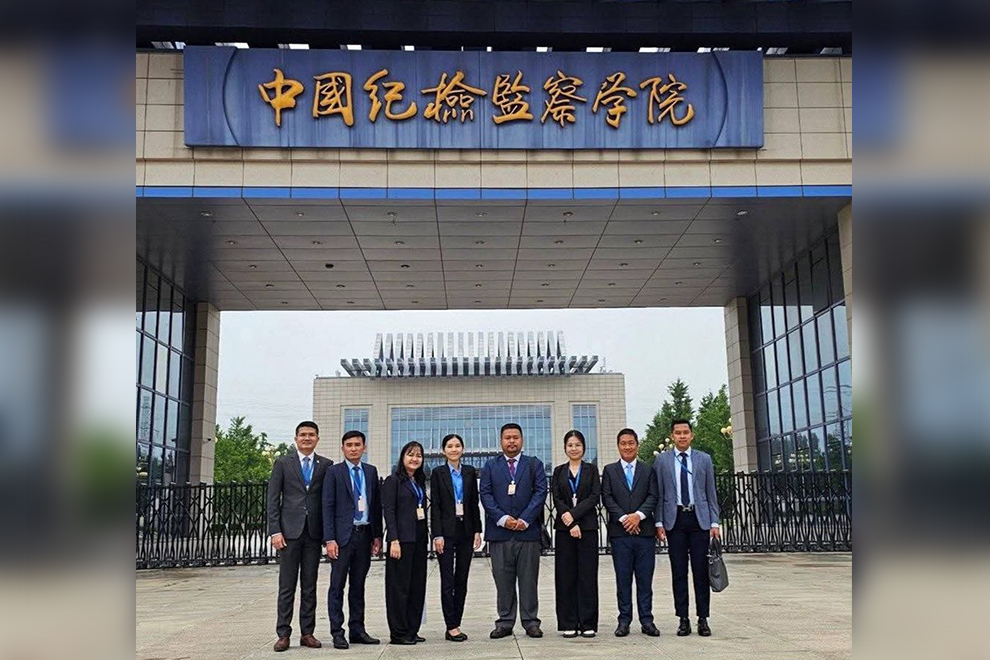
Eight officials from Cambodia’s Anti-Corruption Unit (ACU) have gained insights into China’s anti-corruption measures, namely “Swatting Tigers”, “Slapping Flies” and “Hunting Foxes”.
The knowledge was acquired during as they attended the “Anti-Corruption for Belt and Road Initiative Partners” seminar, held in Beijing, China, from June 26 to July 10, 2025, explained to a July 15 statement from the ACU.
According to the ACU, participants learned about the Chinese Communist Party’s 8-point directive and China’s anti-corruption strategies “Swatting Tigers” – prosecuting high-ranking officials, “Slapping Flies” – disciplining lower-level officials and “Hunting Foxes” – tracking and repatriating fugitives who fled abroad.
“These strategies reflect strict discipline, legal reforms and institutional accountability, which have proven effective in combating corruption,” added the unit.
The delegation joined the seminar alongside 33 participants from seven other nations: Cuba, Gambia, Indonesia, South Africa, Tanzania, Thailand and Nepal.
It aimed to strengthen cooperation and share best practices to promote integrity and clean governance among Belt and Road countries.
Several key topics were covered, including China’s political system, leadership governance concepts, national conditions and achievements in strengthening party discipline, party oversight and supervision structures. The attendees also studied laws and regulations related to anti-corruption efforts, public complaint systems, implementation of the party’s 8-point directive, strengthening codes of conduct and international cooperation in repatriating fugitives and asset recovery.
They also engaged in experience-sharing sessions with counterparts from the other seven countries and took part in several field visits.
In April, a five-member delegation from the Communist Party of China’s disciplinary body and the Yunnan provincial government paid an official visit to the ACU to exchange experiences in anti-corruption mechanisms and human resource development. That delegation was led by Lei Gang, a standing member of the Yunnan CPC’s disciplinary committee and the province’s state supervisory body.
Both sides spoke highly of the cooperation between the institutions and agreed to deepen their collaboration, particularly in expanding mutual understanding and reinforcing their shared rejection of offering a haven to corrupt individuals — aligning with multilateral frameworks such as the UN Convention Against Corruption.
