



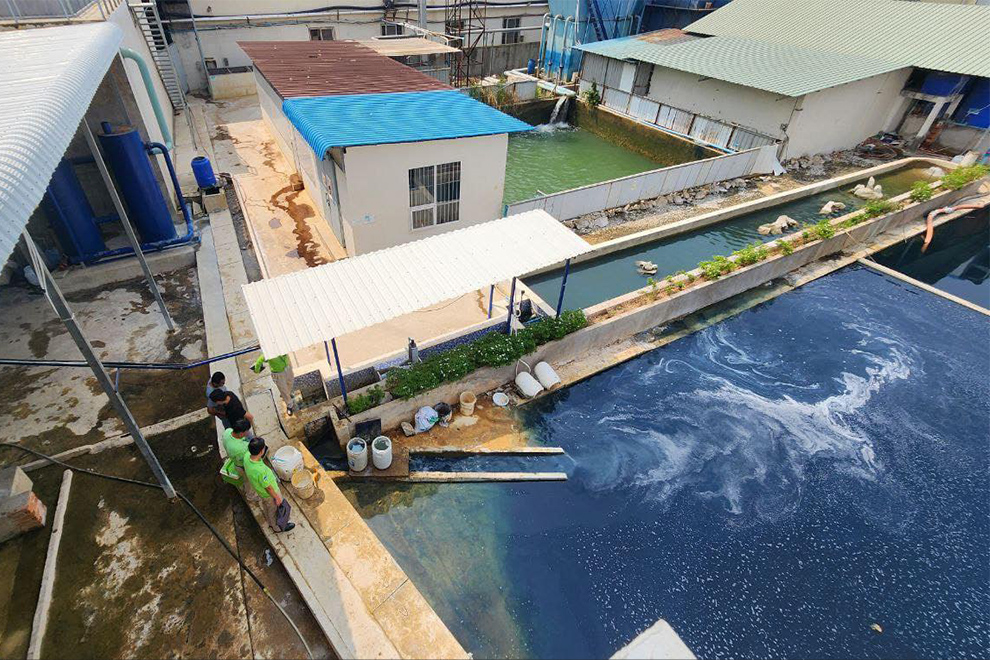
The ministry of Environment has shared that in the first half of the year, it pursued legal action against 30 polluters. In the same period, 50 separate facilities have signed agreements to install automated monitoring systems that will help prevent environmental contamination.
Ministry spokesperson Khvay Atitya said on Thursday, July 10 that specialist teams from the General Department of Environmental Protection, in cooperation with relevant ministries, sub-national authorities and local communities, took action against 26 companies or factories that were polluting public water sources and 4 that were polluting the air.
He explained that this was done in accordance with Cambodia’s Environmental and Natural Resources Code and other existing legal standards, noting that all violators were subject to enforcement, without exception.
The ministry issued 24 warning letters and correction orders, and suspended production of two factories in Preah Sihanoukville’s Prey Nop district: Noble Taste Food Co., Ltd and Kubon (Cambodia) Technology Co., LTD.
Administrative penalties, including fines and correction orders, are currently pending in six other cases.
These measures are part of the ministry’s ongoing efforts to modernise and strengthen pollution monitoring and prevention, particularly targeting high-risk waste discharges that threaten water, land and air quality across Cambodia, said Atitya.
“To enhance the monitoring of high-risk pollutants, 50 companies and factories operating in Cambodia have signed agreements to install automated monitoring equipment to help prevent leaks or illegal discharges of toxic wastewater into public water sources and natural wetlands, in accordance with the Environmental Code and related legal regulations,” he added.
Among these, 35 locations — mostly in Kandal province and Phnom Penh — have already installed such monitoring systems.
Environment minister Eang Sophalleth expressed his appreciation to the companies and factories that cooperated by installing the systems, complying with technical environmental standards, and implementing corrective measures in line with Cambodia’s laws and regulations.
He added that this effort contributes to the government’s “Clean Cambodia” campaign, part of the National Environmental Strategy and Action Plan, led by Prime Minister Hun Manet. The goal is to improve daily living conditions by ensuring environmental cleanliness and safeguarding the health of workers, employees and communities.
The strategy also supports Cambodia’s role in preserving environmental and social health, both locally and on the international stage.
In related developments, on Wednesday, July 9, permanent secretary of state for the ministry San Vanty chaired a meeting to review a draft sub-decree on hazardous waste management.
The draft sub-decree contains 12 chapters and 56 articles, with the primary aim of establishing clear procedures for managing and monitoring hazardous waste — from its generation to its final disposal. The sub-decree is intended to prevent and reduce the spread of hazardous substances into the environment and to protect public health.
Relevant senior officials and technical staff participated to provide input and ensure the draft’s effectiveness.
