



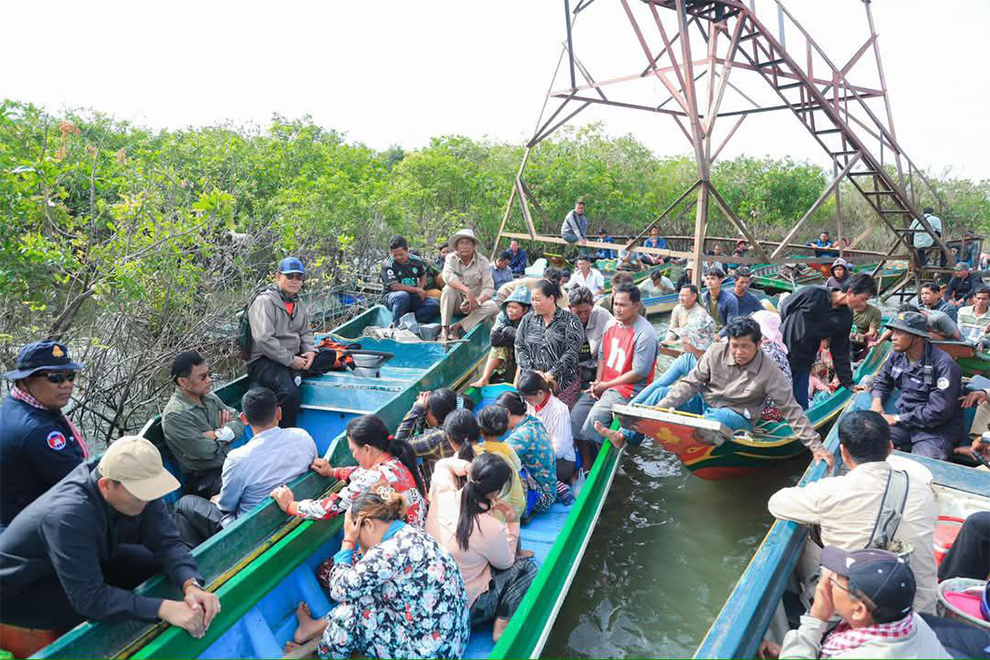
Fish yields in Pursat province have increased by approximately 26 per cent over the past five years, thanks to collaborative efforts among local and national authorities, communities, and numerous partner organisations.
Deputy provincial governor Lim Soktou shared the positive results with representatives of the EU and UN Food and Agriculture Organization, as they accompanied a media inspection tour of the implementation of the EU-funded CAPFISH-Capture programme.
The delegation visited the Srey Chek fishing community in Kandieng district and the Kampong Prak community in Krakor district last week, as part of a three-day Earth Day celebration led by the Ministry of Agriculture, Forestry and Fisheries.
“In 2020, our fish production was only 330,000 tonnes. By 2024, after collaborative participation from all national-level partners, communities and organisations, the yield had increased to 420,000 tonnes. That’s a 26 per cent increase,” he said.
The deputy governor described this increase as a “major victory” that resulted from joint cooperation among all parties — a collaboration deemed essential to sustainably protect and develop fisheries resources.
He stressed that cracking down on illegal fishing is critical to ensuring the sustainability of fish stocks. As such, Pursat provincial governor Khoy Rida has taken a direct interest and personally led enforcement operations on the Tonle Sap Lake.
Rida noted that combating fisheries crimes is a shared responsibility, requiring the combined use of manpower and resources. He noted that no single entity — whether the agriculture ministry, the Ministry of Environment, other authorities or communities — could succeed in enforcement alone, regardless of their willingness.
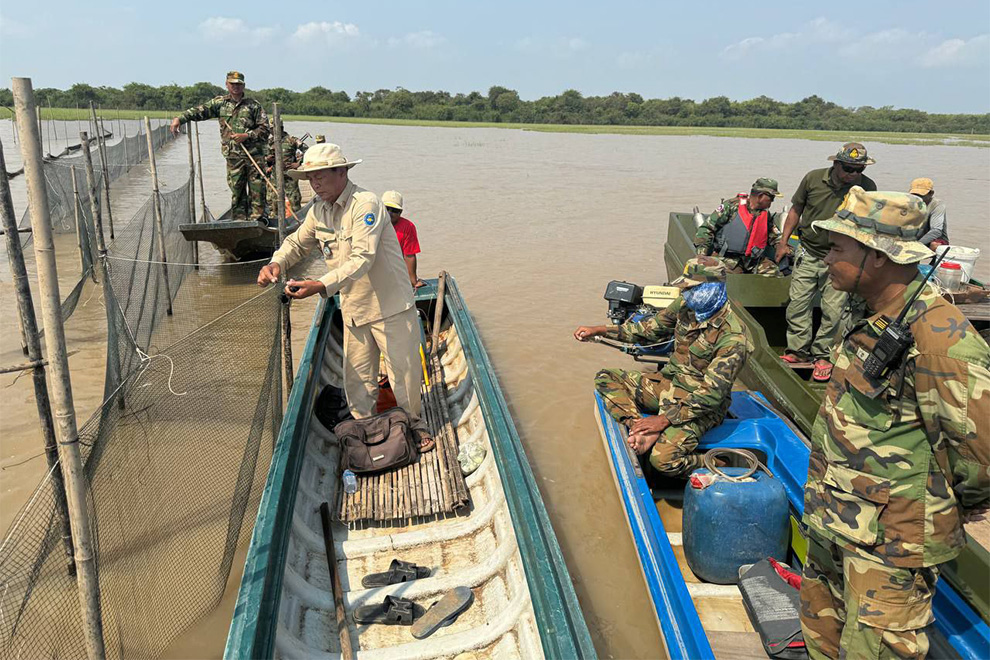
He added that earlier this year, Prime Minister Hun Manet authorised the deployment of around 1,000 Royal Cambodian Armed Forces (RCAF) personnel to provide operational support for efforts to suppress illegal fishing activities on the Tonle Sap. Combined with community enforcement, this has significantly reduced criminal activity and greatly boosted fish yields.
“This year, our catch increased by more than 10,000 tonnes compared to previous years. Even just a few months of effective enforcement has caused a notable surge in fish populations. We’ve committed to action before, but we never achieved the success we’re seeing now with full cooperation. Encouraging people to voluntarily follow fisheries laws and regulations will help boost fish populations even further in the future,” he continued.
He emphasised that the main goal of enforcement is to ensure that the Cambodian people continue to have fish resources, especially as the population grows. Natural resource management must be transparent and safe, he added.
“As long as we respect the law, we will not lack fish. If we use legal fishing nets responsibly and within the limits set by the agriculture ministry, we will preserve species for future generations,” he added.
A fisherman from the Srey Chek fishing community, 33-year-old Mam Rorsa, said the biggest obstacle to fisheries conservation is large-scale illegal fishing, often carried out by outsiders. However, he noted that recently his yields have increased, partly due to the shutdown of illegal large-scale operations.
He reported earning between 30,000 and 40,000 riel per day from fishing during the dry season this year. In contrast, the previous dry season saw him make just 10,000 to 20,000 riel per day. In the rainy season, he earns 100,000 to 200,000 riel per day.
“I’ve caught more fish than in previous years because they cracked down on many large-scale illegal operations, like big trawlers. They come from outside — they’re not local people,” he said.
In the first quarter of 2025, 478 suspects were arrested for illegal fishing on the Tonle Sap Lake, including 47 Vietnamese nationals, according to the RCAF’s National Task Force for Illegal Fishing Suppression.
During the same period, the task force destroyed 7,225 fish traps, over 2 million metres of monofilament nets, 1,194 items of illegal gear (nets, engines, raft systems) and over half a million illegal poles and stakes.
A total of 1,187 people were reprimanded, while 441 fishermen from 98 vessels signed written agreements pledging to comply with the law.
Some fishermen have been granted temporary permission to use limited types of fishing equipment. These include 250-metre fence nets with 0.03-metre mesh, paddle or motorised (18HP or less) canoes with a 0.03 metre mesh net, 6 HP motorised rafts, and hand dragged nets with 0.015-metre mesh up to 100 meters long.
This provisional permission applies during the current interim period, as the new Fisheries Law is enacted. It is expected to be implemented in the near future.
