



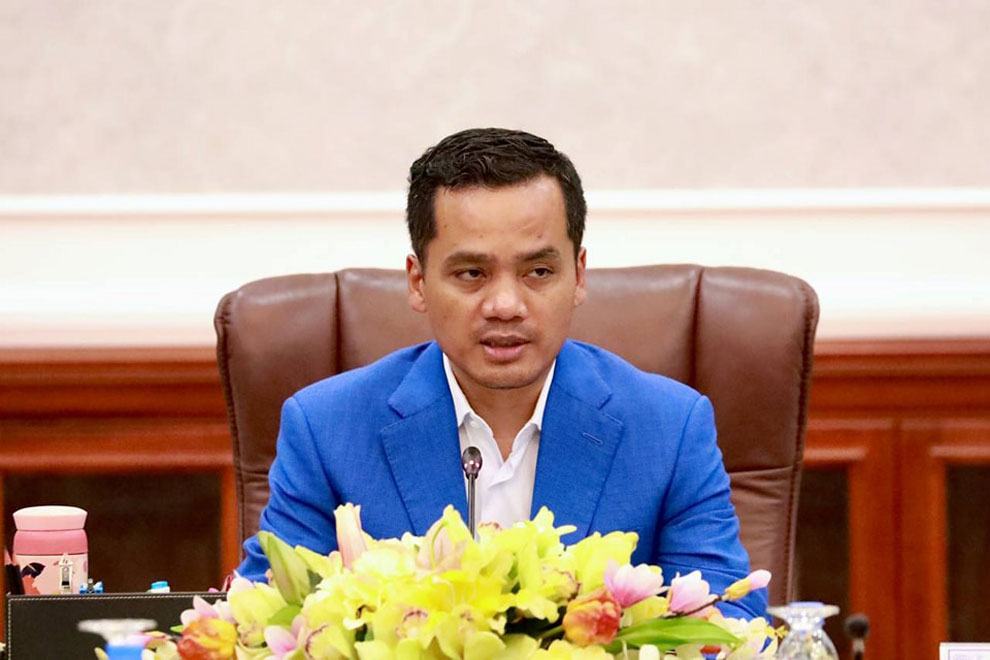
The Ministry of Interior has issued guidelines for inspections and investigations aimed at resolving complaints within the jurisdiction of its General Secretariat, intended to expedite problem resolution and enhance public confidence in the government.
According to the ministry’s instructions, signed by interior minister Sar Sokha on March 1, the process entails summoning parties within the scope of the audit’s focus.
Those falling under the General Secretariat include citizens, NGOs, members and chiefs of the capital-provincial-district-town councils, as well as all civil servants at the national and sub-national levels within the interior ministry’s jurisdiction.
Sokha said the ministry will call all senior officials, from the level of undersecretary of state or equivalent, to report to the ministry for inquires.
“The summmons of relevant parties is aimed at enhancing the efficiency of the inspection or investigation, resolving complaints quickly and boosting public trust,” he said.
The minister added that upon receiving a notice to appear, the concerned individual must personally attend at the appointed time and, in case of inability to attend, must notify the ministry’s secretariat in writing or contact them in advance, providing the reason and relevant documentation.
In cases where civil servants fail to respond to a summons without a valid reason, the secretariat will seek approval from the ministry to impose disciplinary sanctions in accordance with the law.
He also noted that following an inspection, the ministry will authorise the secretariat to communicate the outcomes to the relevant association or NGO that initiate the complaint.
Am Sam Ath, operations director at rights group LICADHO, commented that all complaints made by the public to any state institution should be addressed and resolved in accordance with Article 35 of the Constitution.
He regarded the ministry’s actions as beneficial, urging all relevant authorities to engage actively in resolving complaints involving the public.
“These points are positive, as they encourage all relevant authorities to engage in addressing the public’s complaints. However, it’s important to appropriately delineate the division of authority to avoid blame-shifting, which can cause delays and adversely affect the public,” he said.
