The Extraordinary Chambers in the Courts of Cambodia (ECCC) are hosting a photography exhibition which honours the perseverance and courageous spirit of journalists during the painful period of Cambodia’s wars of the 1960s and 70s.
“Requiem: Honouring the Journalists Who Lost Their Lives During the War in Cambodia”, organised by the ECCC in collaboration with Meta House Phnom Penh, commemorates the Cambodian photographers who lost their lives while reporting on their own nation, explained a joint press release.
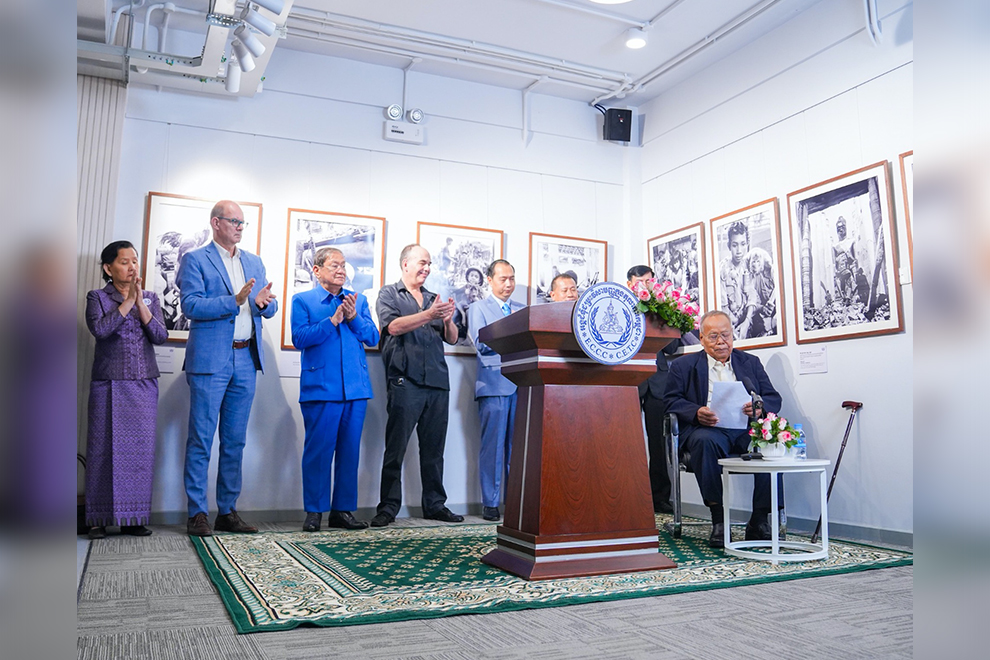
The exhibition was attended by Khieu Kanharith, former Minister of Information and currently a Senior Advisor to His Majesty the King; current information minister Neth Pheaktra, representatives from the Japanese and German embassies, and over 100 local and international guests.
“The 25 photographs in this exhibition were chosen from the book Bangsokol – Requiem to honour the memory and legacy of photojournalists who lost their lives during the war. Our goal is to educate the public, especially Cambodian youth, about this historical context, encourage reflection on the role of journalism during conflict and the justice process, and support the ECCC’s mission by showcasing historical events that occurred during the Khmer Rouge era,” explained Kranh Tony, acting director of administration for the ECCC.
Kanharith said the photographs demonstrate the heroism of journalists from all sectors who strived to show the world the true situation that occurred in Cambodia during the war.
“Photographs are crucial documents and play a vital role in inspiring future generations of Cambodians to understand the suffering and hardship our people endured,” he added.
“During and after the war, journalists became a critical foundation for collecting documents, questioning, and revealing hidden truths. They also hold the right to help create and complete historical and legal documents, which have played a crucial part in remembering and seeking justice,” he noted.
Pheaktra also shared his views on the value of the photographs which convey deep emotions and depict the past stories and suffering of citizens during the war.
“These photographs deliver a message to the younger generation so they clearly understand the value of peace for which the Cambodia leadership struggled and sacrificed everything, even their lives to bring peace and national development. Therefore, we all have a role to preserving this hard-won peace; otherwise, we will face stories like those we see in these photographs now,” he said.
Kong Vorn is a veteran journalist and former correspondent for a Japanese agency during the Lon Nol era of the 1970s. He shared several stories about what journalists experienced during the war and expressed his personal feelings about the exhibition.
“When I see these photographs, I feel both moved by the preservation and appreciation for the previous generation of journalists, and also profoundly horrified, because the images of brutal killings under jungle law have returned once again.
“Among these journalists are Cambodian and foreign photographers who I knew and who were brutally killed by the Khmer Rouge,” Vorn said.
The press release said the photo exhibition was extracted from the book “REQUIEM”, which commemorates photographers who lost their lives while covering the Vietnam War and the Indochina War, including many who worked in Cambodia.
The book was compiled by Horst Faas (1933–2012) and Tim Page (1944–2022), both of whom were also war journalists. The images on displayed were provided by Australian journalist Marianne Harris, the wife of Tim Page.