



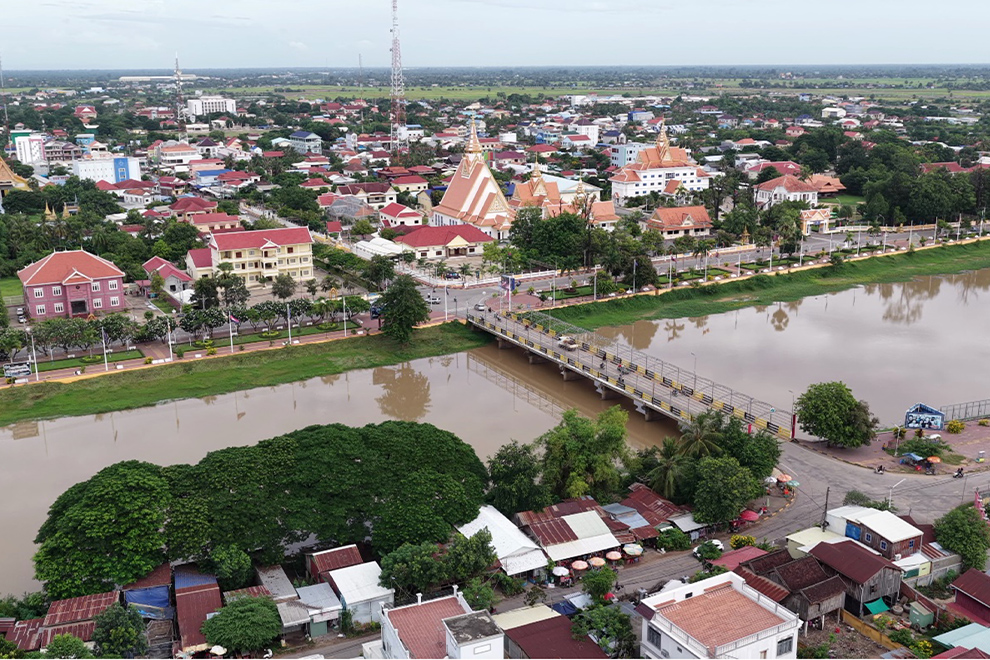
The Asian Development Bank (ADB) has approved a $763 million investment programme to help Cambodia expand access to safe water supply and sanitation, strengthen water security and enhance the resilience and livability of its cities.
The total amount includes a $20 million grant from the Asian Development Fund (ADF).
The investment, labelled as “The Livable, Resilient, and Water-Secure Cities Investment Programme” will utilise a multitranche financing facility to improve basic urban services in 14 cities and 12 districts across the Mekong, Tonle Sap and coastal regions, according to a December 1 press release.
It will boost inclusive coverage of basic urban services, with approximately 15 per cent of the direct beneficiaries from poor households.
“This investment programme will help Cambodia build inclusive, climate-resilient urban services that support not only liveability but also productivity and competitiveness,” explained newly-appointed ADB country director for Cambodia Yasmin Siddiqi.
“By improving water supply, sanitation and other urban services, we aim to directly benefit more than two million people and ensure that even the most vulnerable communities are not left behind,” she added.
Cambodia’s access to basic water and sanitation rose to nearly 83 per cent in 2024, from 73 per cent and 54 per cent, respectively, in 2015.
However, critical gaps remain, with services such as sewerage, drainage and solid waste management needing significant upgrades to meet growing demand and address challenges from extreme weather events, according to the release.
The investment programme is in line with the government’s goals for urban resilience, poverty reduction and achievement of the UN Sustainable Development Goals. It will support priority short- and long-term investments to expand and sustain resilient urban infrastructure and services, promote water security, and strengthen institutional capacity and service delivery, it added.
The ADF provides grants to the poorest and most vulnerable countries in Asia and the Pacific. The fund helped 384,000 people emerge from poverty and generated around 500,000 jobs in period from 2021–2024, said ADB.
According to ADB, more than half of Cambodia’s population is exposed to climate-related risks. Annual climate-related losses could reach $10.6 billion by 2050, if there is no effective adaptation — including improved drainage systems. This potentially reduce gross domestic product by up to 10 per cent.
“Urban areas are particularly vulnerable, with the urban population projected to grow by 47.8 per cent, from 4.6 million in 2024 to 6.8 million (35 per cent of the national population) by 2040,” said the ADB.
