Economists believe that the Cambodian government’s decision to exempt US agricultural and industrial goods from import taxes on will not cause the Kingdom any loss when compared to the benefits it will gain from the US government’s reduction of reciprocal tariff rates on Cambodian goods from 49% to 19%.
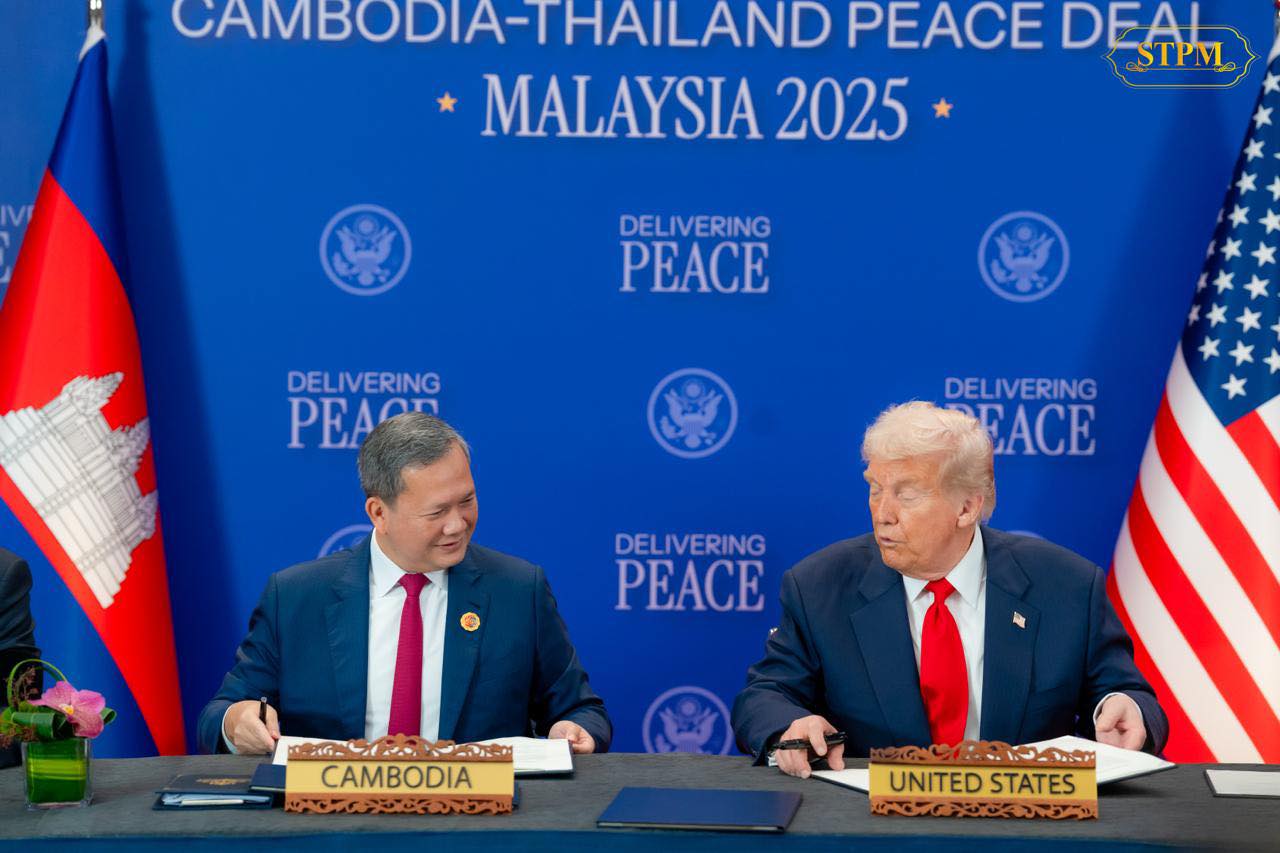
According to an October 26 White House press release, the US and Cambodia agreed to a trade deal that will provide US exporters with unprecedented access to Cambodia’s market.
“Cambodia has agreed to eliminate all tariffs on US goods, including food and agricultural products and industrial goods, meaning that US exports to Cambodia will not face a duty,” said the White House.
Cambodia has committed to treating US exports “fairly”, including recognising US regulatory oversight to ensure that goods do not need to undergo burdensome additional testing requirements.
US imports will no longer face “competitive disadvantages vis-à-vis other trading partners”, it added.
According to the General Department of Customs and Excise (GDCE), the US is Cambodia’s second-largest trading partner after China. In the first nine months of 2025, trade between Cambodia and the US totalled $9.57 billion, an increase of 22.6% over the same period in 2024.
Exports to the US reached $9 billion, up 22%, while imports were $283.63 million, up 46.9%.
Economist Lor Vichet told The Post on October 27 that the government’s decision to lift import duties aims to strengthen bilateral cooperation and increase the flow of American goods into Cambodia. He added that the policy would have only a minimal impact on national revenue.
“The tax exemption for US goods will have very little impact because the volume of imports remains small compared to the large amount of exports to the US,” he said.
He noted that, thanks to the reduction of US reciprocal tariffs to 19%, Cambodia will still enjoy a positive outcome. The exemption will also encourage greater consumption of American products within Cambodia.
In April 2025, in what he described as an effort to reduce trade deficits and promote domestic production, the administration of US President Donald Trump announced reciprocal tariff policies on all imports. At the time, Cambodia was slapped with a potentially crippling 49% rate.
After continuous negotiations, the rate was lowered to 36%, and finally, before taking effect in early August, it was reduced again to 19% — a moderate figure which will allow Cambodian products to remain competitive in US markets.