



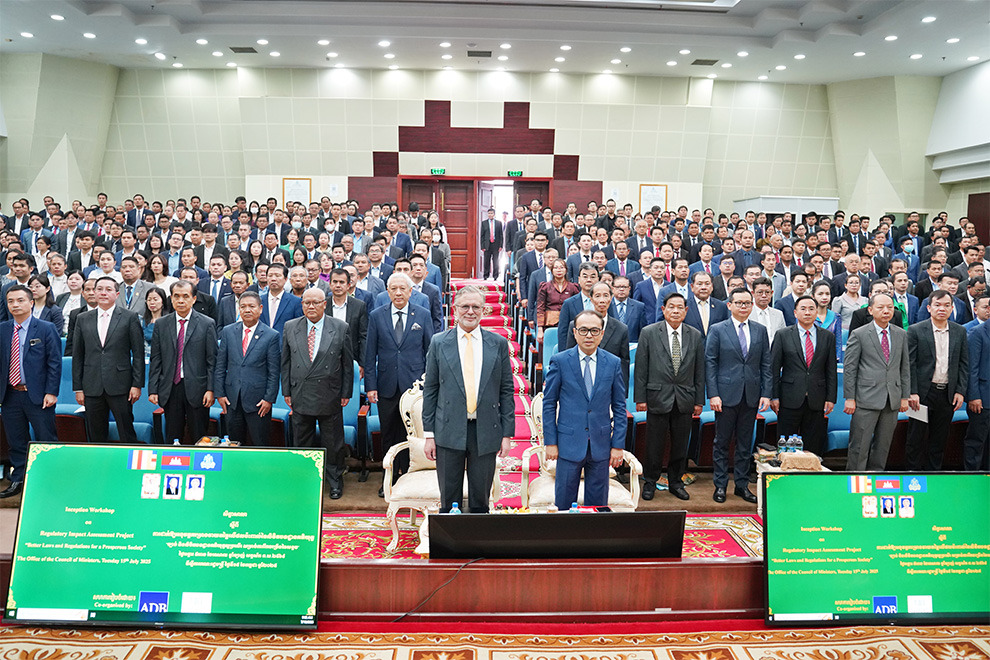
Cambodia’s ongoing efforts to improving regulatory frameworks and creating a more transparent, efficient government took a significant step forward with the launch of a new phase in the implementation of Regulatory Impact Assessments (RIA).
At the July 15 inception workshop, attended by key stakeholders, the Asian Development Bank (ADB) and the Cambodian government outlined their renewed focus on improving lawmaking processes to drive economic growth, enhance governance and reduce bureaucratic inefficiencies.
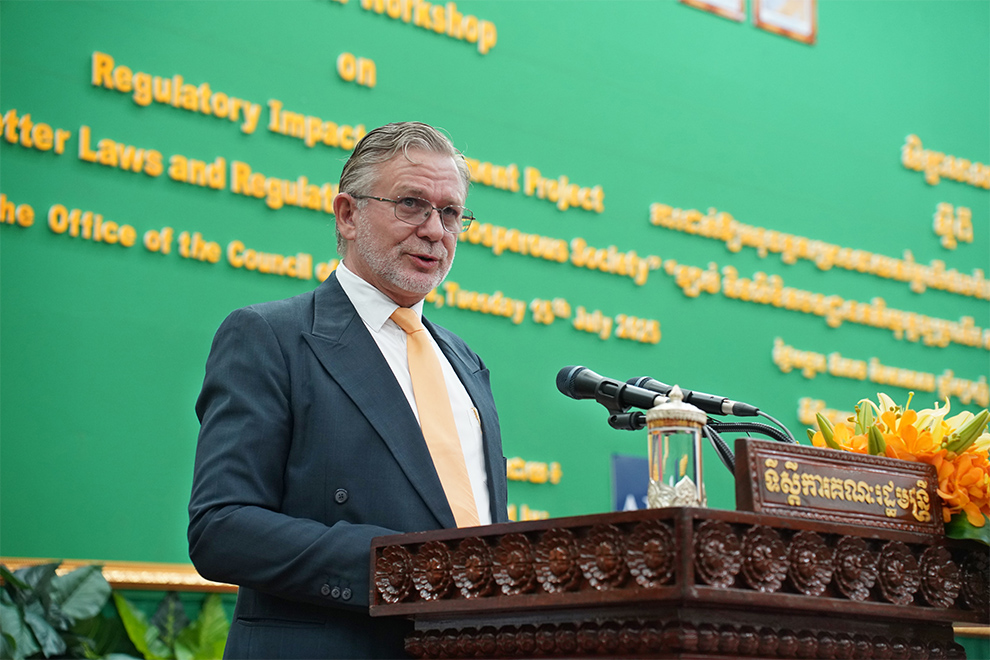
The event, held at the Council of Ministers, was opened by Anthony Robert Gill, country operations head at ADB’s Cambodia Resident Mission.
Gill commended the government’s efforts to institutionalise the Regulatory Impact Assessment process over the past decade.
He noted that, although progress has been made since the introduction of RIA in Cambodia, the momentum slowed down after 2019, largely due to the Covid-19 pandemic and the cessation of ADB funding.
The RIA initiative is now set for a revitalisation, with renewed government leadership and a focus on sustainable reform.
“Today, as Cambodia faces global economic uncertainty, climate change and rising expectations from citizens and investors alike, the RIA is more relevant than ever,” said Gill.
“The goal is to transform regulatory practices, ensuring that regulation is rational, not reactive, and that it empowers businesses rather than burdens them,” he added.
Gill noted that the ADB is proud to support Cambodia’s development by helping institutionalise RIA within legal frameworks, ensuring compliance across ministries.
The organisation is assisting the Council of Ministers in defining roles, establishing oversight functions and setting up a dedicated RIA unit.
He explained that the ADB is also guiding the creation of costed RIA action plans, advocating for national budget allocations and aligning RIA with digital governance through a centralised database.
Additionally, he said, it is supporting ministry-level RIA champions and partnering on pilot reforms, such as red tape reduction and SME support, to ensure long-term sustainability and success.
“Our vision is not just to improve regulation, but to improve outcomes. And to do so in a way that is sustainable, inclusive and Cambodian-led,” he noted.
A path to better governance
The RIA process, introduced in 2011, is designed to help the Cambodian government assess the potential costs and benefits of proposed regulations before they are enacted.
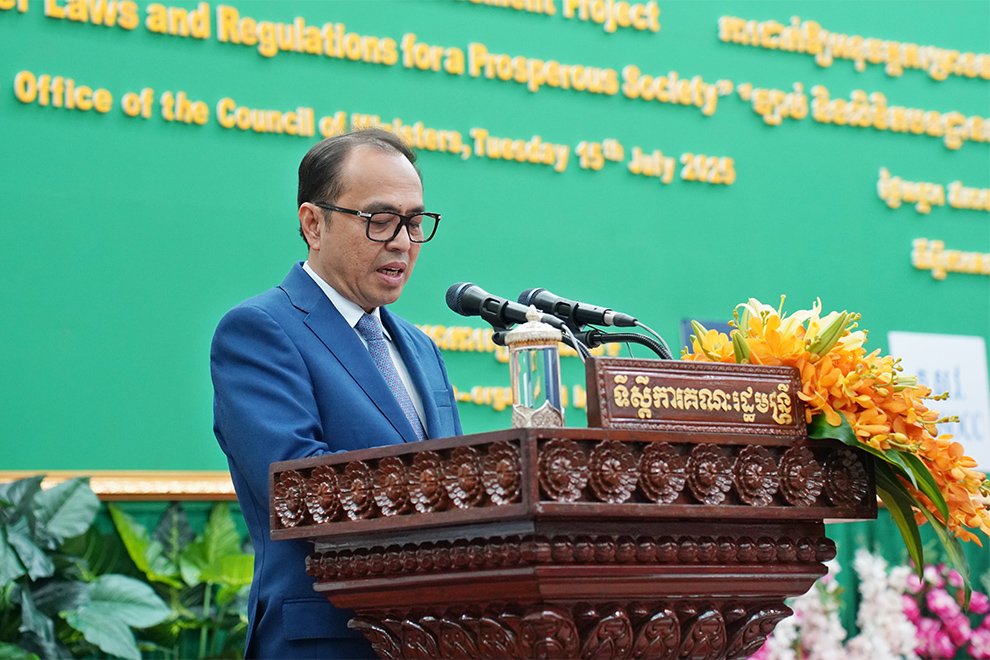
“Following the issuance of Decision No. 132 in 2016, which established RIA working groups in ministries and institutions, the Council of Ministers coordinated the implementation of RIA across 18 ministries and institutions,” explained Vongsey Vissoth, minister in charge of the Council of Ministers, as he delivered a keynote address to the workshop.
He said these efforts led to the preparation of 65 RIA reports and the training of over 1,300 officials. These results were testament to initial efforts, which laid a crucial foundation.
He acknowledged that the momentum of RIA implementation has slowed due to the impact of the Covid-19 pandemic and other challenges.
Gill gave three key takeaways at the closing remark. First, momentum is back. Cambodia is reigniting its RIA agenda with stronger leadership and clearer plans.
Second, he said, the RIA must be embedded as a practice, not just a project, requiring legal frameworks, digital platforms and long-term capacity.
“Lastly, it must serve the people, as smarter regulation leads to better services, business growth and increased trust in institutions — this is the true promise of the RIA,” he added.
It aims to make regulations more transparent, evidence-based and in alignment with national development goals. At the heart of the process is the careful consideration of multiple policy options, consultation with stakeholders and the application of cost-benefit analyses.
This approach ensures that regulations serve the public interest, drive growth and avoid unnecessary compliance costs that could deter investment.
“We want regulation that is transparent, efficient and inclusive,” said Vissoth.
“The laws we create must be clear, predictable and support economic development. This is not just about creating new regulations; it’s about making sure existing laws are effective and equitable,” he added.
Vissoth emphasised that the success of the RIA framework would hinge on commitment from all government ministries and agencies.
While the initiative had faced challenges in the past, including a lack of legal mandates and insufficient technical capacity, he stressed that the RIA process was not just a technical project but a national strategy for fostering better governance and attracting investment.
“Today, investors evaluate not just tax incentives or labour costs, but also whether regulations are clear and reliable. Poorly designed regulations increase business costs and discourage innovation,” he added.
In this context, he continued, reforming laws and legal instruments is not a secondary task; rather, it is considered a core responsibility and a strategy for national development.
“Modern laws and legal instruments guide Cambodia towards being diverse, independent and inclusive. The RIA process is essential to ensure that laws are created with the public’s interests and national priorities in mind,” he stated.
He also acknowledged that the Office of the Council of Ministers needs to strengthen its capacity as a coordinating, monitoring, evaluating, drafting, and reviewing institution.
The council’s Economic, Social and Cultural Council (ECOSOCC) will serve as the focal point for RIA implementation, and is responsible for establishing operational systems, such as an effective monitoring and control system. The digitalisation of the RIA process includes the introduction of a central database.
The Role of RIA in boosting investment and competitiveness
The renewed push for RIA comes at a critical time for Cambodia, as the Kingdom faces both internal and external challenges.
Among these challenges are a global economic slowdown, increased competition for foreign direct investment (FDI) and the pressing need for sustainable development in the face of climate change.
Milan Thomas, ADB country economist for Cambodia, noted that the RIA process can play a vital role in boosting investment by ensuring that regulations are carefully designed and their impacts thoroughly assessed.
“For Cambodia, RIA is about boosting investor confidence. When regulations are introduced thoughtfully, with a clear understanding of their impact, investors can have greater certainty that their investments will be protected,” said Thomas.
He highlighted how the garment industry, a key sector in Cambodia’s economy, could benefit from better-regulated environments that lower compliance costs, which are one of the most significant financial burdens on businesses in Cambodia.
Thomas pointed to RIA’s potential to enhance Cambodia’s competitiveness by reducing unnecessary regulatory burdens, suggesting that the transparency built into the RIA process helps foster a more predictable and stable business environment, making it easier for both domestic and international businesses to operate in Cambodia.

Institutionalising the RIA for long-term success
As part of the renewed RIA framework, Cambodia is focusing on several key initiatives to ensure that the process is embedded in the country’s legal and administrative systems.
One of the main components of this effort is the creation of a central RIA database that will track and monitor all regulations subject to the impact assessment process.
Eleanor Mak, an international expert on RIA with the ADB, explained that the next steps for Cambodia’s RIA programme involve updating existing RIA guidelines, simplifying the process for early-stage regulatory screening, and ensuring that RIA becomes an integral part of the policy-making routine in all ministries.
This will involve introducing a straightforward screening tool to assess the potential impacts of new policies early in the process, ensuring that the RIA becomes a habit rather than an additional burden.
“Incorporating early-stage screenings into every ministry’s workflow will make RIA a natural part of government decision-making,” said Mak.
“This change in mindset is essential for ensuring that RIA is institutionalized effectively and sustainably,” she added.
Additionally, Cambodia is focusing on building technical capacity within ministries to ensure that the RIA process is understood and properly implemented.
Pech Sokha, ECOSOCC secretary-general and project director of the RIA initiative, warned that technical training and ongoing support will be critical to the success of the program.
“To achieve this task, we’re asking ADB to mobilise funds for full implementation, because this isn’t a pilot project,” he said.
“If the money is only for five ministries and we want all ministries to know, how can others participate? We need to learn together,” he added.
Inclusive growth and gender considerations
The RIA framework also includes specific provisions for promoting inclusive growth and gender equality.
You Bory, vice-president of the Cambodia Women Entrepreneurs Association, explained that clear and fair laws are crucial for empowering women entrepreneurs and ensuring that they can thrive in a competitive business environment.
“Laws should encourage women business leaders to step forward, be bold and pursue their ambitions,” she said.
“When laws are well-structured and equitable, they create opportunities for all,” she added.
Gill stated that it would support the government in establishing and integrating consultation frameworks to ensure inclusive inputs from SMEs, women and academia, thereby building systemic trust.
