



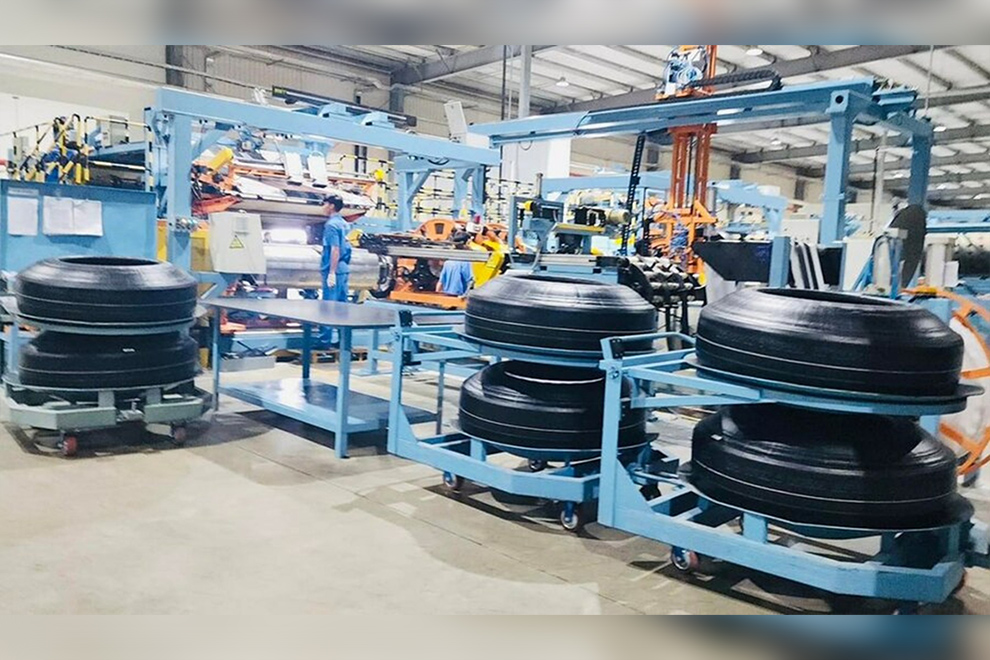
Cambodia’s automotive tyre manufacturing and export sector continued to show strong momentum in 2025, with four related projects approved by the Council for the Development of Cambodia (CDC), representing a total capital investment of nearly $780 million.
According to a CDC press release issued on January 5, the Cambodian Investment Board (CIB) registered 630 projects in 2025, with a combined capital of approximately $10 billion and the potential to create roughly 438,000 jobs. Of these, 387 projects are located outside Special Economic Zones (SEZs), while 243 are situated within SEZs.
The CDC stated, “Notably, the number of registered investment projects increased by 216 projects, or about 52 per cent, while total investment capital rose by approximately $3 billion, or about 45 per cent, compared to 2024 when the CDC registered 414 projects with a total investment of around $6.9 billion. This achievement sets another new record, following a record already set by the CDC in 2024.”
Key areas in 2025 include agricultural plantation expansions, fruit processing facilities, cattle farms, food production, cement manufacturing, iron ore operations, textile and yarn factories, automobile assembly plants, hotel construction, power generation plants and, notably, automobile tyre manufacturing.
In the tyre sector, the CDC approved four projects: one located in the ISI SEZ in Preah Sihanouk province, and three others in SEZs within Svay Rieng province. Combined, these projects account for approximately $774 million in investment capital.
Economist Hong Vanak of the Royal Academy of Cambodia told The Post on January 6 that automobile tyres represent a growing global market, as vehicle use continues to increase across countries. He added that rising investor interest in the country’s tyre manufacturing sector reflects a number of favourable conditions, including investment-friendly legislation, efficient transport infrastructure, access to quality raw materials such as local natural rubber, a sizeable and cost-effective labour force, and broad access to export markets.
“With Cambodia’s current advantages, there is a clear opportunity for investors to open tyre manufacturing plants in the country,” he said. “Tyre manufacturing is a business with strong profit potential and long-term prospects, because regardless of circumstances, demand for tyres remains consistently high.”
Data from the Ministry of Commerce shows that during the first 11 months of 2025, the Kingdom exported tyres worth more than $1.2 billion to international markets – an increase of nearly 60 per cent compared to the same period in 2024.
Ken Oudomonysinat, CEO of Sailun Tire Cambodia, told The Post recently that the quality of tyres produced in the country has gained strong support both domestically and internationally, and is becoming a highly promising export product for global markets. He noted that more major international investors are now showing interest in establishing tyre manufacturing plants.
He explained that factors attracting international manufacturers include the country’s favourable investment laws, the high quality of Cambodian natural rubber, an abundant and cost-effective labour force, and, most importantly, strong global demand for Cambodian-made products.
“In 2024, my company produced and sold more than 60,000 tyres in the domestic market and for export. But in 2025, in just the first eight months of the year, the company had already sold around 100,000 tyres,” he said.
“Within ASEAN, Cambodian natural rubber is considered among the best in quality. In fact, Sailun tyres produced in Cambodia using Cambodian rubber are regarded as some of the highest-quality products,” he added.
According to the commerce ministry, the country earned more than $874 million from automobile tyre exports in 2024 – an increase of over 490 per cent compared to 2023.
