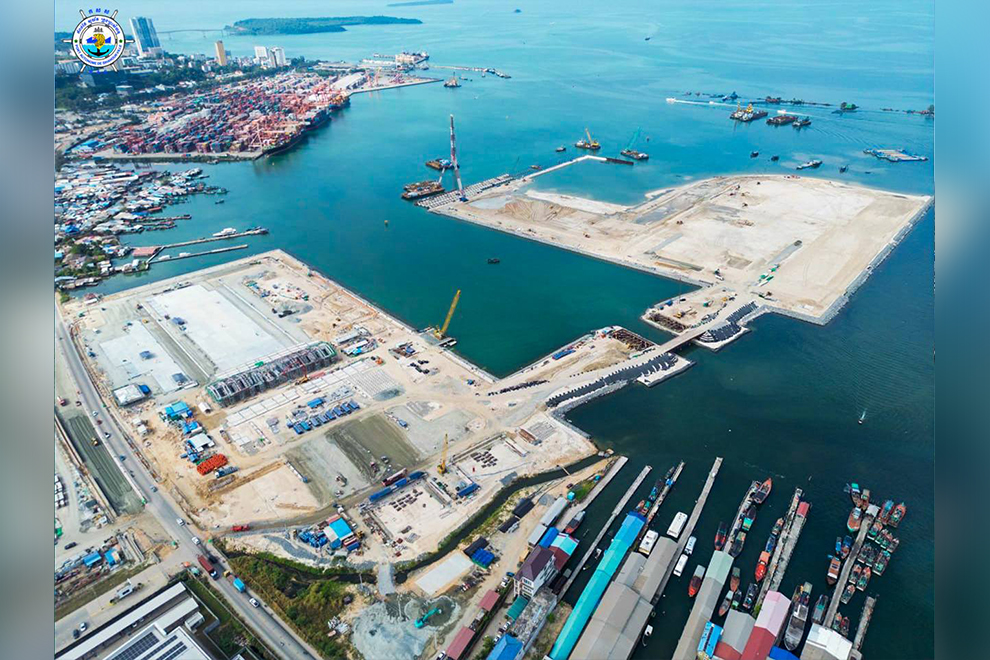
Cambodia’s only deep-sea port is entering a critical test phase as surging export volumes strain existing capacity, prompting the government and European business leaders to press for immediate operational reforms ahead of a major expansion scheduled for 2027.
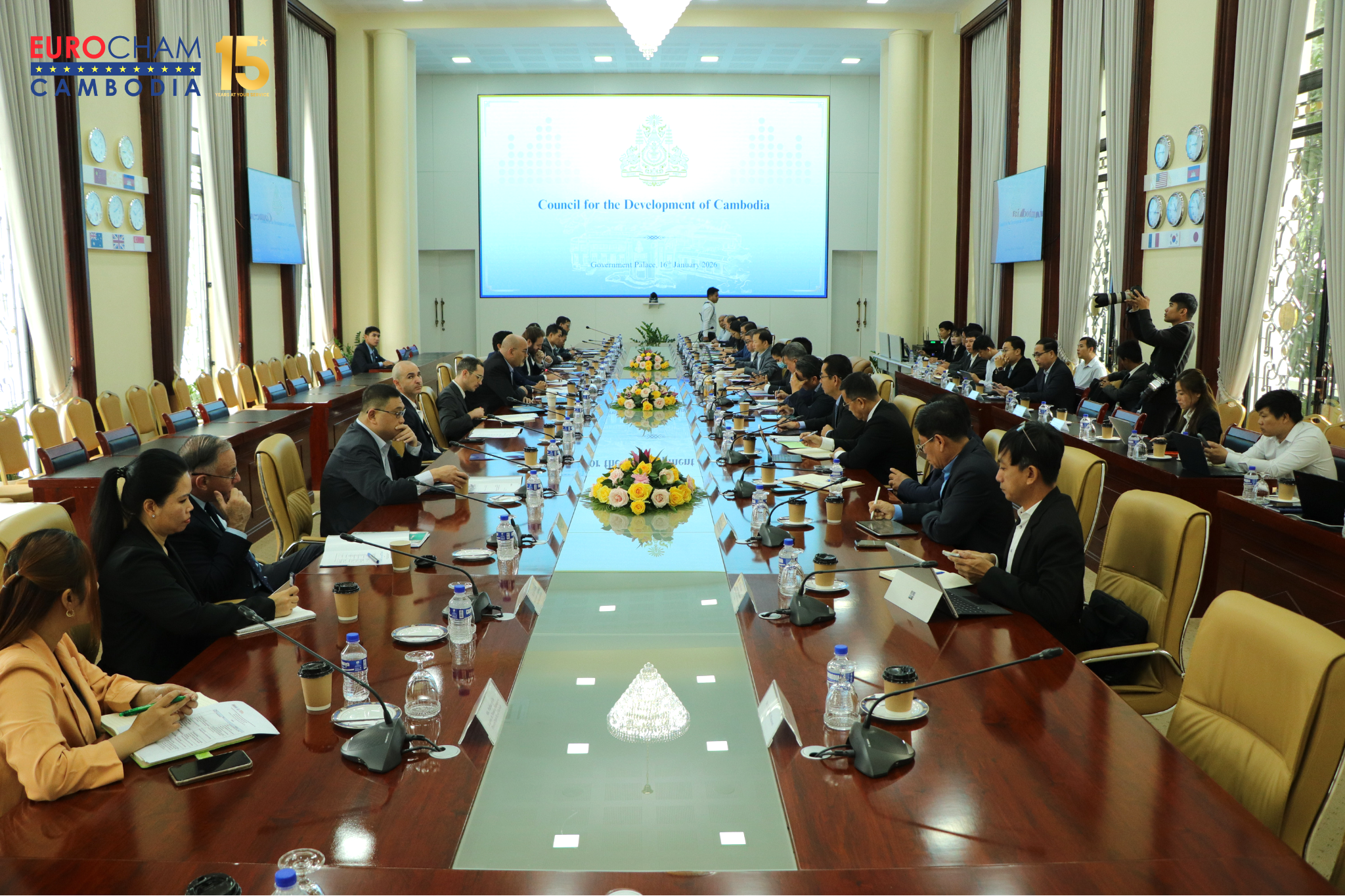
The issue took centre stage on January 16 during a high-level coordination meeting chaired by Sun Chanthol, first vice-chairman of the Council for the Development of Cambodia (CDC), to review EuroCham Cambodia’s policy paper on improving efficiency and capacity at the Sihanoukville Autonomous Port (PAS).
The meeting was held to conduct a comprehensive review and discussion of the key recommendations outlined in EuroCham’s policy paper.
“The primary goal is to identify concrete short-term measures in response to: (1) Growing Workload: Managing the increasing volume of work and operational pressure at the port, (2) Regional Competition: Addressing intensifying competition from other regional production hubs, (3) Logistics Efficiency: Fulfilling the urgent need to enhance the overall efficiency of Cambodia’s logistics sector,” Chanthol explained, via social media.
With container volumes expected to approach 1.5 million TEUs this year, participants warned that growth itself is becoming the system’s biggest challenge.
While the expansion of PAS is underway, the next major phase will not be completed until 2027, leaving a narrow window in which efficiency gains must absorb rising demand.

“The Sihanoukville Port Authority is working hard to cope with a very strong export growth and to upgrade infrastructure and handling capacities,” said EuroCham vice-chairperson Tassilo Brinzer.
“It’s a good problem to have, but it does pose challenges for the industry and for exporters,” he added.
The meeting brought together senior officials from the Ministry of Public Works and Transport, the Ministry of Economy and Finance, PAS leadership and private-sector representatives from EuroCham, reflecting growing urgency around logistics performance as Cambodia competes with other regional production hubs.
Discussions focused on how efficiency-driven reforms — rather than new infrastructure alone — can prevent congestion, rising costs and supply-chain uncertainty over the next two years.
Representatives from PAS presented updates on digitalisation initiatives aimed at improving transparency, monitoring and service speed, while acknowledging the pressure created by higher cargo volumes.
EuroCham’s Transport and Logistics Committee presented targeted recommendations based on operational experience, covering four priority areas: electronic data interchange connectivity between PAS and private logistics systems, road access and gate flow management, rail accessibility and competitiveness, and better balancing cargo volumes throughout the week.
Kaushal Rohilla, vice-chairperson of the committee and General Manager of CMA CGM Cambodia, said recent engagement had already helped advance practical solutions.
“Over the past year, our engagement has helped advance short-term measures focused on reducing bottlenecks and improving operational efficiency, while remaining aligned with the government’s broader logistics modernisation agenda,” he said.
Among the proposals discussed were extending customs availability at port gates to support night-time operations, reassessing rail handling fees to encourage a shift from road transport, and introducing incentives to promote off-peak use of the Phnom Penh–Sihanoukville Expressway to ease congestion.
For exporters, manufacturers and shipping lines, PAS’s performance is increasingly tied to cost competitiveness and investor confidence.
Industry representatives warned that congestion, limited system integration and constrained operating windows translate directly into higher costs and operational uncertainty.
In his closing remarks, Chanthol reaffirmed the government’s commitment to continued engagement with the private sector, stressing that logistics reform is central to Cambodia’s investment strategy.
He said the government remains ready to welcome more European investors and will continue deep reforms focused on strengthening physical connectivity and accelerating the digitalisation of public services.
The policy paper under discussion was first submitted by EuroCham to the transport ministry in August 2025, making Friday’s meeting the second formal review.
Both sides agreed to maintain regular coordination to ensure short- and medium-term measures are implemented while PAS prepares for its next expansion phase.
As Cambodia’s export growth accelerates, the challenge is no longer attracting trade but managing it efficiently — a test that Sihanoukville Port must pass if the country is to sustain its ambitions as a regional logistics hub.