Economists predict that the export of goods produced in Cambodia will increase further in the future, as by the end of 2025 Cambodia had nearly 60 operational special economic zones (SEZs) and industrial parks, representing an increase of more than 10% over 2024.
The Ministry of Industry, Science, Technology and Innovation reported that by the end of 2025 Cambodia had a total of 57 SEZs and industrial parks with operating factories, a 14% increase from 50 in 2024.
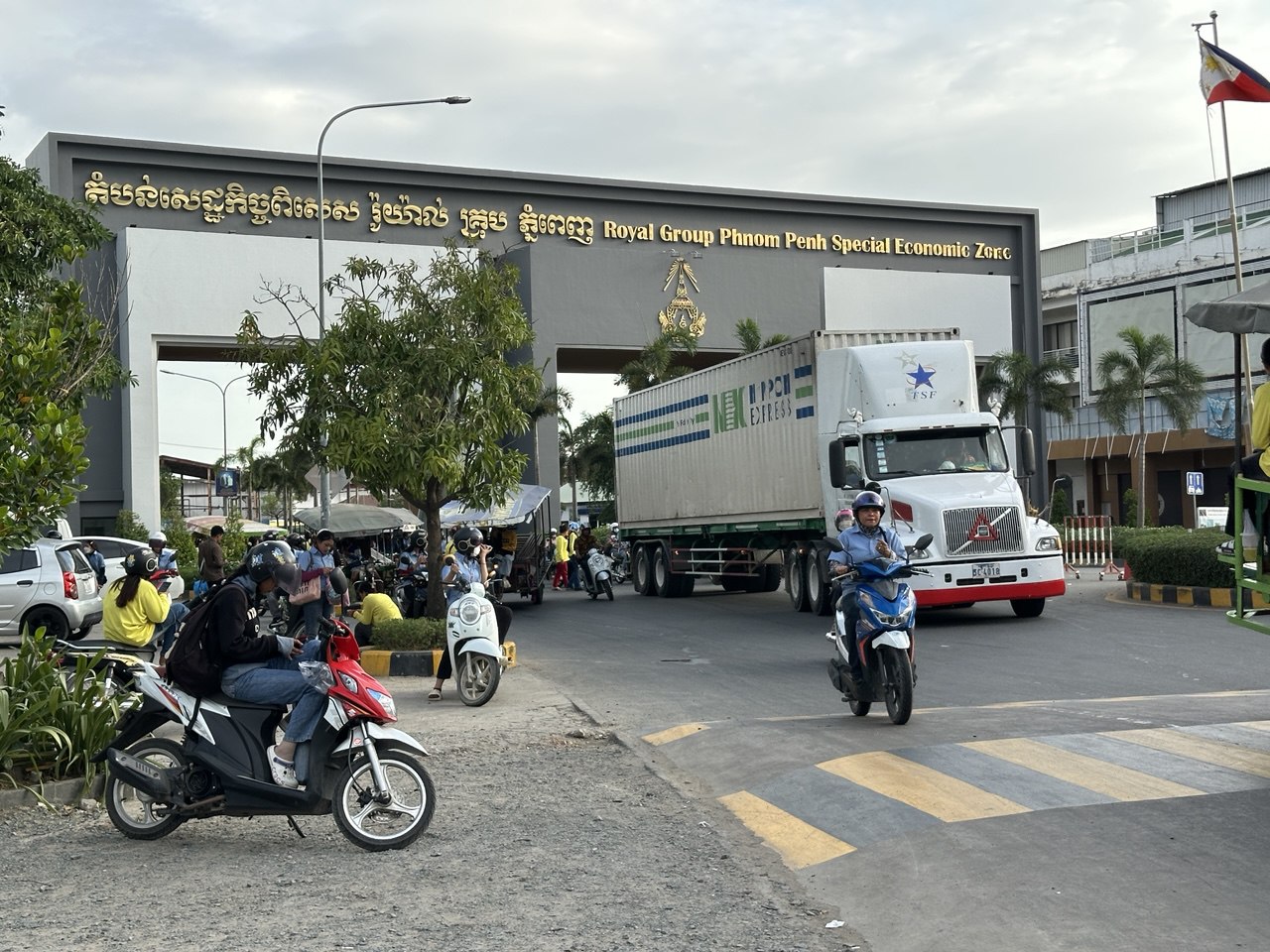
Among them, 34 are SEZs, an increase of four from the previous year. Of the total, 12 are located in Svay Rieng province, six in Preah Sihanouk province, three each in Kandal, Koh Kong, and Banteay Meanchey provinces, two in Kampong Speu province and one each in Kampong Cham, Kampot, Kratie and Pursat provinces, with one in Phnom Penh.
The 23 industrial parks include seven in Kandal and Kampong Speu provinces, six in Phnom Penh, and one each in Kampot, Takeo and Banteay Meanchey provinces.
Hong Vanak, an economist at the Royal Academy of Cambodia, told The Post on March 6 that these areas have become highly attractive for investors, especially foreign ones.
Investment in these areas offers convenience in handling export–import documentation, good transport infrastructure, water and electricity supply, and various tax incentives.
He added that the increase in SEZs and industrial parks reflects both the country’s development and investors’ confidence in investing directly in Cambodia.
“This growth also demonstrates the commitment of the Cambodian government and private sector to promote the industrial sector and accelerate national economic development. As production activities increase, it will help boost exports,” he said.
An industrial park refers to a specially planned area of land equipped with full infrastructure — such as roads, water supply, electricity and wastewater treatment systems — to cluster enterprises, factories and various industries in one location. They are designed to promote investment, process raw materials and create jobs. Investment in industrial parks also receives tax and customs incentives from the Royal Government, such as withholding tax exemptions or VAT exemptions on exports.
Minister of Commerce Cham Nimul, speaking at the Cambodia–China Industrial Park Promotion Forum on July 28, 2025, noted that industrial parks and special economic zones play an important role in driving Cambodia’s economic growth by creating a favourable environment to attract foreign direct investment.
“Industrial parks can help connect China’s production chains — such as modern agriculture, food processing industries, the automotive sector, electronics and digital technology — thereby increasing trade between Cambodia and China,” she said.
Mey Kalyan, senior advisor to the Supreme National Economic Council, described the establishment of agro-industrial parks and special economic zones as an important part of strengthening Cambodia’s economy in a sustainable way. Industrial parks can increase the value of agricultural products and create employment opportunities for people in the provinces.
He noted that Cambodia still exports a large amount of unprocessed agricultural products, which traders sell to neighbouring countries where they are processed into higher-value products. Therefore, it would be beneficial if Cambodia had more processing factories and enterprises.
The General Department of Customs and Excise (GDCE) reported that in 2025, the Kingdom’s total international trade reached $64.03 billion, an increase of 16.8% over the $54.82 billion recorded in 2024. Exports totalled $30.15 billion, up 14.7%, while imports were $33.88 billion, up 18.7%.