The Ministry of Industry, Science, Technology and Innovation and the UN Industrial Development Organization (UNIDO) have concluded the year-long Eco-Industrial Parks (EIP) Light Touch Activities project, marking a major step in the Cambodian industrial sector’s journey towards sustainability.
The December 10 closing workshop marked a strategic move from improving individual factories to transforming entire special economic zones (SEZs) into green communities, according to a ministry press release.
While previous government efforts focused on resource efficiency for small enterprises or specific technology transfers for larger factories, the EIP framework applied a holistic approach to the Kingdom’s SEZs, it noted.
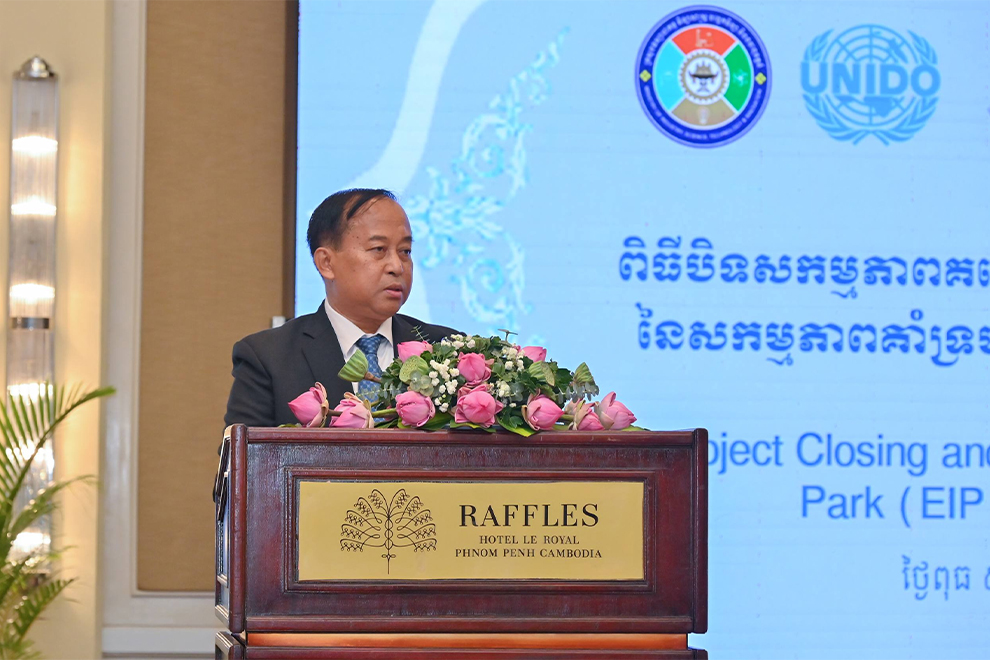
Ministry secretary of state Tung Siny addressed the closing event. He explained that the project, funded by the Swiss Government, aimed to maximise impacts through industrial symbiosis, where zones share resources to reduce waste, alongside systemic improvements in park management, environmental standards and social welfare.
“The EIP light touch activities brought ‘Greening Industry Momentum’ towards another level and scaled up the impacts across aspects towards the inclusive and sustainable industrial development,” he said.
According to Siny, a true Eco-Industrial Park goes beyond planting trees. The new framework advocates for the use of renewable energies like solar and biomass over fossil fuels, the recycling of treated wastewater and the integration of social services. The vision includes establishing vocational training schools, nurseries and recreational spaces directly within industrial parks to improve the lives of workers.
He noted that more work remains to be done, despite the successes of the pilot phase. The roadmap involves drafting new laws for industrial park management and fostering better connectivity between raw material supplies and production zones. The current efforts are just the first step, he added, saying that secured budgets are needed to expand these frameworks to provincial levels.
Siny called for continued partnership with international donors to solve these issues. He said only collective and systematic efforts will make the EIP approaches successful and beneficial for all, but believed the approach would contribute to Cambodia’s broader goal of reaching middle-income status by 2030.