China is the largest source of goods for Cambodia. In the first two months of 2026, goods imported from China to Cambodia were valued at nearly $3.3 billion, an increase of more than one-third over the same period in 2024.
The amount Cambodia spent on imports from China accounted for more than half of its total spending on imports.
The General Department of Customs and Excise (GDCE) reported that in January to February, trade between Cambodia and China reached $3.58 billion, up 34.4% from the $2.66 billion recorded in the same period of 2025. Imports totalled $3.28 billion, up 34.2%, while exports were $295.69 million, an increase of 35.7%.
The value of Cambodia’s imports from China represented 55.76% of the country’s total import value of $5.88 billion.
The Kingdom’s trade balance in the first two months of 2026 showed a deficit of about $2.99 billion, compared with $2.23 billion during the same period in 2025.
Lim Heng, vice-president of the Cambodia Chamber of Commerce, told The Post on March 11 that the growth of Cambodia–China bilateral trade — especially the large volume of imports in recent years — has been driven by several factors, including stronger diplomatic relations, competitive prices of goods and Cambodia’s demand for raw materials for manufacturing export goods.
He added that, besides raw materials, Cambodia also imports automated factory machinery from China to improve production efficiency, increase output and enhance product quality. Machinery products are playing an important role in helping boost Cambodia’s manufacturing capacity.
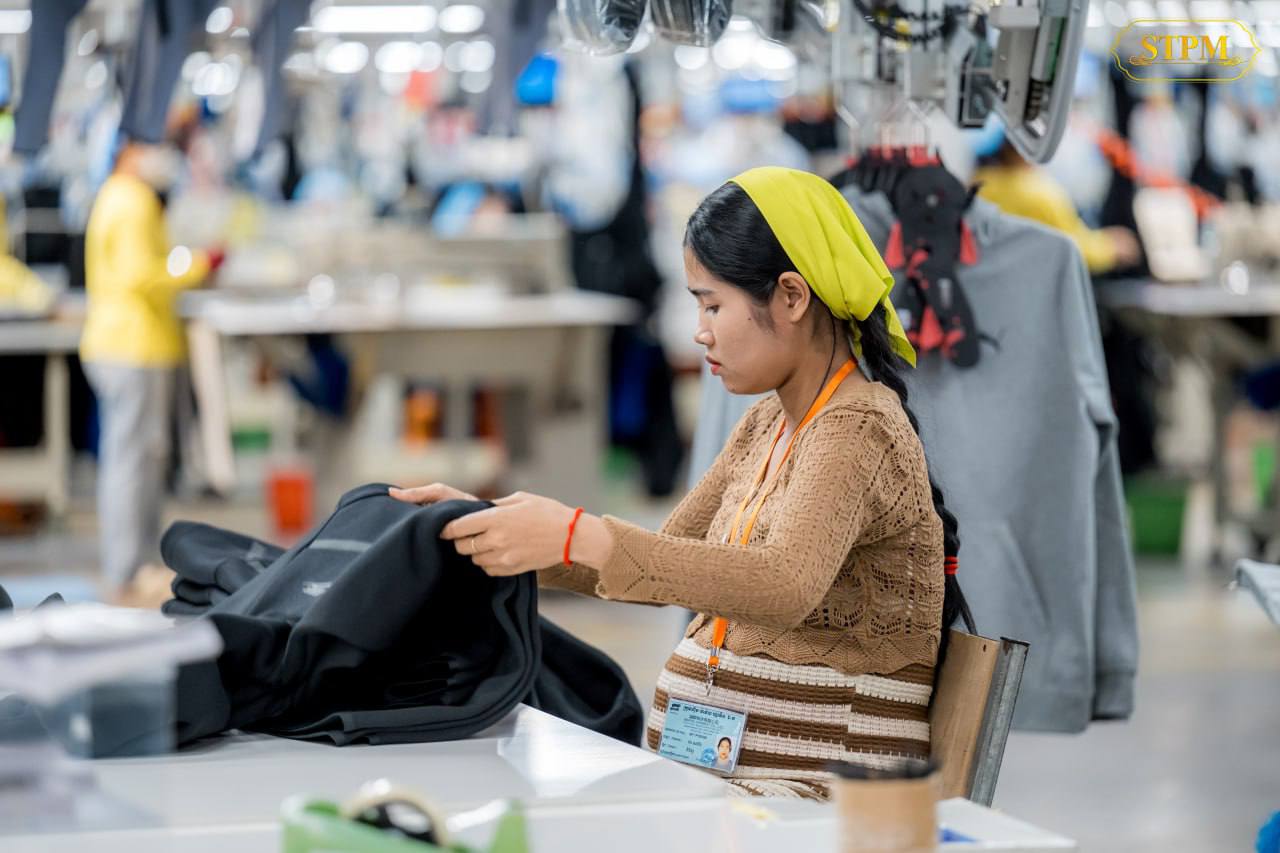
“As a developing country, Cambodia imports many goods from China to meet domestic demand and to strengthen its capacity to export to international markets. Regarding the issue of the trade imbalance, it is not a cause for concern because most goods imported from China are raw materials for the textile sector, which are processed and then exported to markets such as the US, Canada and Europe,” he explained.
He noted that relations and trade between the two countries will continue to grow, as geopolitical tensions and tariff issues among major powers have encouraged many companies to seek opportunities to relocate their production bases to Cambodia.
“The Cambodia–China Free Trade Agreement (CCFTA) is also a driving force attracting more Chinese investors to invest in Cambodia or partner with local investors to produce goods for export back to China,” he said.
Cambodia’s exports to China consist mainly of agricultural products, furniture, jewellery and textile products. Imports include raw materials for factories and enterprises, daily consumer products, food and beverages, vehicles, machinery, construction materials, electrical and electronic equipment, pharmaceuticals and agricultural fertilisers, according to Heng.
In 2025, total trade between Cambodia and China reached $19.73 billion, an increase of 29.9% over 2024. Cambodian exports totalled $1.69 billion, down 3.6%, while imports were $18.04 billion, up 34.3%. China remains Cambodia’s largest trading partner.