



All investment projects under the “Special Programme to Promote Investment in the Four Northeastern Provinces of the Kingdom of Cambodia 2025–2028” (SPIN) will receive substantial support from the Royal Government, with a minimum investment capital starting from $100,000.
Details of the “SPIN Investment Forum”, held by the SPIN Working Group in Phnom Penh on September 29 were shared in a statement.
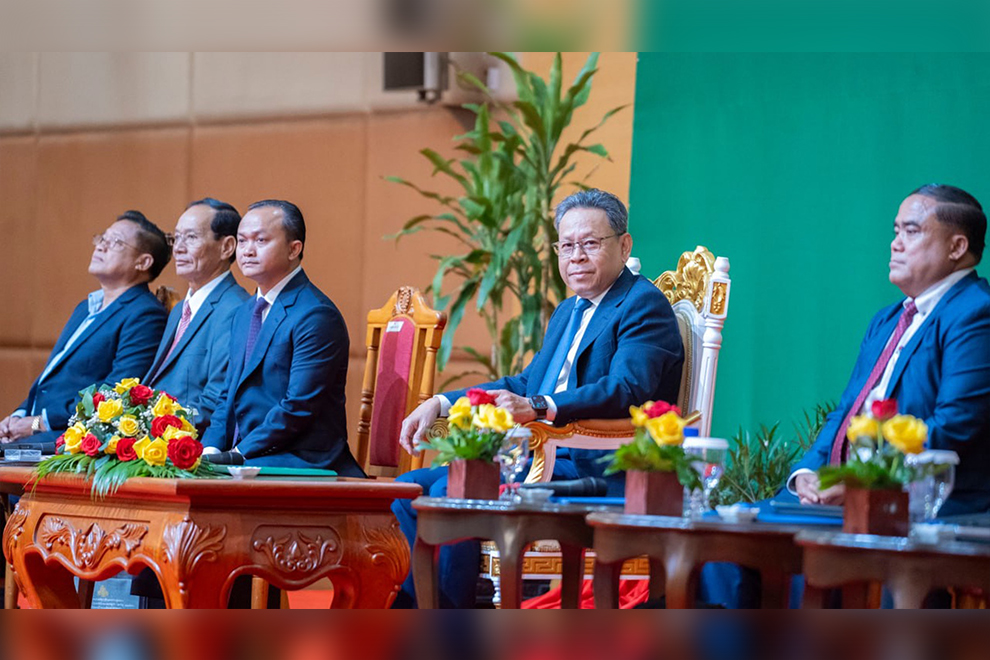
The forum was attended by Hean Sahib, secretary of state at the Ministry of Economy and Finance and chair of the SPIN working group, as well as senior officials from government institutions and the provincial administrations of Kratie, Stung Treng, Mondulkiri and Ratanakkiri provinces, alongside domestic and foreign investors.
The release explained that the forum aimed to: (1) continue promoting the SPIN Programme; (2) gain insights into the progress of investments in the Northeast through presentations by companies currently investing in the region; and (3) provide a platform for direct dialogue between investors and the SPIN working group, as well as representatives from the authorities from the four Northeastern provinces regarding investment challenges and possible solutions.
Sahib noted that the SPIN Programme is not only an incentive policy but also a strategy to respond to the challenges of investors in the current environment. He encouraged all relevant ministries and institutions to provide maximum facilitation and warmth to investors.
He also outlined three key recommendations to ensure the successful implementation of the SPIN Programme, in line with the vision of the Royal Government of Cambodia.
Further strengthening of the “One Stop Service” mechanism is required, he said. This should be done by enhancing the delegated authority of the inter-ministerial working group to streamline procedures for reviewing, approving and monitoring investment projects, while eliminating unnecessary bureaucratic delays and costs that discourage investors.
Increasing the capacity of all stakeholders, including provincial administrations and technical departments, is essential.
The active participation of all stakeholders must be encouraged, through strengthening and maintaining active engagement between the SPIN working group, provincial administrations and technical departments, local communities, and domestic and foreign investors to create an ecosystem that protects and sustains investments in the Northeastern region.
These efforts aim to promote the expansion of the economic base of provinces far from growth centres, enhance their connectivity with national economic flow and complement government strategies and policies, through the introduction of comprehensive, interconnected, transparent and effective measures and mechanisms.
According to Sahib, under the SPIN framework, investors will receive comprehensive support, including tax and customs incentives, access to low-interest financing through the Agriculture and Rural Development Bank (ARDB) and the SME Bank, reduction in production costs and streamlined procedures to facilitate private investment.
Investment projects in the Northeastern provinces are eligible for registration as Qualified Investment Projects (QIP) with minimum investment capital of $100,000, he explained.
Furthermore, all investment facilitation and support in the Northeast will be carried out under the “One-Stop Service” mechanism of the SPIN working group, which offers comprehensive review and approval of special incentives as well as various licenses and permits as a complete package for investment projects through the working approach based on the “dynamics of stakeholder system” that supports collaborative decision-making in an efficient and transparent manner.
During the forum, Socfin Cambodia, a producer and processor of rubber for export, operating in Mondulkiri province, and UBE Development, a company developing and investing in the Snuol Special Economic Zone in Kratie province, delivered presentations on their respective business activities.
The presentations discussed diverse investment activities and business opportunities in the Northeastern provinces, as well as the investment climate, most notably in terms of agricultural and agro-industrial development.
Both companies highlighted strong interest from both domestic and foreign investors in the potential of the region, as well as the close support offered by the government.
