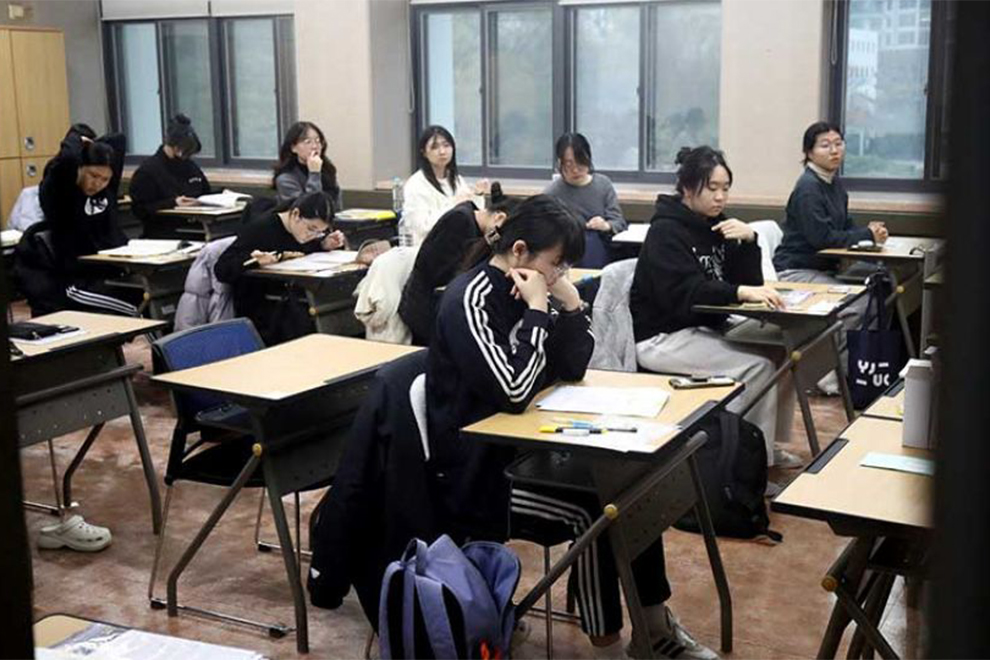
SEOUL – Conversations between parents and elementary school children in South Korea are increasingly centered on academic performance rather than aptitude or future aspirations, coinciding with rising levels of depression among younger students.
According to a recent report by the Ministry of Education, the proportion of elementary school students who said they discuss their grades or academic performance with their parents every day rose to 30.5 percent in 2025, up from 25.7 percent five years earlier.
By contrast, the share of students who reported talking daily about their aptitude, dreams or future school choices remained relatively low, standing at 15 percent and 15.7 percent, respectively.
The survey was conducted in 2025 among 6,751 sixth-grade elementary students nationwide as part of the ministry’s annual student assessment.
The report noted that conversations about children’s long-term direction remain limited, revealing a tendency among parents to place greater emphasis on short-term academic outcomes than on broader future pathways.
Surveys conducted at the same time among middle and high school students showed the opposite trend. The proportion of students who said they talk about grades and academic performance every day fell sharply, from 41.4 percent to 25 percent among middle schoolers, and from 23.1 percent to 20.3 percent among high school students.
The contrast highlights a particularly notable rise in grade-focused discussions at the elementary level compared with older age groups.
According to separate research by the Seoul Metropolitan Office of Education released in May, the depression index among elementary school students increased from 0.51 in 2021 to 0.66 in 2022 and 0.73 in 2023, based on a scale with three as the maximum score.
The index showed a slight rise among middle school students, while no meaningful change was observed among high school students.
“The increase in academic stress and social isolation following the COVID-19 pandemic, along with greater smartphone and social media use, appear to be contributing factors,” a researcher who participated in the depression survey said.
“Children at this age, whose self-awareness is still developing, can be more psychologically vulnerable under excessive expectations and academic pressure from parents.”
ANN/The Korea Herald