



TOKYO – Prime Minister Sanae Takaichi has been forced into a tough spot following U.S. President Donald Trump’s demand that Japan and other countries dispatch vessels to the Strait of Hormuz to ensure its safety.
The Japan-U.S. summit meeting scheduled for Thursday in Washington, which Takaichi hoped would be a showcase of her smooth relationship with Trump, looks set to put her diplomatic skills to the test.
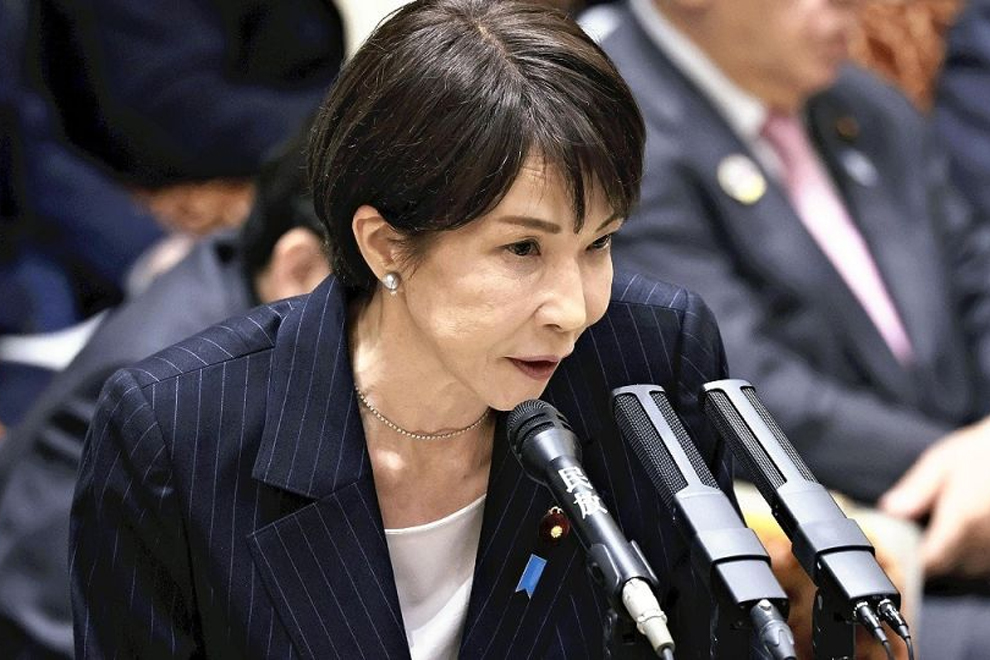
“Since no [formal] request has been made [from the United States] yet, it is difficult to comment on a hypothetical situation,” Takaichi said at a meeting of the House of Councillors Budget Committee on Monday.
Takaichi maintained a cautious tone on the possibility of the Self-Defense Forces being dispatched to the Strait of Hormuz, saying, “Rather than simply responding to a request from the United States, we will make the most appropriate decision based on what Japan can do within its legal framework.”
Japan faces significant constitutional hurdles to any potential mission involving the Self-Defense Forces regarding the ongoing Iranian attacks on vessels. A senior Defense Ministry official said that there is almost nothing the SDF can do there unless the conflict subsides. Nevertheless, the government is scrambling to determine what Japan can contribute as the Japan-U.S. summit meeting approaches.
Takaichi managed to build a personal rapport with Trump during his visit to Japan in October, just a week after becoming prime minister. She succeeded by mentioning the late Prime Minister Shinzo Abe, who had established a close relationship with the president.
Her efforts were well-received by the public, giving her Cabinet a strong start with high approval ratings. Yet if Takaichi fails to meet Trump’s expectations at the coming summit meetings, a rift could form in their relationship.
Following Trump’s social media posts expressing expectations for Japan to dispatch vessels, the government reached out to the White House to sound out the president’s true intentions.
With no clear response yet obtained, a senior government official said, “We must prepare for every possible scenario.”
Concerns over U.S.-China moves
Trump’s move to demand that other countries send ships on the eve of the summit is seen as having been completely outside the prime minister’s expectations.
The prevailing view within the government had been that Washington would not request international support, even as tensions in the Middle East rose. This sentiment was echoed by a senior official from the Foreign Ministry.
Optimism had also spread among officials that the summit meeting would be a success if Japan were to leverage its tariff agreement with the United States — made ahead of many other countries — to prominently highlight its plans to contribute to the investment projects that Trump himself prioritizes.
Japan’s situation has also become more complicated following Trump’s decision specifically demand that China dispatch vessels to the Strait of Hormuz.
The Japanese government had positioned the upcoming summit as an opportunity to confirm the strengthening of Japan-U.S. cooperation, with an eye toward the U.S.-China summit scheduled for April. There are now growing concerns within the government, with one senior official warning, “If China responds to Trump’s call, Japan will find itself in an even more difficult situation.”
Takaichi has garnered public support by rolling out economic measures under her policy of “responsible and proactive public finances.” However, the situation in Iran has sent crude oil prices soaring and is beginning to cast a shadow over the Japanese economy.
Any misstep in economic policy or in relations with the United States could undermine the robust public support that forms the foundation of her political standing. The administration is now considering its options, with an aide saying, “Leaving a request from the United States unanswered is not an option.”
ANN/The Yomiuri Shimbun
