



Neth Pheaktra, Minister of Information and honorary president of the Airavata Elephant Foundation, has strongly condemned Thai military’s “brutal and inhumane” aggression, saying it has not only claimed human lives but also devastated wildlife and protected ecosystems in northern Cambodia.
In a statement released today, December 26, Pheaktra said Thai military attacks involving aerial bombardment, artillery shelling and advanced weaponry had caused severe environmental destruction in Preah Vihear province, including the killing of wildlife in conservation zones.
“The Thai military’s aggression has not only caused destruction and the loss of human life; bullets of all kinds and bombs dropped from fighter aircraft have also killed wildlife living in protected conservation areas,” he said.
“The use of advanced weaponry and the release of toxic smoke into forest areas, resulting in the deaths of wild animals, constitutes a crime against the environment and the ecosystem,” he added.
Speaking in his capacity as honorary president of the Airavata foundation, also known as the Elephant Conservation Association (ECA), Pheaktra condemned what he called “the deliberate targeting of nature” and urged global environmental advocates to speak out.
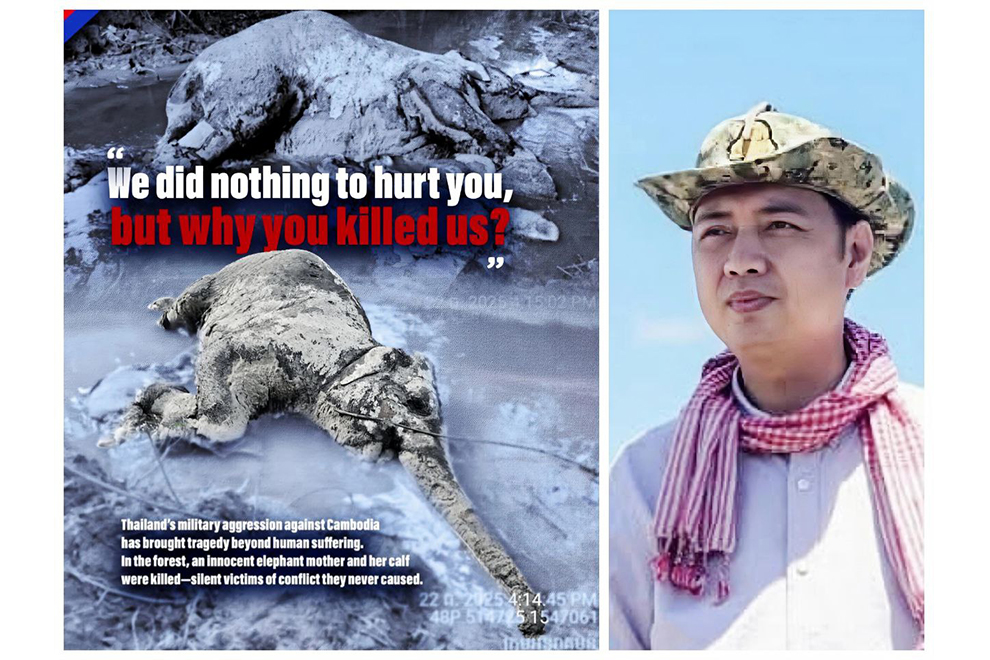
“I strongly condemn the brutal and inhumane actions of the Thai military and call upon wildlife lovers and environmentalists around the world to denounce the Thai military for its destruction of wildlife,” he said, referring to the death of two elephants — a mother and her calf — caused by Thai shrapnel in the forests of Preah Vihear.
His remarks aligned with recent statements by Minister of Environment Eang Sophalleth, who has described Thailand’s military actions as violations of international law and environmental crime.
Speaking during a lecture on “Leadership and Environmental Governance in Cambodia” at the Royal Academy of Cambodia on December 23, Sophalleth said the incursions had caused extensive damage to natural resources and biodiversity.
“These acts of aggression not only cause deaths and injuries, but also destroy natural resources and biodiversity within Cambodia’s sovereign territory, violate international law and violate human rights,” he said.
“The environment is life. Disrespecting the environment is disrespecting life. Disrespecting life is a violation of human rights — the right to live,” he added.
The ministry has deployed 14 monitoring teams comprising 60 officials to assess environmental pollution along the Cambodia–Thailand border.
These teams are monitoring air, water and soil quality both inside and outside evacuation camps, and collecting samples for laboratory analysis.
As part of these efforts, the ministry has also provided 350 rubbish bins, 25 motorised waste-collection vehicles and one garbage truck to provincial administrations to support sanitation at evacuation centres, in what officials described as a spirit of “Khmer helping Khmer” and national solidarity.
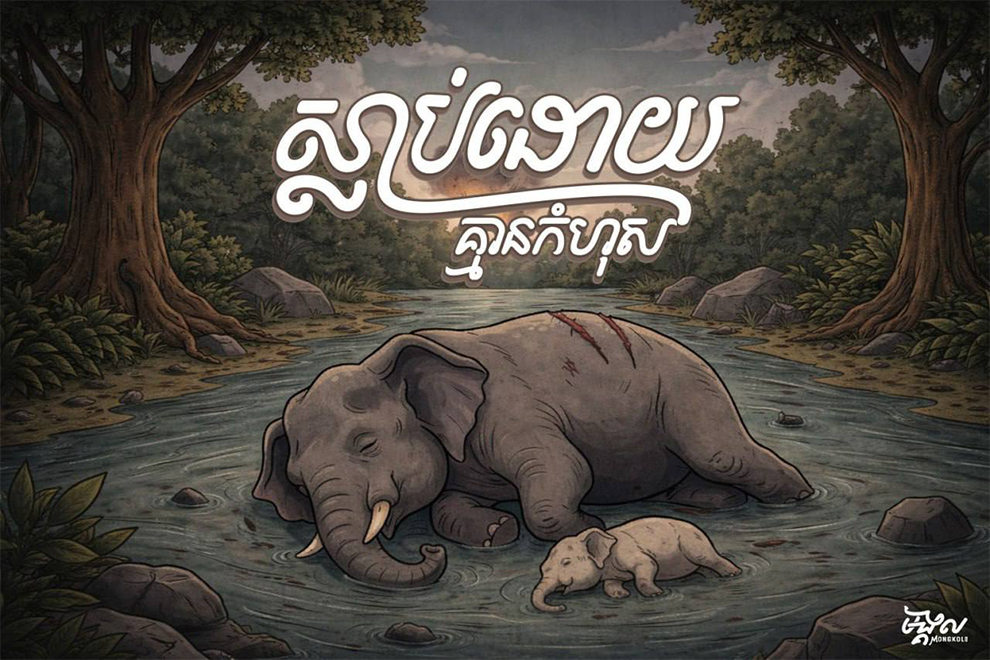
Park rangers and local communities reported that a female wild elephant and her newborn calf were found dead in the Preah Roka–Chheb Wildlife Sanctuary, Preah Vihear province, on December 23, after what authorities say was Thai shelling or airstrikes.
Both were discovered in the O’Skach stream, with the mother showing severe shrapnel wounds and evidence of miscarriage before she died.
