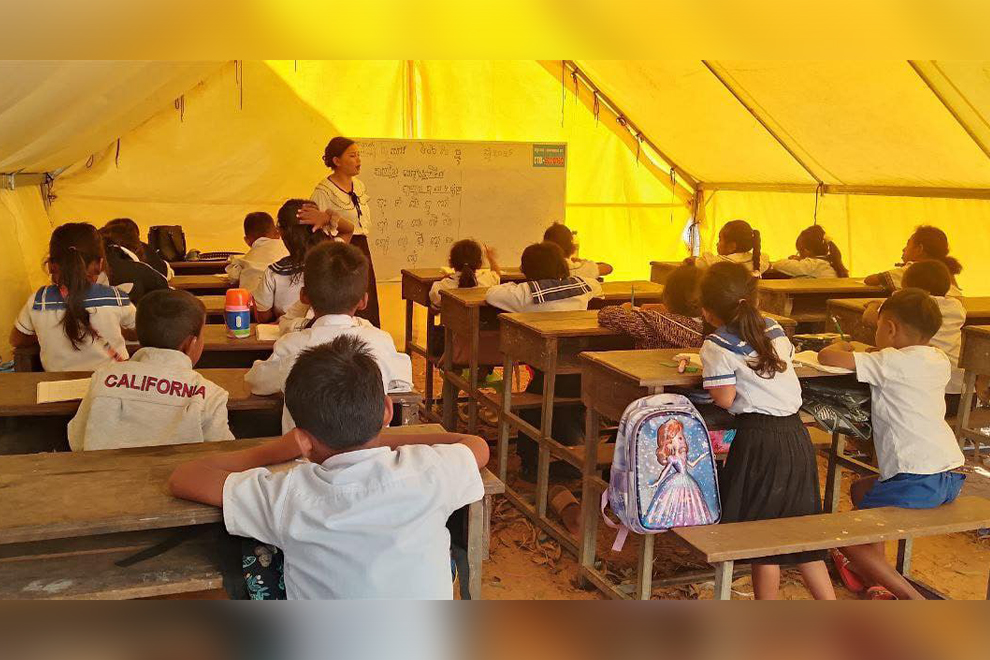
The current widespread attacks by Thai forces on Cambodian territory had disrupted the education of around 130,000 students across six provinces as of December 9. The Ministry of Education, Youth and Sport has prepared plans to provide learning materials and tents to serve as temporary classrooms in safe zones for displaced students, and is assessing possibilities for distance learning.
The ministry announced that the attacks have severely impacted Cambodian children’s schooling. As of December 9, 514 schools were closed, affecting the learning of around 130,000 students and the work of 4,650 teachers.
In Choam Ksant district, Preah Vihear province — which is fully affected — 61 schools have suspended operations, impacting 13,665 students and 493 teachers. In Oddar Meanchey, also under attack, 260 schools have shut down, affecting 55,731 students and 2,344 teachers. Of the schools located within 10 km of the border, 32 have been closed, including 12 in Samraong town, 8 in Banteay Ampil, 4 in Anlong Veng and 8 in Trapang Prasat districts.
In five districts of Banteay Meanchey province, 186 schools have suspended operations, affecting 58,754 students and 1,790 teachers. In Veal Veng district of Pursat province, 5 schools have closed, impacting 891 students and 20 teachers. Among these, Promoy High School and Promoy Pagoda have been repurposed as temporary shelters for civilians fleeing from Thmor Da commune.
Two schools in Mondol Sima district, Koh Kong province, have closed, affecting 55 students and 3 teachers.
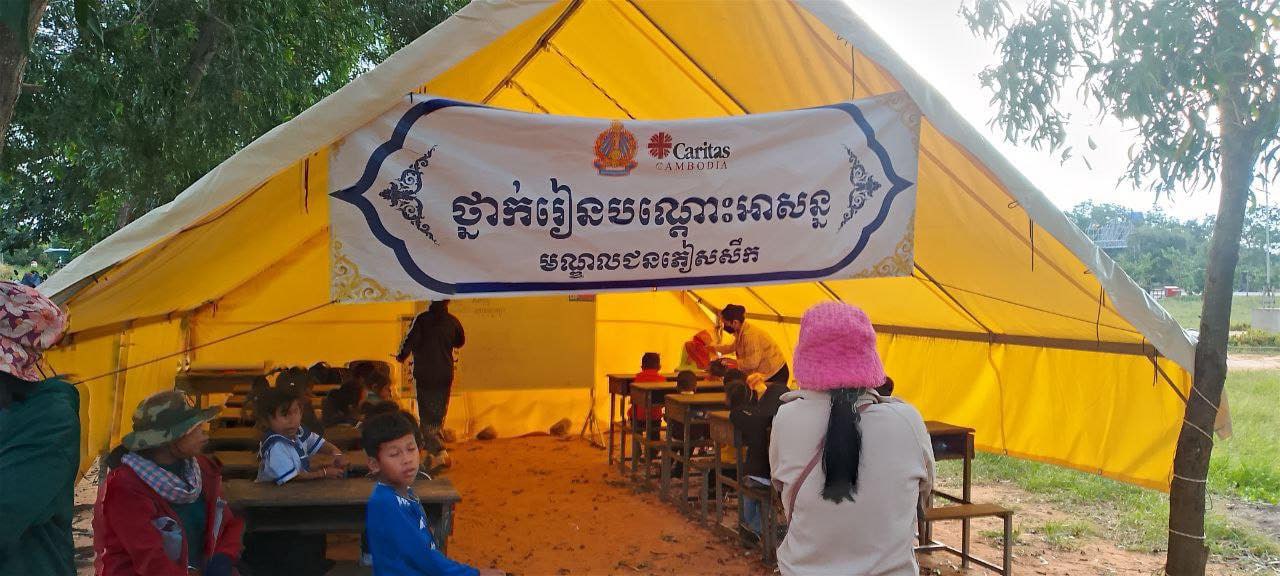

Although schools in the four Cambodia–Thailand border areas of Battambang province — Samlout, Sampov Loun, Kamrieng and Phnom Proek — remain open, student attendance is significantly low.
Education minister Hang Chuon Naron instructed relevant educational institutions to ensure the provision of essential supplies, learning materials and tents for temporary classrooms in safe areas for displaced students, and to examine their capabilities to implement distance learning.
His directives were delivered during a December 9 meeting at the education ministry headquarters concerning support plans for schools affected along the border.
Before the in-depth discussions began, he urged working groups to continue close monitoring of conditions and emerging developments along the border to ensure timely support, aligned with real needs.
The meeting began with reports on the current status of schools, students and communities in Banteay Meanchey, Oddar Meanchey, Preah Vihear and Pursat provinces, where armed clashes are ongoing.
Discussions continued on consolidating urgent measures to help support and stabilise the situation, ensuring the safety of education personnel, teachers and students.
After reviewing the latest reports and exchanging ideas, the minister issued key recommendations, prioritising close monitoring of the situation and identifying realistic support measures.
He ordered the formation of specialised teams to oversee the implementation and tracking of actions, with daily reports on developments affecting education personnel, students and their families, along with updates for communication and coordination with development partners, civil society, the private sector and the public to secure material and financial assistance.
“Please prioritise essential needs, including basic supplies, learning materials and tents to serve as temporary classrooms in safe areas for displaced civilians, and have technical teams assess the feasibility of distance learning systems,” he added.