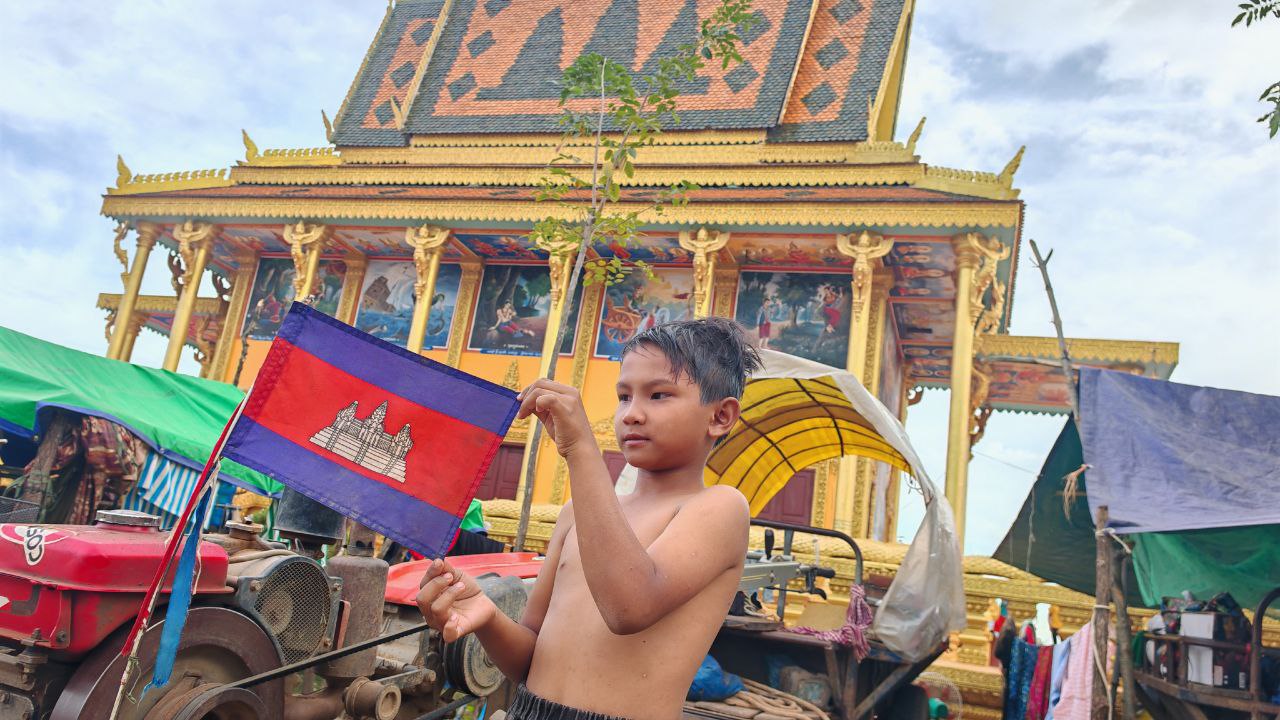
For the third consecutive day, thousands of Cambodian families displaced by cross-border shelling and the deployment of Thai F-16 fighter jets remain in shelter in schools, pagodas and temporary evacuation centres near the Cambodia–Thailand border, uncertain when it will be safe to return home.
The clashes, which began early on December 7, have forced residents in several border districts to flee amid fears of renewed artillery fire and air operations.
Many evacuees say they left their homes with little more than the clothes they were wearing, abandoning farms, livestock and their daily sources of income.
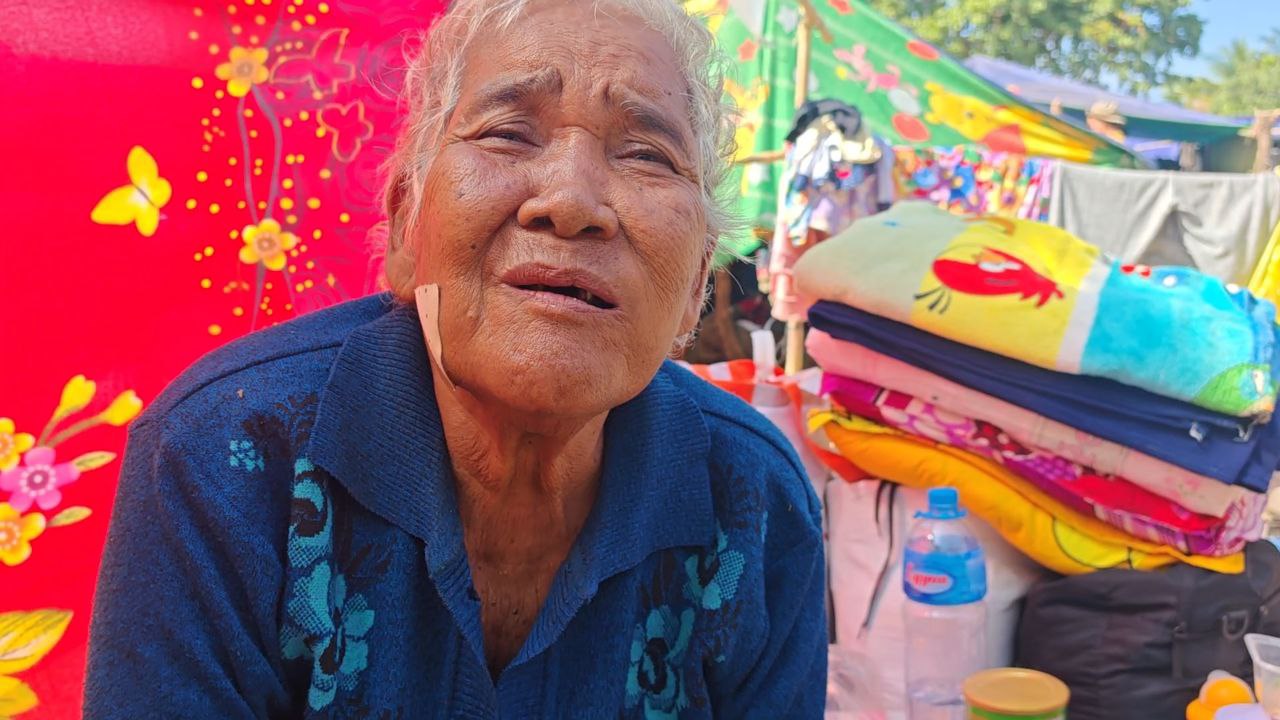
“We felt uneasy when the shelling started. The sound was very close,” said Tev Yeun, 80, from Thamacheat, Choam Khsant district, Preah Vihear province.
Yeun is now staying at an evacuation site in Oddar Kiri Toul Andet pagoda, Thnalbek village, Thmey commune, Kulen district, Preah Vihear province.
She explained that her home is near Phnom Trob and Phnom Khmaoch, very close to the fighting. Old and reluctant to flee, she said she initially stayed put, but began shaking when the gunfire started. Thai soldiers fired for about an hour before the area fell briefly quiet.
Yeun said her family then ran, leaving behind their house, dogs and cats. Speaking slowly and raising her hands in prayer while sitting inside her tent, she told The Post: “I pray every day that our soldiers stay safe. Lok Ta Dy is helping. I just want peace for all of us.”
Cambodian authorities said the displacement followed what they described as intensified military actions by Thai forces along the border, including the use of F-16 fighter jets — a move officials warned could further endanger civilians in contested areas.
The Ministry of Interior on Tuesday condemned Thai military attacks on civilian areas, citing deaths, injuries and the suffering of displaced residents caused by what it described as aggression on Cambodian sovereign territory.
According to the Ministry of National Defence, at around 2.40am on December 9, Thai forces fired heavy weapons near Chak Puok Primary School in Slor Kram commune, Svay Chek district, Banteay Meanchey province, as well as near a cornfield at the foot of a nearby mountain.
It said the strikes amounted to indiscriminate attacks on civilian communities, including areas surrounding a children’s school.
As of 11am on December 9, civilians in Preah Vihear, Oddar Meanchey, Banteay Meanchey, and Pursat provinces had fled Thai military attacks. The total number of displaced families is 16,568, consisting of 54,550 individuals.

Civilians caught in the crossfire
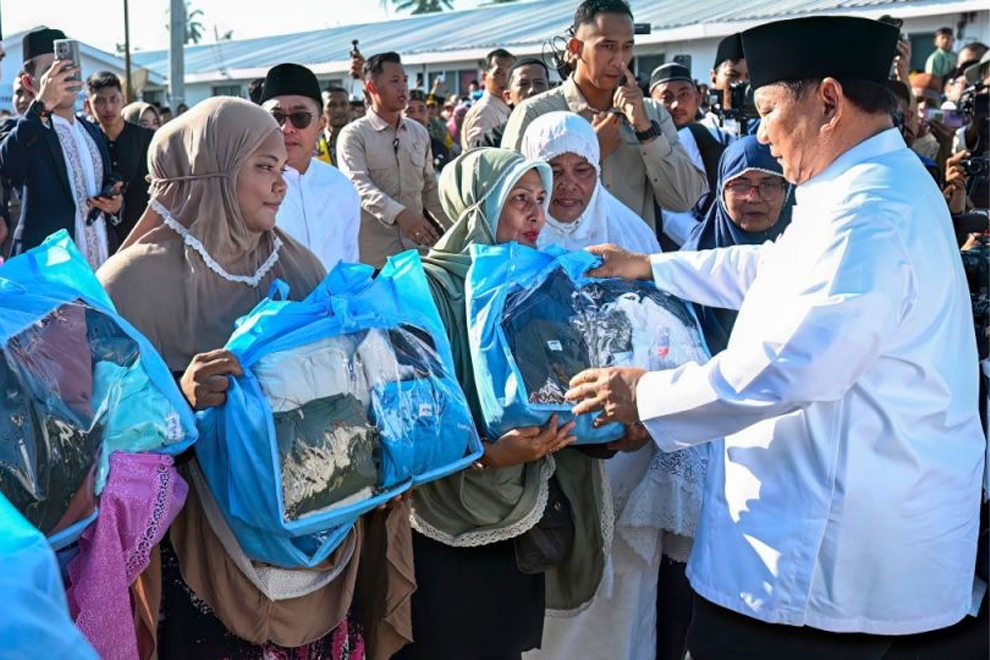
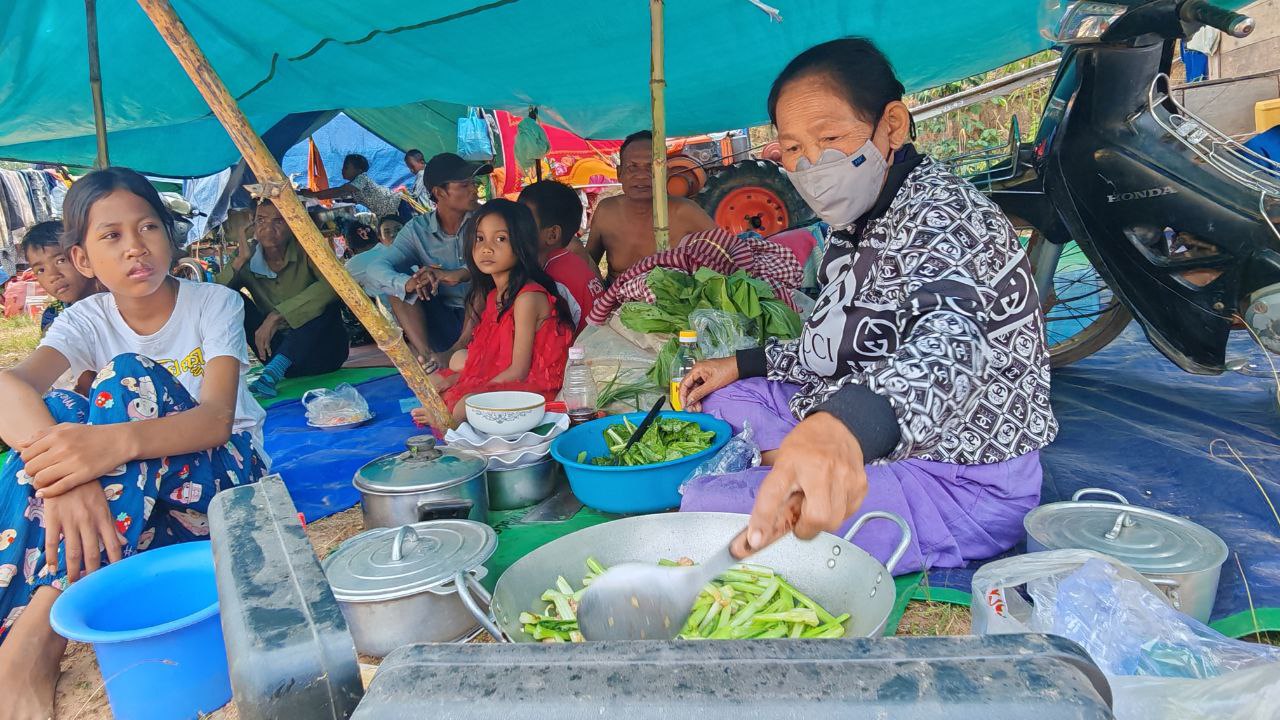
At evacuation sites, families have been sleeping on thin mats, some of them arriving with only the clothes on their backs. Local officials said many evacuees include elderly people, women and children, some of whom have shown signs of trauma after days of uncertainty.
“We have never experienced this level of fear,” said Pen Leanghai, 61, a mother and grandmother who supports five grandchildren.
“The jets were flying overhead. We didn’t know if our houses would still be standing,” she recalled.
Prolonged displacement could severely affect livelihoods, particularly for farming households dependent on daily labour and livestock care.
Sao Mom, 52, from the one of the harfest-hit confrontation zones, Choam Khsant, said that after the clashes of July 24-28, her livestock was gone, her crops dead.
“We are struggling, as parents, to feed our family of seven, including our son, who has a disability. Displacement is not very suitable for him,” Mom told The Post at Por Selaram Pagoda, in Preah Vihear town.
Min Sitha, deputy governor of Preah Vihear, said that Wat Oddar Kiri Toul Andet was sheltering nearly 900 families, or about 4,000 people, who had fled from six communes in Choam Khsant district as of the morning of December 9.
“The provincial governor has prepared infrastructure at eight locations, including a water supply, electricity and bathroom facilities,” Sitha said.
Meanwhile, Sok Monirith, acting district governor of Tbeng Meanchey district, said that Wat Peung Angkam, located in Bak Kam village, Chhean Mak commune, Tbeng Meanchey district, Preah Vihear province, had received 722 families, or 2,810 displaced people, from Choam Khsant district.
Cambodian government calls for protection of civilians
Prime Minister Hun Manet said the Royal Government’s immediate priorities are to protect the people and safeguard Cambodia’s territorial integrity, as clashes continue along the border.
“I call on all ministries, institutions, authorities at every level, all branches of the armed forces and all Cambodian citizens to unite in defence of the nation and the homeland during this difficult period,” he said.
Interior Minister Sar Sokha has ordered border provinces to evacuate residents from high-risk areas to designated shelters and to document damage caused by Thai military attacks.
In a December 9 letter, he also instructed authorities to provide displaced families with food, medicine, clean water, electricity and basic shelter.
Thai military escalation raises concerns
Cambodia expressed concern over statements by Thai leadership and military commanders that framed the clashes as operations to defend or reclaim what they described as Thai territory.
Senate president Hun Sen said Cambodia has been forced to strike back to defend its territory after exercising restraint for more than 24 hours to honour the ceasefire and allow civilians to evacuate to safety.
In a Facebook post on Tuesday, Hun Sen said Thai Prime Minister Anutin Charnvirakul had announced plans to use force to seize 11 locations along the border, prompting Cambodia to respond by ordering all branches of the armed forces to strike back at any point of attack.
“Cambodia desires peace, but Cambodia is forced to strike back to defend our territory,” he said, dismissing Thai military threats and criticism from opposition figures who had accused the government of either warmongering or weakness.
Phnom Penh has accused Thai political and military leaders of fuelling tensions through aggressive rhetoric and military posturing, rather than pursuing de-escalation through diplomatic channels.
Leadership contrast amid escalating tensions
Observers note a stark contrast in leadership responses between the two countries. While Cambodia has focused on evacuations, humanitarian assistance and calls for restraint, Thailand’s approach has emphasized military readiness and territorial claims.
“Prime Minister Anutin Charnvirakul on Monday announced the closure of negotiation channels with Cambodia, calling the issue a strictly bilateral matter and voiding the previous joint declaration,” according to Thai media outlet Khaosod English.
Many have commented that the attacks are lined to Thailand’s upcoming January elections, with the current government needing a popularity boost after criticism of the way it dealt with recent heavy flooding in southern Thailand. It is suspected that limited military aggression is aimed at driving a wave of nationalism that will see Anutin retain his position.
The escalation came as Thai Army Chief Chaiphruek Duangprapat warned that ongoing border clashes could prompt the Royal Thai Army to take action that would leave Cambodia unable to mount military operations for a long time, saying the move would be to safeguard future generations.
Prime Minister Hun Manet said he was surprised by statements from the commander of Thailand’s First Army Region announcing the use of force to seize what Cambodia considers sovereign territory, following artillery fire and ground incursions into Preah Chan and Chouk Chey villages in Banteay Meanchey province.
In a social media post on the evening of December 8, Hun Manet said the surprise was not over the attacks themselves but over Thailand’s long-standing claims to be a peace-loving country that respects international law.
He urged Bangkok to resolve border disputes through peaceful mechanisms, including the Cambodia–Thailand Joint Boundary Commission, which has operated for more than two decades based on internationally recognised legal documents.
Regional and legal implications
ASEAN chair, Malaysian Prime Minister Anwar Ibrahim, has expressed concern over reported breaches of the ceasefire and joint peace declaration between Cambodia and Thailand following renewed border clashes on December 7 and 8.
In a social media post, Anwar said the fighting risked undermining efforts to stabilise relations between the two neighbours, offering condolences to the families of those killed or injured.
“I urged both sides to exercise restraint, maintain communication and use existing mechanisms to defuse tensions, adding that Malaysia stands ready to support efforts to restore calm, protect civilians and return to a diplomatic path in line with international law and ASEAN principles,” said Anwar.
UN secretary-general António Guterres has urged Cambodia and Thailand to exercise restraint as fighting intensified along their shared border, voicing particular concern over Thailand’s air strikes and the mobilisation of heavy weapons.
“The secretary-general reiterates his call on the parties to return to the framework of the Joint Declaration signed in Kuala Lumpur on October 26, recommit to the ceasefire and implement de-escalation and confidence-building measures. He calls on both parties to make full use of all mechanisms for dialogue to find a lasting solution to the dispute through peaceful means,” said a release.
Japan, France and the US also called for calm, while German Foreign Office Asia-Pacific director-general Frank Hartmann warned that further violence risks escalation and urged both sides to halt the conflict and prioritise civilian safety.
Uncertain days ahead
As night fell on the third day of clashes, evacuees say their greatest fear is that the fighting will continue.
“We just want to go home in peace,” said Yeun, looking after her grandchildren at a temporary shelter. “We are ordinary people. It’s too much suffer for us.”
For now, displaced families wait — listening for distant explosions, watching the sky and hoping that calm will return before more lives are uprooted.