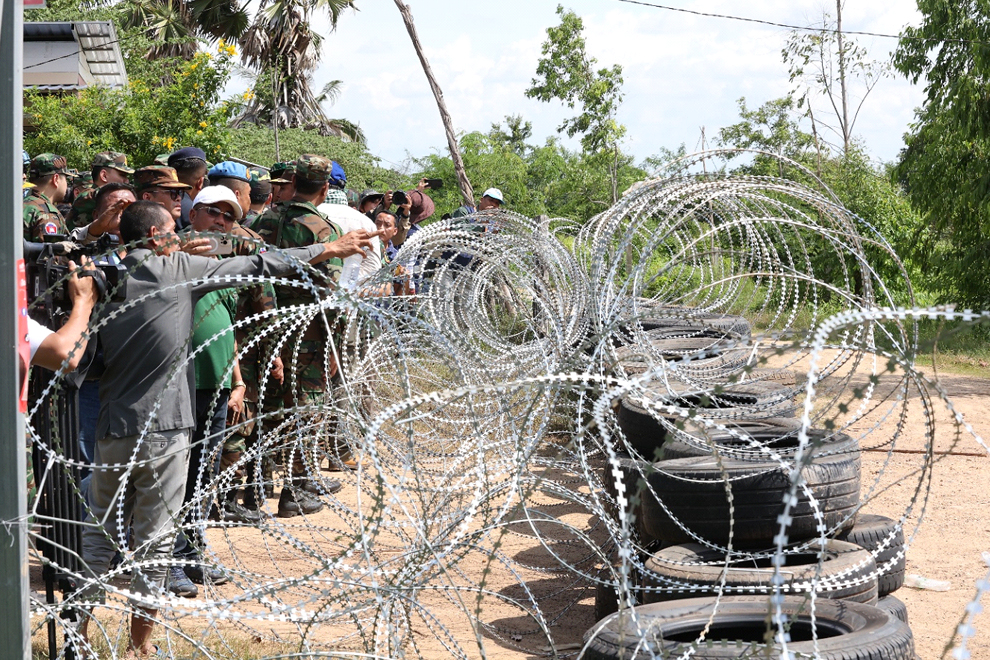
The governor of Banteay Meanchey province has sent a letter to his counterpart in Thailand’s Sa Kaeo province, urging Thailand to respect existing agreements and memoranda of understanding, especially regarding Thai claims over Chok Chey and Prey Chan villages in O Bei Choan commune, O Chrov district.
Governor Oum Reatrey called for all parties to await the decisions of the Cambodia-Thailand General Border Committee (GBC) and the Joint Boundary Commission (JBC).
“I would like to clarify that this issue pertains to border management, surveying, demarcation and boundary marker placement, which fall under the jurisdiction of the Cambodia-Thailand GBC and JBC, in accordance with the border cooperation agreement of September 29, 1995, and the 2000 Memorandum of Understanding (MoU 2000) on the surveying and demarcation of the Cambodia-Thailand land border,” he wrote, in his September 2 letter.
On August 29, Sa Kaeo governor Parinya Phothisat wrote to Reatrey, demanding that Cambodia relocate 170 Cambodian families, which Thailand claims are residing on Thai territory in Ban Nong Chan and Nong Ya Kaew villages, Khok Sung district, Sa Kaeo province. The two villages correspond with Chok Chey and Prey Chan.According to the Thai media outlet The Nation, the affected families include 135 in Chok Chey and 35 in Prey Chan.
Reatry explained in his missive that any unilateral actions that affected the villagers’ lives and livelihoods would violate the MoU 2000, the Cambodia-Thailand ceasefire agreement of July 28, the spirit of the extraordinary GBC meeting held on August 7, in Malaysia, and the Regional Border Committee (RBC) meeting between the two countries on August 22.
“I request that Your Excellency maintain the current border situation and the status of residents living there, and leave this matter to the GBC and JBC, which are the correct mechanisms for resolving this issue. I am confident that this matter will be resolved peacefully and in accordance with international law at the upcoming GBC and JBC meetings,” he added.
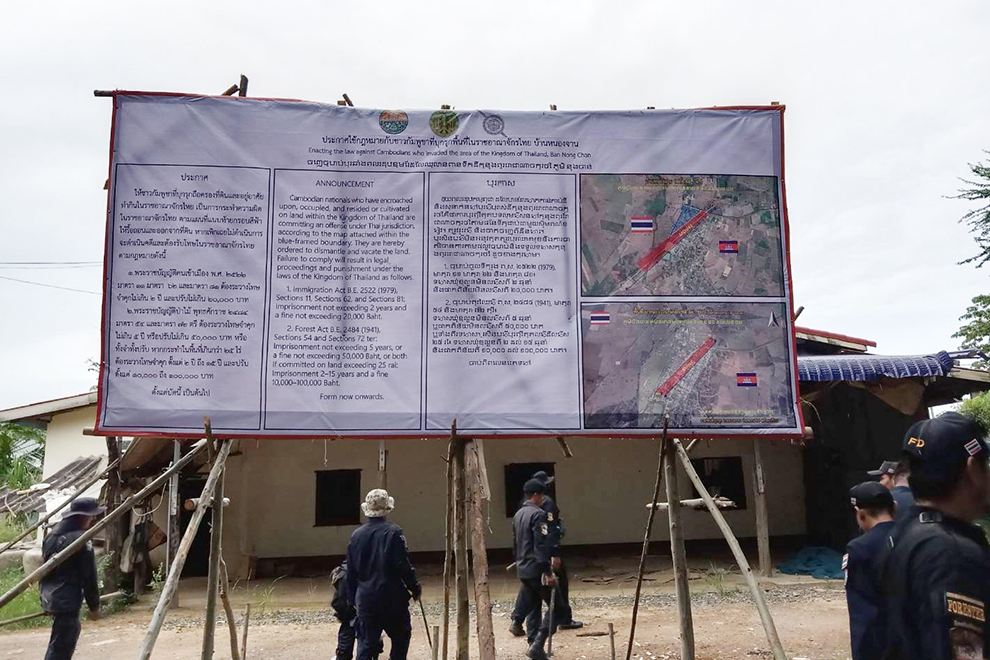

Cambodia has repeatedly asserted that these areas are Cambodian territory and that residents have lived there for a long time. In addition, many Cambodians who lived in refugee camps during and after the Khmer Rouge era have confirmed that these locations are unequivocally Cambodian territory.