Cambodia has demanded that Thailand withdraw from Cambodian sovereign territory, formally accusing the neighbouring country of seizing and maintaining control over parts of its land in violation of a ceasefire agreement, international law and existing bilateral border arrangements, according to a statement issued by the Ministry of Foreign Affairs and International Cooperation on January 2.
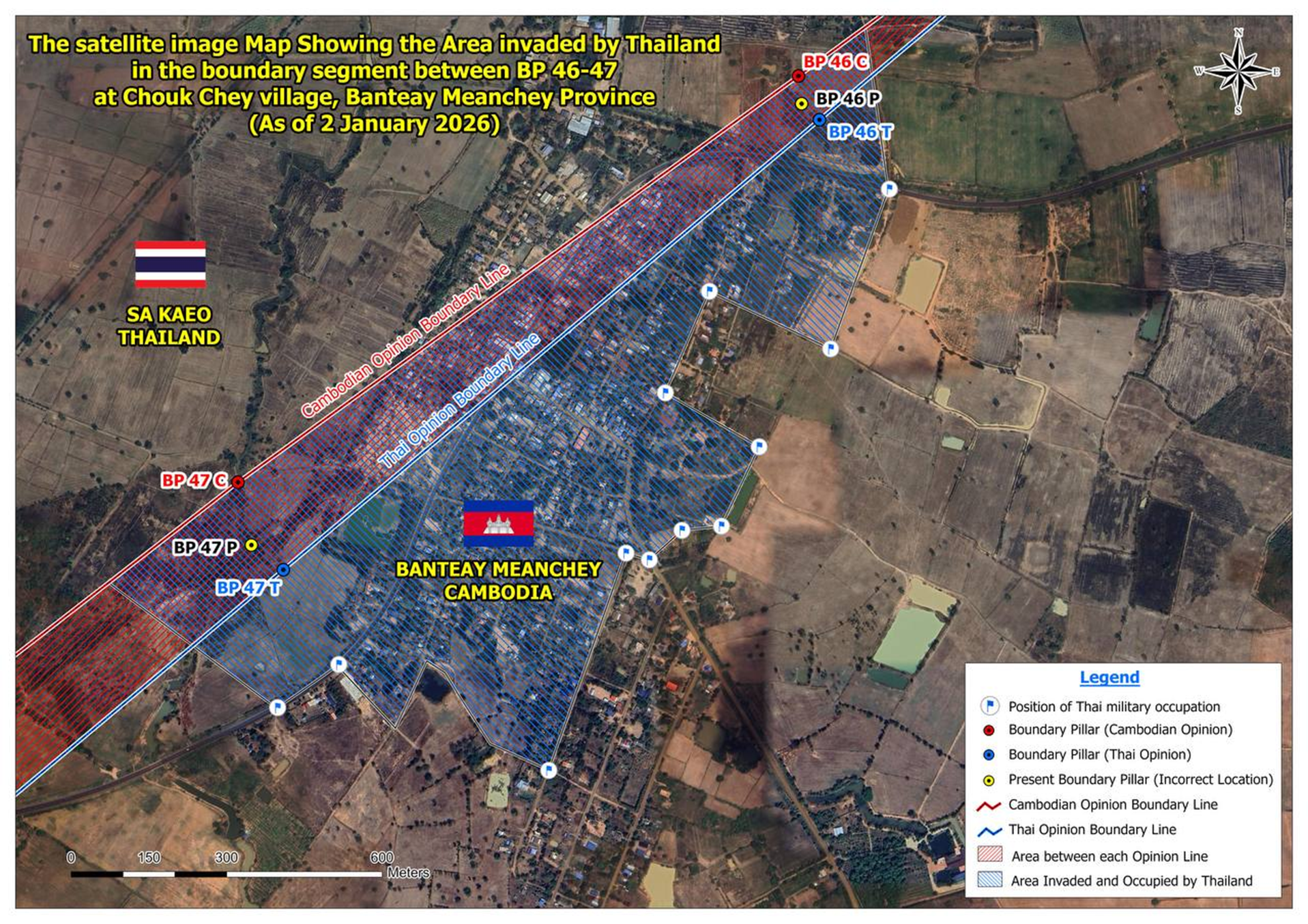
“During their full-scale military operations from December 7-27, 2025, Thai armed forces carried out coordinated and systematic military attacks across multiple sectors of the internationally recognised boundary, forcibly entering, seizing and placing under their effective control areas situated unequivocally within Cambodian territory in four provinces,” said the statement.
The alleged incursions occurred in four provinces — Banteay Meanchey, Pursat, Preah Vihear and Oddar Meanchey — and continued even after a ceasefire took effect on 27 December.
Banteay Meanchey Province: Prey Chan abd Chouk Chey villages and the Boeung Trakuon area, comprising four villages.
Pursat Province: Phluk Domrei area and the Thma Da International Point of Entry area (Chey Chomneas checkpoint).
Preah Vihear Province: An Ses area, Ta Thav area and Phnom Trap area.
Oddar Meanchey Province: O Smach area, Prasat Khnar, Ta Krabei Temple, Ta Mone Thom Temple, Chob Angkunh area and Chok Krous area.
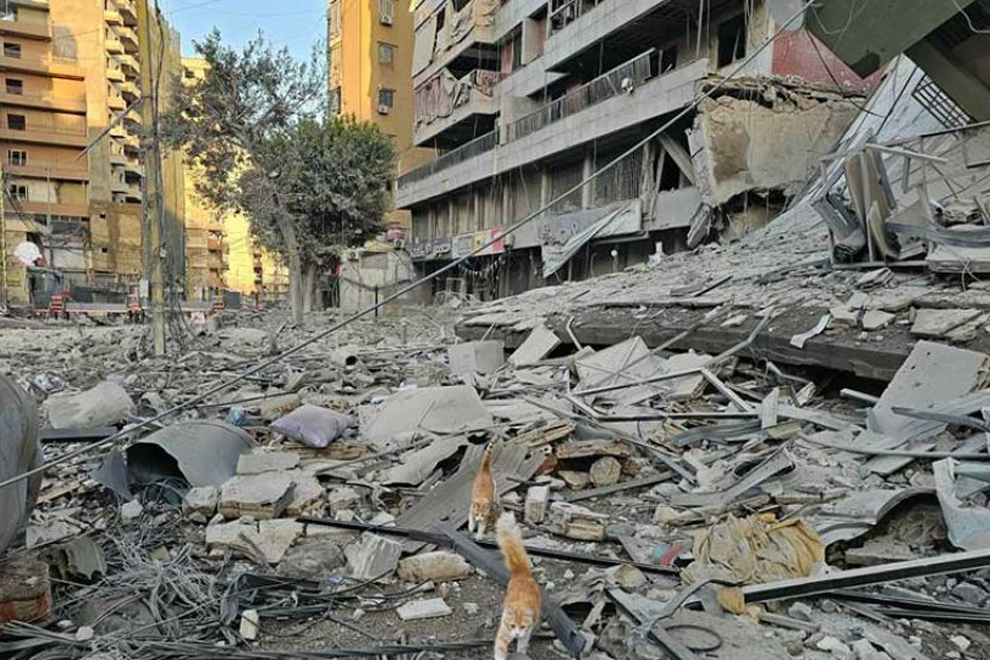
The operations did not stop with the ceasefire. The statement accused Thai forces of intensifying the demolition of Cambodian civilian homes, cultural sites and other infrastructure in occupied areas, particularly in Prey Chan, Chouk Chey and Boeung Trakuon villages, as well as around the Thma Da border crossing.
Satellite images were cited by the Cambodian side as evidence of the destruction.
“These actions further deprive displaced Cambodian civilians of their right to return to their places of habitual residence,” the ministry said, describing the situation as a “gross violation” of international humanitarian and human rights law.
Cambodia argued that Thailand’s continued military presence and control over the disputed areas amount to an “unlawful and continuing occupation” without any legal basis under international law.
The statement cited provisions of the UN Charter prohibiting the use of force against the territorial integrity of another state, as well as articles of the Geneva Conventions and their Additional Protocols that ban attacks on civilian objects and the destruction of property not justified by military necessity.
In the same statement, Cambodia issued a set of demands to Thailand, calling for an immediate cessation of all hostile military activities along the border and within Cambodian territory, the withdrawal of Thai military personnel and equipment to positions consistent with the legally established boundary, and full respect for the mandate of the Joint Boundary Commissions (JBC).
It also urged Thailand to comply “in good faith” with the letter and spirit of all existing ceasefire and peace agreements.
Despite the strong language, the Cambodian government said it remained committed to an amicable resolution of border disputes through peaceful means and in accordance with international law.
It stressed that borders must not be changed by force and that any territorial control exercised as a result of military coercion has no legal effect.
“The Royal Government of Cambodia reaffirms its consistent and unwavering commitment to seeking an amicable resolution to all boundary disputes with Thailand, as with all its neighbours through peaceful means, in accordance with international law, while remaining resolute in upholding its principled position that borders must not be changed by force,” said the statement.
“Cambodia hopes that the international community encourages Thailand to settle the border disputes in accordance with international law and its obligations under the existing treaties and agreements,” it said.