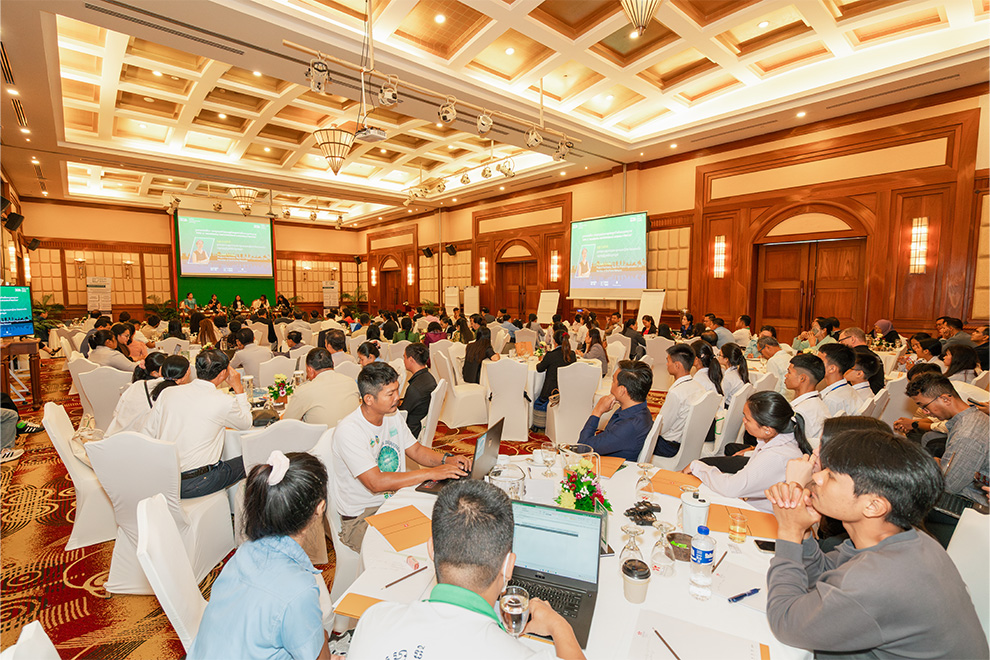
Cambodian authorities and development partners are stepping up efforts to strengthen evidence-based decision-making at the subnational level, with policymakers, researchers and civil society representatives gathering for the recent Ponlok Chomnes Provincial Policy Forum in Siem Reap.
The forum, held at Sokha Angkor Resort on February 5, underscored a growing recognition that national strategies can only deliver tangible benefits when informed by local data and community realities.
Speaking at the opening session, Sok Thol, Siem Reap deputy provincial governor, said the forum aimed to bridge provincial experiences with national policymaking to ensure that policies reflect the actual needs of citizens.
He outlined four key objectives, including linking grassroots voices to national decision-makers, promoting data-driven policy design, showcasing provincial research methods and strengthening collaboration among government bodies, research institutions and communities.
“The forum is an important part of contributing to the implementation of government laws and policies to promote socio-economic development and improve people’s livelihoods through responsive public services,” he said.
Supported by the Australian Government and implemented by The Asia Foundation, the Ponlok Chomnes programme has played what officials described as a significant role in reinforcing Cambodia’s research ecosystem and policymaking processes since its launch in 2019.
The initiative is currently in its second phase (2023–2027), continuing collaboration with government agencies, research institutions and civil society organisations to advance inclusive, data-informed policies.
Provincial authorities face increasingly complex challenges — from climate pressures to economic shifts — making reliable data a critical governance tool rather than a technical exercise, participants noted during the forum.
Thong Sokhun, director general of the General Department of Environment and Infrastructure at the Office of the Council of Ministers and member of the Ponlok Chomnes Technical Steering Committee, stressed that data-centred and people-focused policies are essential to translating national strategies into practical outcomes.
Effective policies, he said, must be grounded in realities encountered by provincial administrations and communities, while feedback mechanisms between local and national institutions remain vital to ensuring successful implementation.
Sokhun encouraged provincial authorities to actively engage communities, collect data and base decisions on clear evidence, while urging researchers to produce high-quality studies that policymakers can apply in practice.
The forum brought together national policymakers, subnational authorities, community representatives, civil society organisations and research partners, reflecting what officials described as a shared commitment to strengthening decentralisation, improving coordination and enhancing public service delivery.
For Siem Reap — a province with strong potential in tourism, agriculture and logistics — sustainable and inclusive development depends heavily on rigorous research and comprehensive data collection to guide long-term planning, Thol noted.
He added that major infrastructure projects, including extensive road upgrades and the new Siem Reap-Angkor International Airport, have already bolstered the province’s growth trajectory, with additional connectivity projects expected to further integrate the province into regional transport networks.