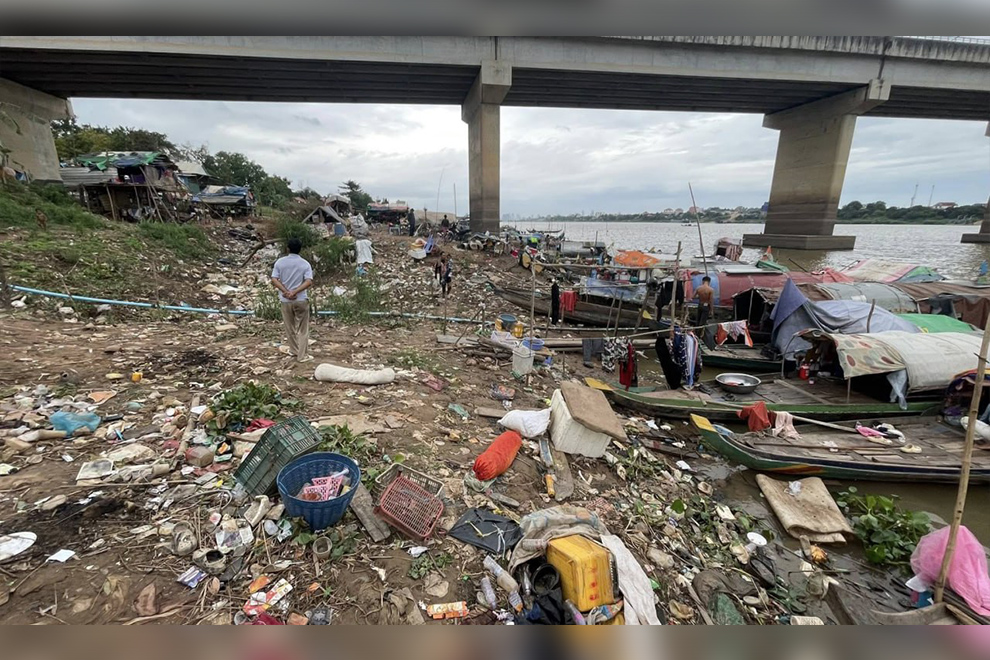
Cambodia has requested that the UN Environment Programme (UNEP) continue to provide cooperation on key projects aimed at preventing plastic waste pollution in the Tonle Sap Lake, the Mekong River and the sea.
Ministry of Environment secretary of state Chuop Paris issued the request during a meeting with Rolph Payet, executive secretary of the Basel, Rotterdam and Stockholm (BRS) Conventions, at the UN headquarters in Geneva, Switzerland, according to the ministry.
Paris highlighted Cambodia’s achievements and efforts under the leadership of environment minister Eang Sophalleth in implementing the Circular Environmental Strategy, especially in promoting “cleanliness” through various environmental campaigns carried out in recent years.
The BRS Conventions have previously supported Cambodia’s environmental priorities, particularly in preparing and updating the National Implementation Plan (NIP), managing and reducing persistent organic pollutants (POPs), implementing measures to prevent plastic waste pollution, managing solid waste disposal sites (reducing open burning) and managing electronic waste and hazardous waste.
Paris proposed that the BRS Conventions continue cooperation on five priority projects.
These include cleaning up plastic waste in the Tonle Sap Lake, preventing transboundary plastic waste pollution along the Mekong River within both the regional and Cambodian context, preventing marine pollution from plastic waste, reducing POPs generated from solid waste disposal sites and open burning, through environmentally safe waste management practices, and promoting the production and use of biodegradable plastics.
Payet praised Cambodia’s environmental progress and expressed willingness to explore ongoing support for the proposed projects.
The BRS Conventions are multilateral environmental agreements with the shared goal of protecting human health and the environment from hazardous chemicals and waste.
The meeting took place during the second part of the fifth session of the Intergovernmental Negotiating Committee to develop an international legally binding instrument on plastic pollution, including in the marine environment (INC-5.2). The conference was held from August 5 to 14 and involved 165 member nations.
During the INC-5.2 session, Paris also participated in a ministerial or high-level representative meeting and submitted a statement to the UNEP-INC Secretariat supporting the establishment of international legal measures to address plastic pollution.