



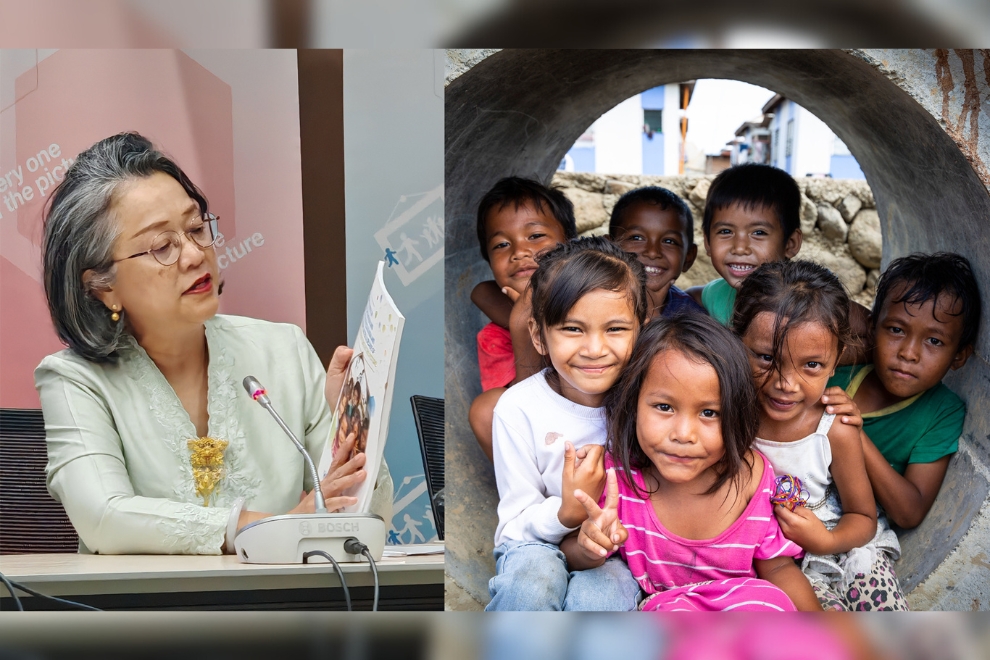
Cambodia has made significant strides in civil registration and vital statistics (CRVS) over the past decade, with timely birth registration up by 30 percentage points and death registrations more than doubling to 70 per cent by 2023.
In an exclusive written interview with The Post, Armida Salsiah Alisjahbana, UN undersecretary-general and executive secretary of the UN Economic and Social Commission for Asia and the Pacific (ESCAP), praised the country’s achievements but also pointed to ongoing gaps — particularly in the quality of cause-of-death data and the timeliness of vital event registration.
As the CRVS Decade (2015–2024) nears its conclusion, Cambodia’s 2025 progress report is expected to help shape ESCAP’s future strategies, with a continued focus on building inclusive, resilient and interoperable CRVS systems across the region.
(ESCAP) is one of five UN regional commissions, Headquartered in Bangkok, it promotes regional cooperation to address economic, social and environmental challenges across Asia and the Pacific. ESCAP’s work spans areas like macroeconomics, trade, transport, ICT, social development, statistics and energy.
Alisjahbana has served in her current role since 2018. A trained economist, she was Indonesia’s Minister for National Development Planning from 2009 to 2014 and served as Alternate Governor to the World Bank and ADB.
She is also a professor of economics at Universitas Padjadjaran and holds degrees from the University of Indonesia and Northwestern University, as well as a PhD from the University of Washington. Alisjahbana brings deep expertise in development planning and sustainability to her leadership at ESCAP.
1. How does ESCAP assess Cambodia’s progress in achieving its nationally-set CRVS targets at the end of the CRVS Decade, and what notable improvements or gaps have been observed so far?
Cambodia’s CRVS improvement journey has been impressive. Since the start of the Asia and the Pacific CRVS Decade in 2015, the timely birth registration rate for infants has increased by about 30 percentage points, while timely death registration more than doubled to 70 per cent in 2023. As a result, Cambodia has achieved many national targets including certificate issuance for all registered births and deaths, birth registration for children under five and death registration within one year. Despite this progress, Cambodia’s review questionnaire for the 2025 Asia-Pacific CRVS Progress Report highlights ongoing gaps in the quality of causes of death data, production and dissemination of vital statistics, and the timeliness of births and deaths registration.
These achievements reflect strong government commitment, particularly from the Ministry of Interior, Ministry of Health and National Institute of Statistics of Cambodia, as well as support from development partners.
High-level delegates from these ministries attended the 2014 Ministerial Conference on CRVS in Asia and the Pacific and endorsed the shared vision of universal and responsive CRVS systems by 2024.
Building on this momentum, the Cambodian government adopted the National Strategic Plan for Identification (NSPI) 2017-2026, aligning with the Regional Action Framework. It also established the inter-Ministerial National Steering Committee on CRVS and Identification (NSCI), which has guided system-wide improvements, enabling Cambodia to meet its national CRVS targets. The 2023 Law on CRVS and Identification marks another milestone, providing a legal framework for future well-integrated CRVS ID improvements.
2. Given Cambodia’s near-universal birth registration but historically low death registration rates, what targeted support or guidance will ESCAP provide through the 2025 review process to help the country close this data gap?
Cambodia has notably increased birth and death registration rates over the past decade. However, further improvements are needed to make the CRVS system more timely, inclusive and resilient to reach universal civil registration. Significant systemic changes are also required to achieve improvements in death registration and recording of causes of deaths.
Strengthening coordination between the General Department of Identification, National Institute of Statistics and health ministry is crucial to address these needs, along with digitalisation and interoperability efforts.
ESCAP is working closely with the National Institute of Statistics, the Ministry of Planning and the General Department of Identification (interior ministry) to conduct a completeness assessment of Cambodia’s CRVS system.
The assessment is a critical first step towards universal civil registration as it will help determine population groups currently left out of the system. Once finalised, the Government can use the findings to develop targeted interventions for hard-to-reach populations and people in vulnerable situations. In addition to ESCAP, several development partners, such as Vital Strategies, GHAI, WHO and UNDP, have supported Cambodia on legal reforms, processes redesign, investment planning and infrastructure development to enhance the CRVS system.
3. With the possibility of extending the CRVS Decade beyond 2024, how will the results from Cambodia’s 2025 progress questionnaire influence ESCAP’s priorities or strategies for future regional CRVS collaboration?
The key areas of focus for the extension will be inclusivity and resilience of CRVS systems. Cambodia has already taken important measures in this direction including hosting the Second Meeting of the South-East Asia Civil Registration Professionals Network earlier this year. However, the 2025 progress questionnaire and report recommendations highlight additional areas for improvement. At the regional level, ESCAP will continue to strengthen cooperation by providing a platform for countries to share experiences, lessons learned and innovative solutions on enhancing CRVS inclusivity and resilience, as well as targeting activities to the evolving needs of all countries in the region. ESCAP will also work closely with development partners to explore the possibility of complementing their existing and future support to the Government of Cambodia.
