Cambodia has stepped up fuel market oversight and warned petrol station operators against price manipulation as governments across Southeast Asia roll out emergency measures to cope with a surge in global oil prices triggered by geopolitical tensions.
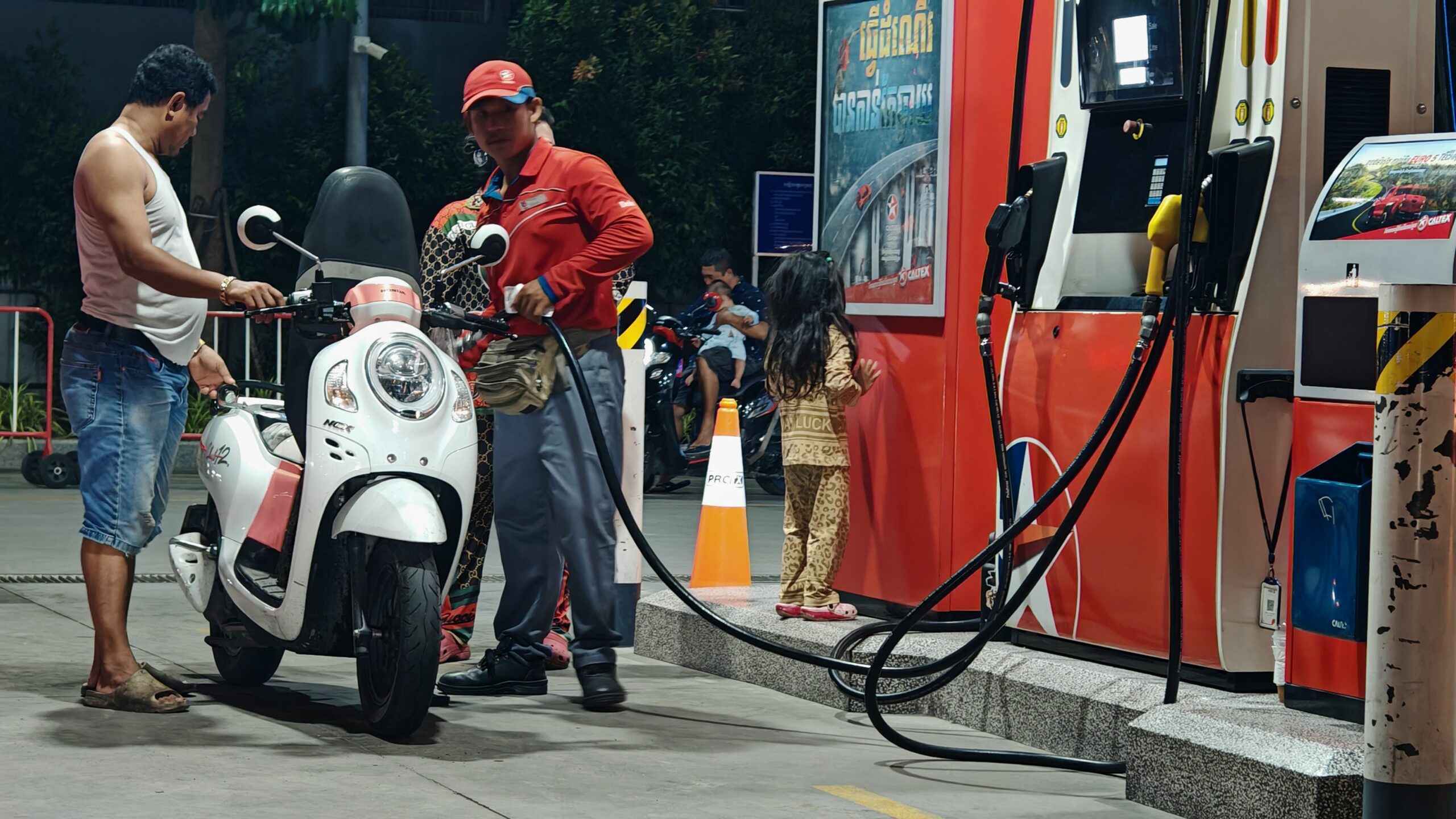
Retail fuel prices in Cambodia rose to 5,200 riel per litre for regular gasoline (Gasoline 92) and 6,050 riel per litre for diesel as of March 11, according to the Ministry of Commerce.
Despite government subsidies, the new rates remain in effect until March, reflecting the impact of international market volatility.
Authorities say the increase is largely driven by turbulence in global energy markets linked to escalating conflict in the Middle East, which has disrupted shipping routes and unsettled oil supplies.
In response, the commerce ministry issued a March 9 instruction ordering fuel distribution companies, petrol stations and depots nationwide to strictly follow regulations governing fuel sales and supply management.
“The directive requires stations to sell fuel strictly at publicly displayed prices based on official announcements from the ministry and to ensure the accuracy of fuel quality and quantity provided to customers,” it said.
Operators are also required to maintain transparency about fuel stocks and notify authorities in advance if supplies are expected to run out or if stations intend to temporarily suspend sales.
“Stations and depots must report stock levels when supplies fall to around 10 per cent of capacity so that regulators can monitor supply conditions and respond quickly to potential shortages,” it said.
The ministry said the measures are intended to ensure transparency in the fuel supply chain and prevent opportunistic practices during periods of price volatility.
Officials from the ministry’s General Department of Consumer Protection, Competition and Fraud Repression (CCF), along with provincial commerce departments and the Ministry of Mines and Energy’s local offices, are conducting inspections to ensure stations comply with technical standards and fair sales practices.
Authorities have also urged the public not to hoard fuel or store excessive quantities, warning that improper storage could create serious fire hazards and threaten community safety.
Energy minister Keo Rattanak recently reassured the public that Cambodia continues to receive regular fuel imports despite rising prices.
Speaking during a public forum on March 8, he said the Kingdom maintains sufficient reserves to last about 21 days, even if fuel imports were temporarily halted, adding that supplies continue to arrive daily.
“We are not in a situation of fuel shortage,” he said.
“The problem is that the fuel price has now increased, and newly imported fuel will consequently be at a higher price,” he added.
The minister also warned petrol station operators that licenses could be revoked if they sell fuel above government-set prices.
“If you do not respect the conditions set and follow the government’s instructions, the energy ministry will revoke the license and permanently ban you from the gasoline trade,” he said.
Authorities also cautioned individuals against purchasing fuel in large quantities for resale at higher prices, warning that such activities could lead to arrest.
Across Southeast Asia, governments are adopting various strategies to mitigate the impact of rising energy costs as oil prices climb amid instability affecting global supply routes.
Vietnam has encouraged businesses to allow employees to work from home to reduce fuel consumption while cutting import tariffs on certain fuel products to zero to stabilise supply.
Officials warned that fuel shortages could occur in some areas if geopolitical tensions continue to disrupt global supply chains, according to Viet Nam Express (VNE).
At the same time, the government has introduced tax relief measures aimed at stabilising domestic supply. Domestic gasoline and diesel prices increased across the board from 00:00 on March 11, with RON95 gasoline exceeding 29,000 VND per litre (about 4,500 riel).
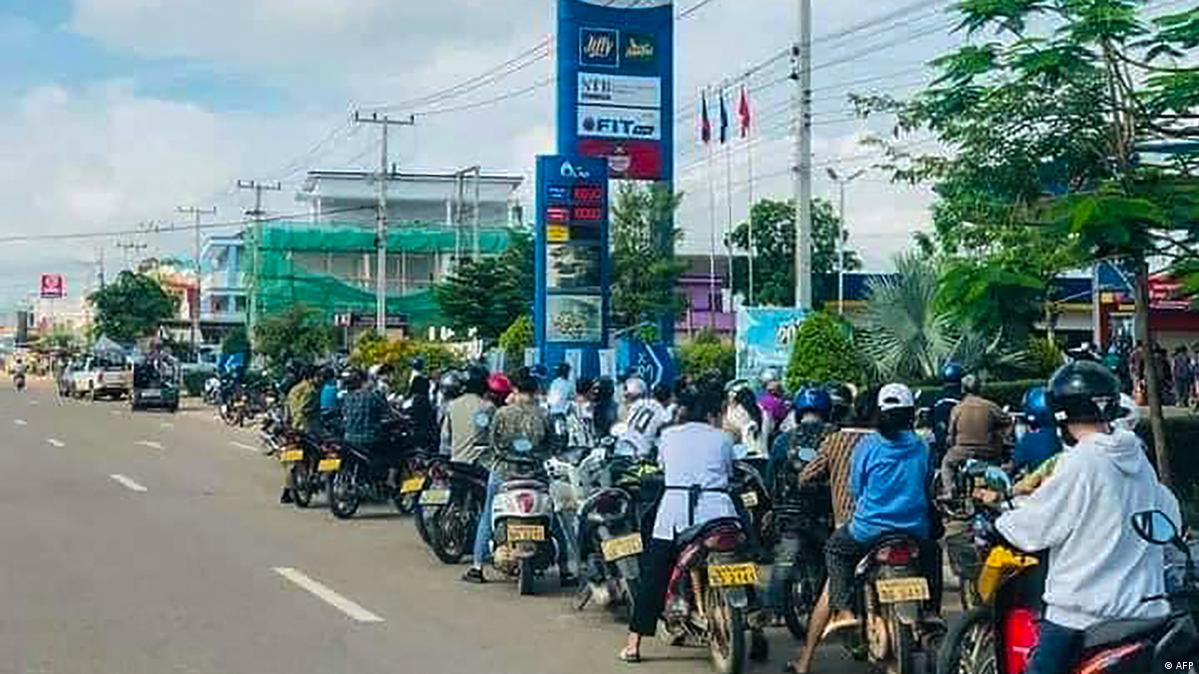
In Laos, fuel prices surged sharply on March 6, with authorities warning distributors against hoarding and ordering companies to report daily supply levels.
“Retail fuel prices increased to 38,230 kip (about 7,100 riel) for premium gasoline, 32,220 kip (about 6,000 riel) for regular gasoline and 32,900 kip (about 6,100 riel) for diesel,” according to a new pricing announcement that took effect early that morning, The Laotian Times reported.
Myanmar has introduced one of the region’s most drastic responses: a nationwide fuel rationing system for private vehicles.
The policy, announced by the country’s National Defence and Security Council, took effect on March 7 and restricts vehicles to operating on alternating days based on whether their licence plate numbers are even or odd.
Myanmar relies heavily on refined petroleum imports from regional hubs such as Singapore and Malaysia, which process crude oil from the Middle East.

As of March 6, diesel was priced at 2,610 Myanmar kyats (MMK), while premium gasoline stood at 2,595 MMK (about 4,900 riel) and regular gasoline at 2,525 MMK (about 4,800 riel), according to denkomyanmar.com.
Thailand has urged households to conserve energy by setting air-conditioners at 26°C and reassured the public that national oil reserves remain sufficient.
The Thai Ministry of Energy said raising the temperature by just one degree Celsius can reduce electricity consumption by three to five per cent, according to The Nation.
Fuel prices in Thailand over the past 24 hours stood at 31.05 baht (about 3,900 riel) per litre for gasoline 95, 40 baht (about 5,100 riel) for premium gasoline 95, and 30 baht (about 3,800 riel) for diesel.
Analysts say the developments highlight Southeast Asia’s heavy reliance on imported fossil fuels and its vulnerability to external shocks.
Nearly a fifth of global oil shipments pass through the Strait of Hormuz, a strategic shipping route linking Middle Eastern producers to Asian markets.
Any disruption to traffic through the narrow waterway can quickly drive up fuel prices across the region.