



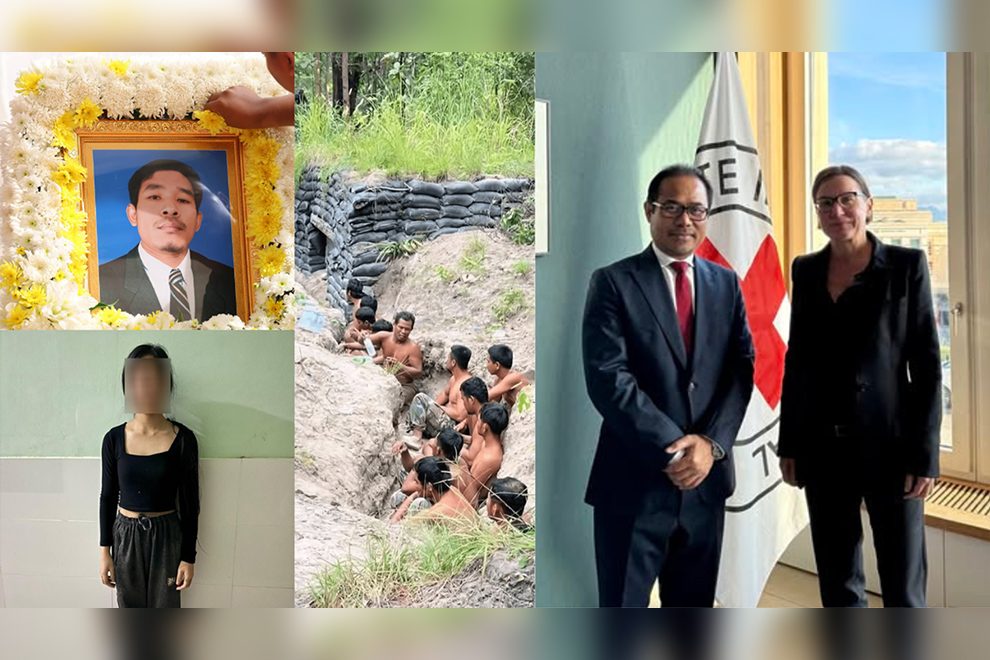
In Dara, permanent representative of Cambodia to the UN in Geneva, met with Mirjana Spoljaric, president of the International Committee of the Red Cross (ICRC), to update her on the situation of the ongoing armed conflict between Cambodia and Thailand. He also detailed several alleged human rights abuses committed by Thai soldiers against Cambodian civilians.
During the November 18 meeting, Dara highlighted serious violations committed by the Thai armed forces, including the shooting of unarmed Cambodian civilians, resulting in one death and three injuries, the alleged gang rape of a Cambodian teenage girl by seven Thai soldiers, and other serious incidents affecting civilians, protected persons and protected objects.
A press release from the Cambodian Permanent Mission noted that Dara expressed grave concerns over the continued detention of 18 Cambodian soldiers, who were illegally captured in what constitutes a serious violation of the Third Geneva Convention.
He also raised concerns about the mental health condition of one soldier who was returned by the Thai side, as well as their being forced to sign agreements not to return to the front lines. He stated that such agreements are prohibited under the Third Geneva Convention.
Cambodian leaders, including Senate president Hun Sen, do not consider the 18 captured Cambodian soldiers prisoners of war (POWs), as Thai soldiers entered Cambodian territory to capture them after a ceasefire had already been in effect for around eight hours. Cambodia refers to the men as hostages that Thailand is using as bargaining chips for their demands.
Nevertheless, Dara informed Spoljaric about the legal requirement to release prisoners of war, citing Article 118 of the Convention, which requires the “immediate and unconditional repatriation of prisoners of war” at the end of active hostilities.
“The continued detention without legal basis is an unlawful confinement, considered a grave breach in accordance with the Third Geneva Convention and its Additional Protocol I,” he said.
“Such a breach would lead to the international responsibility of the detaining state and the individual criminal responsibility for war crimes under the Rome Statute of the International Criminal Court,” he added.
