Around 30 years ago, a woman named Touch Pov sat looking at her fermented fish (Trey Ngeat) after customers complained that it was “as salty as pure salt”. Because of her passion for the family tradition of fish processing and her determination, she finetuned her flavour profiles until it became a hit with both domestic and international customers.
Now 63 years old, Pov is the owner of EPov Drief Fish Processing Handicraft, located in Boeung Snay Village, Sambo Meas commune, in Kampong Cham’s Kampong Cham town.
The unique taste of her products, created through her own innovation, has helped drive sales and income upward — reaching more than $10,000 per month, especially over the past two years with support from the CAPFISH-Capture project.
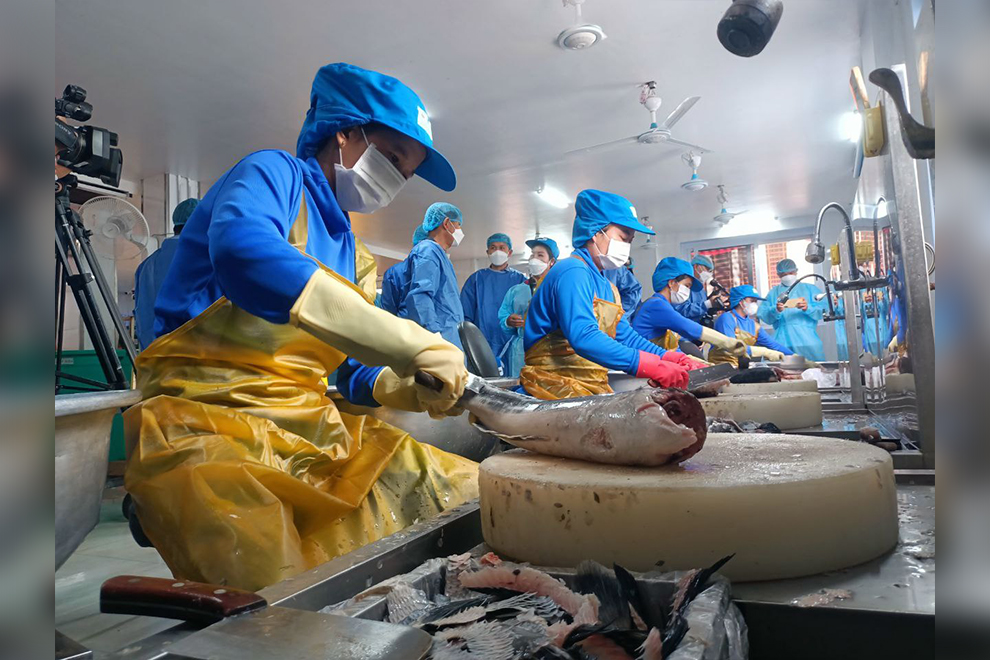
On Thursday, September 11, a delegation of around 70 people — including officials from the Ministry of Agriculture, Forestry and Fisheries, the EU, UNIDO and journalists — visited her operation.
Pov, known to many as “E Pov”, told her visitors that her revenue comes from two main sources, Online sales, generating around 25 million riel (approx. $6,200) per month, and other market sales, which are counted separately.
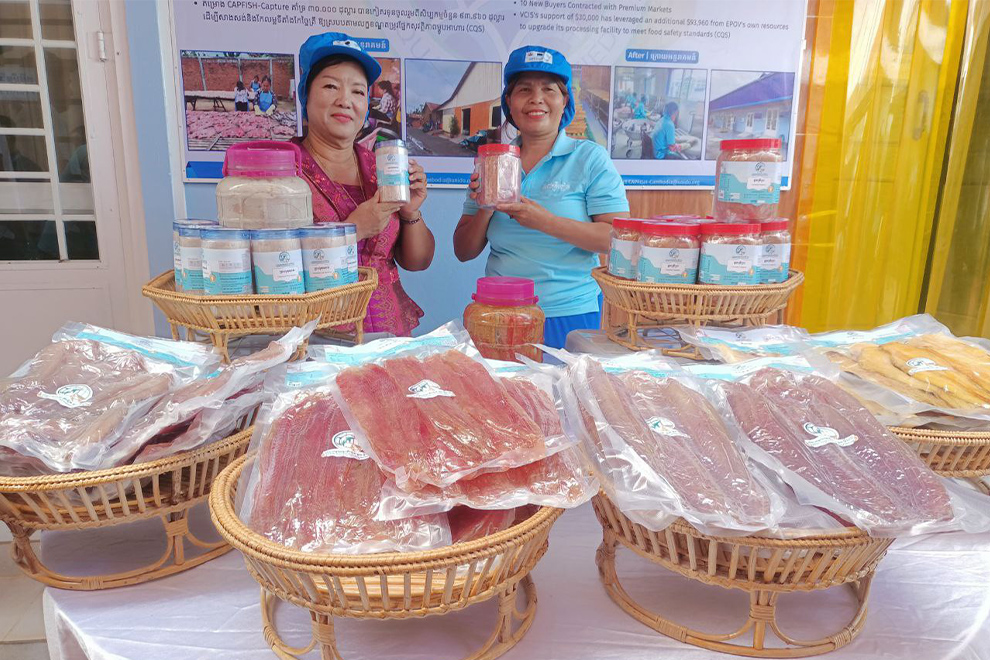

“From online sales, we get around 25 million riel per month. But that’s separate from what we sell at other markets. Altogether, our monthly revenue is more than 50 million riel (over $12,000). That’s both gross and net combined,” she explained.
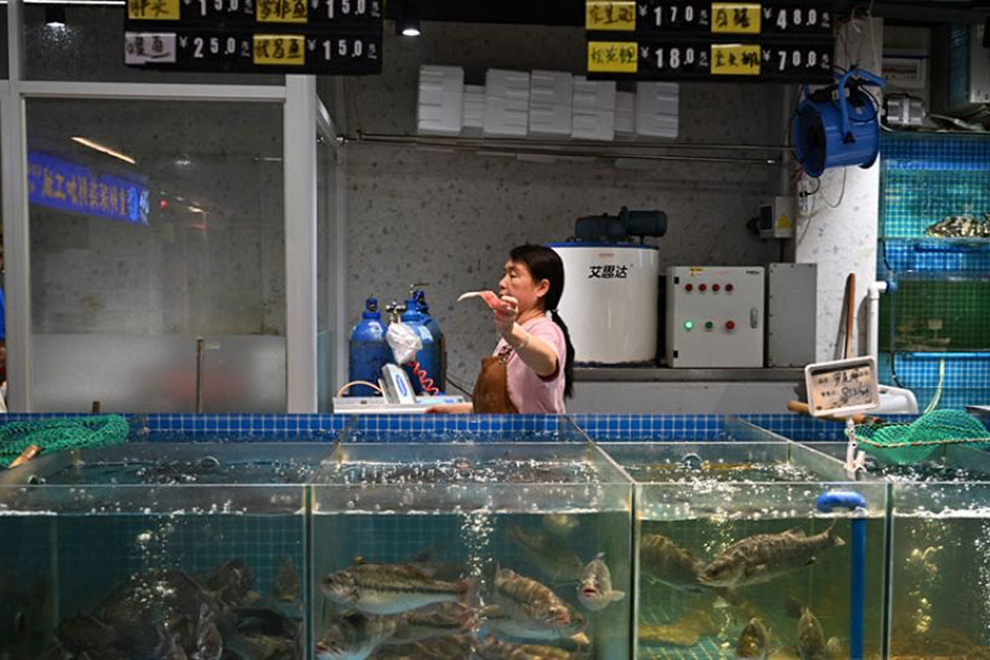
Pov originally sold dried fish at Kampong Cham market in the town, but never made a lot of profit.
“I love this trade. At first, I sold very salty fermented fish. Customers kept saying it was too salty. I sat down, looking at the fish — why is it too salty? Why can’t we make it right? We have our hands and feet, so let’s try,” she recalled.
“I kept adjusting the flavour until customers accepted it. That became my signature taste, created by me alone,” she noted.
For raw materials, she explained that she bought farmed fish from local farmers, not imports. Farmers now increasingly raise fish to the standards which her enterprise will accept.
“We use very little natural fish — like Trey Chhloun and Trey Keh. At my place, we don’t lie, we tell the truth — it’s farmed fish. Farmers in Cambodia raise the fish and sell it to us. Natural species, like small Trey Real, is so small to process into dried fish,” she explained.
Her enterprise was registered with the provincial Department of Industry, Science, Technology and Innovation in 2023. It sources fresh fish from local aquaculture farmers, fishers, traders and members of the Cambodian Aquaculturists Association. Initially, her products mainly served low-income customers, but now she is moving into higher-value markets, including Cambodians living abroad. Improved hygiene, creative product development and technology adoption have driven this growth.
The handicraft produces dried and fermented fish products, including paórk and mam, from various fish species such as pangasius, giant/snakehead and snakeskin gourami.
It targets two market segments, low-to medium-income consumers, including green shops in Phnom Penh, and Cambodian consumers abroad. The average annual sales of dried fish are estimated to be about 38,000 kg. Products are categorised into different grades, with prices varying based on fish species, packaging and the size of orders.
To boost competitiveness, she plans to invest in cleaning and sanitation equipment for hygienic processing rooms, which will increase production capacity and meet CQS (Cambodian Quality Seal) standards. With CAPFISH-Capture support, she expects to boost sales to around 40,000 kg per year, with a projected 20 per cent increase. These investments will improve food safety, expand access to low- and middle-income markets and have positive impacts across the fish value chain — creating jobs and income.
The project has also supported training on business proposal writing, enterprise management, consultancy, social and environmental management, branding, packaging and logo design. Additionally, it has helped showcase products at events in Phnom Penh, trained staff and partners in food safety basics and CQS requirements and assisted her enterprise in achieving official CQS certification.
Her enterprise has invested about $93,960 together with the CAPFISH-Capture project — covering about 76 per cent of total investment — to upgrade processing infrastructure to meet food safety standards and expand into new markets.
Such achievements would not have been possible without strong support from the Fisheries Administration and other value chain partners, who ensured her enterprise could obtain safe, high-quality fish certified under CQS standards.
Currently, the business distributes about 38,000 tonnes per year to both domestic and premium markets, including Cambodian diaspora communities abroad. Sales are expected to grow another 10% by the end of 2025 due to rising online orders.
Overall, the project’s interventions have not only boosted income, reduced poverty and created jobs, but also addressed food safety concerns, protected public health and contributed to Cambodia’s GDP.
The CAPFISH-Capture project is funded by the EU and implemented by the Fisheries Administration, in partnership with UNIDO.