



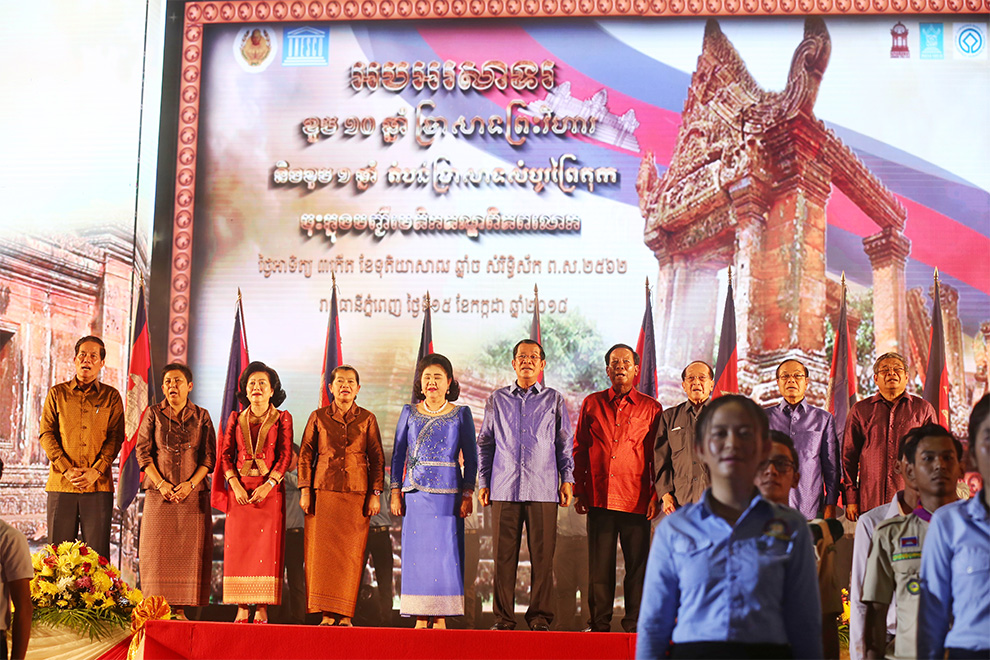
The Kingdom of Cambodia marked a significant milestone today, celebrating the 17th anniversary of Preah Vihear Temple’s inscription as a UNESCO World Heritage site.
On the July 7 anniversary, His Majesty King Norodom Sihamoni celebrated its recognition as a national cultural treasure, thanking the Cambodian people and leaders for their efforts to preserve it.
Prime Minister Hun Manet also marked the occasion, emphasising the temple’s historical significance and the shared responsibility to protect Cambodia’s cultural heritage.
He recalled when the grand celebrations began in full swing at Phnom Penh’s Olympic Stadium on July 8, 2008, with thousands of Cambodians gathering to honour their nation’s heritage and cultural pride, just a day after the temple was officially inscribed as a World Heritage site.
The atmosphere was electric, with a sea of people waving Cambodian flags, their faces alight with the joy of the historic commemoration.
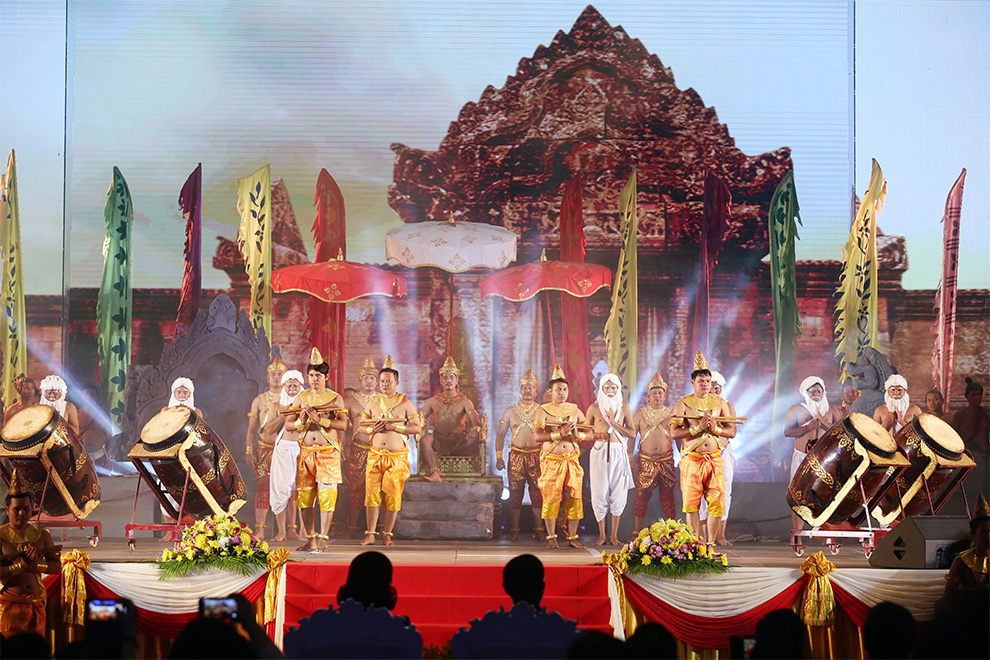
The event, which was attended by government officials, dignitaries and citizens, featured performances and cultural exhibitions that highlighted the nation’s long and storied history.
At the heart of the huge celebrations was the late Deputy Prime Minister Sok An, whose tireless efforts at the 32nd UNESCO World Heritage Committee session in Quebec, Canada, in 2008, led to Preah Vihear’s official inscription.
“Listing the Preah Vihear Temple as a World Heritage Site showed us that the temple is top Khmer architecture for humanity,” Sok An declared at the time.
Temples and pagodas across Cambodia also celebrated the UNESCO inscription of Preah Vihear, with monks and local communities holding prayer ceremonies and religious rituals.
These spiritual celebrations were a way to honour the temple’s historical significance and reflect the national pride and unity felt by the people.
The moment marked a historic diplomatic victory for Cambodia — but one shadowed by regional conflict.
From triumph to tensions: A tumultuous turn
While Cambodians celebrated the temple’s inscription with pride, the July 2008 decision deeply agitated Thailand.
The roots of the dispute trace back to colonial-era border demarcations, further complicated by Cold War geopolitics and rising nationalism on both sides.
The diplomatic row began when Cambodia submitted Preah Vihear Temple for World Heritage status in 2007.
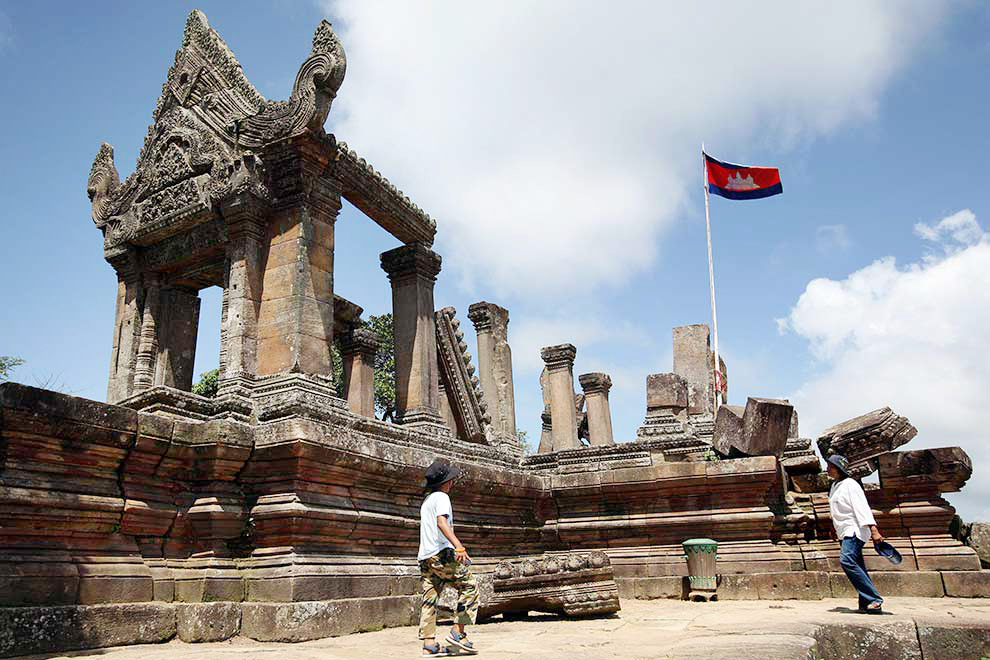
The temple, perched on a 525-metre cliff in the Dangrek Mountains, is surrounded by a disputed 2.6 square kilometres of land, which both countries claim as their own.
The conflict reached a boiling point in October 2008, shortly after the UNESCO inscription, when violent clashes between Thai and Cambodian troops occurred near the temple.
Thailand, particularly elements aligned with its Yellow Shirt political movement, objected to Cambodia’s solo nomination of the site.
“The dispute began on July 15, 2008, when Cambodian authorities arrested three Thai nationals for attempting to plant the Thai flag near Preah Vihear Temple,” explained the Cambodian ambassador to the UN.
“In response, Thai soldiers crossed into Cambodian territory near Keo Sikhakirisvara Pagoda, about 300 metres from the temple. Thailand argued that the demarcation of the area, ruled to be Cambodian by the ICJ in 1962, had not been completed,” he added.
Within a week of the UNESCO decision, Thailand withdrew its ambassador from Phnom Penh and troop deployments followed.
Cross-border tensions escalated into deadly skirmishes, culminating in fatal clashes in October 2008 and again in 2011.
In July 2008, according to the BBC, Cambodia accused Thai troops of occupying the Ta Moan temple complex on Cambodian land, with around 70 Thai soldiers present. Thailand denied the claim.
“High-level diplomacy has been taking place to resolve the Preah Vihear dispute, which revolves around border areas drawn up by French cartographers a century ago,” said the BBC’s “Thais accused over new temple row” article, published at the time.
“An agreement was reached, following a meeting between the foreign ministers of both countries, to reduce troop numbers near the temple,” it added.
Cambodia, steadfast in its position, turned once more to diplomacy and legal instruments.
In 2013, the ICJ reaffirmed Cambodia’s sovereignty over the temple and ordered Thailand to withdraw troops from the promontory, though the surrounding terrain remained sensitive.
Letters from the Throne and Statesmen
To mark today’s anniversary, His Majesty King Norodom Sihamoni issued a royal message extolling the inscription as a “national cultural treasure and a world heritage site”, while expressing his “highest gratitude” to the late King Father Norodom Sihanouk and past and present leaders.
The King also extended deep appreciation to the Cambodian people and acknowledged the leadership of Hun Sen and Hun Manet, along with the efforts of Sok An in the vital conservation work.
“This inscription has allowed the Kingdom of Cambodia to open a new chapter in history, where the world recognises the Temple of Preah Vihear as a cultural and historical treasure, a great legacy of the Khmer ancestors left for future generations to preserve,” His Majesty wrote.
Senate president Hun Sen — who, as premier, initiated the nomination process in 2001 — shared a video message featuring a song composed for the anniversary.
“I still want to achieve two of my goals. First, turn the former battlefield into a developed area. Second, turn borders with all neighbouring countries into borders of peace, friendship, cooperation and development,” he said.
Hun Sen also recalled that it was under King Sihanouk’s leadership that Cambodia secured the 1962 ICJ ruling that first recognised Cambodia’s sovereignty over the temple.
Meanwhile, Prime Minister Hun Manet emphasised the temple’s architectural and spiritual grandeur.
“Stretching widely like a ship on the ocean, Preah Vihear Temple stands proudly atop a mountain peak… Built by eight Khmer ancestors who were former kings, this masterpiece embodies the soul of our nation,” he said, via a social media post.
He urged all Cambodians to treat cultural heritage not merely as symbols of the past but as foundations for future unity and peace.
A temple transcending stone
Perched atop the mountains, Preah Vihear is both monument and memory.
Constructed over centuries by Khmer kings and dedicated to the Hindu god Shiva, it exemplifies classical Khmer architecture with its intricate stone carvings and axial layout across the mountaintop.
According to UNESCO’s 2008 decision, the temple was inscribed under Criterion (i), recognizing it as “an outstanding masterpiece of Khmer architecture”.
Yet its political significance arguably overshadows even its artistic merit.
The temple continues to serve as a potent symbol of sovereignty and national pride, particularly for a generation that witnessed both the elation of 2008 and the danger that followed.
Recent confrontation with Thailand
A Cambodian soldier was shot and killed by Thai troops near Mom Bei, The Emerald Triangle area in the Dangrek Mountains, on May 28, further escalating tensions between the two neighbouring Kingdoms over unresolved border claims.
The incident follows was followed by a breakdown in talks during a June 14–15 Joint Boundary Commission (JBC) meeting. Cambodia noted that it was willing to discuss most border issues, but an agreement on the status of the Ta Moan Thom, Ta Moan Tauch and Ta Krabei temples and the Mom Bei area was off the table.
Cambodia submitted a case to the International Court of Justice (ICJ) on June 15, seeking legal clarity on the four contested areas.
Tensions were heightened again on June 27, when Thai troops allowed tourists to visit Ta Moan Thom Temple, triggering a verbal clash with Cambodian forces.
Prime Minister Hun Manet issued a July 2 warning to Thailand against blocking Cambodian access to the sites and called for a return to the pre-June 7 status quo.
Public support for the government’s legal approach remains high, with over 99% of Cambodians backing the move to the ICJ. Thai officials, however, continue to push for bilateral talks.
With military forces still present near the disputed sites, the fatal shooting has raised concerns that diplomacy may give way to further conflict unless tensions are swiftly defused.
