



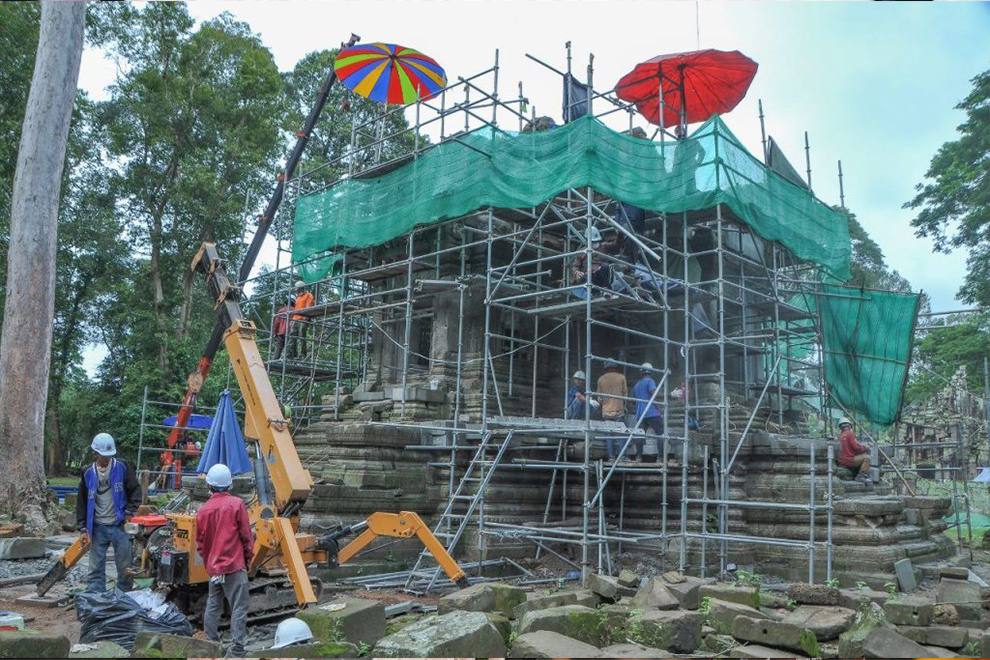
The Apsara National Authority is set to complete the restoration of the historic Chorm Temple by the end of the year, marking a major milestone in the revival of Cambodia’s cultural heritage.
“Situated in the Preah Pithu Temple Group of the ancient city of Angkor Thom, the temple had suffered significant damage over time, but restoration efforts are on track to restore its grandeur,” explained the Ministry of Culture and Fine Arts.
Chorm Temple, a small yet notable sandstone structure dating back to the early 12th century, had been in a deteriorated state for years.
The site, which shares a moat with the neighbouring Preah Pithu (Kor Sak Temple), had become increasingly dilapidated.
With a dedicated restoration project launched in 2019, the temple’s future now looks promising, with a full restoration expected to conclude by the end of 2025.
Eo Jinkyu, the lead architect overseeing the second phase of the restoration of Preah Lan Chol Dorei (Terrace of the Elephants) and the Preah Pithu Temple Group, noted that Chorm Temple was in a state of severe disrepair before renovation efforts began.
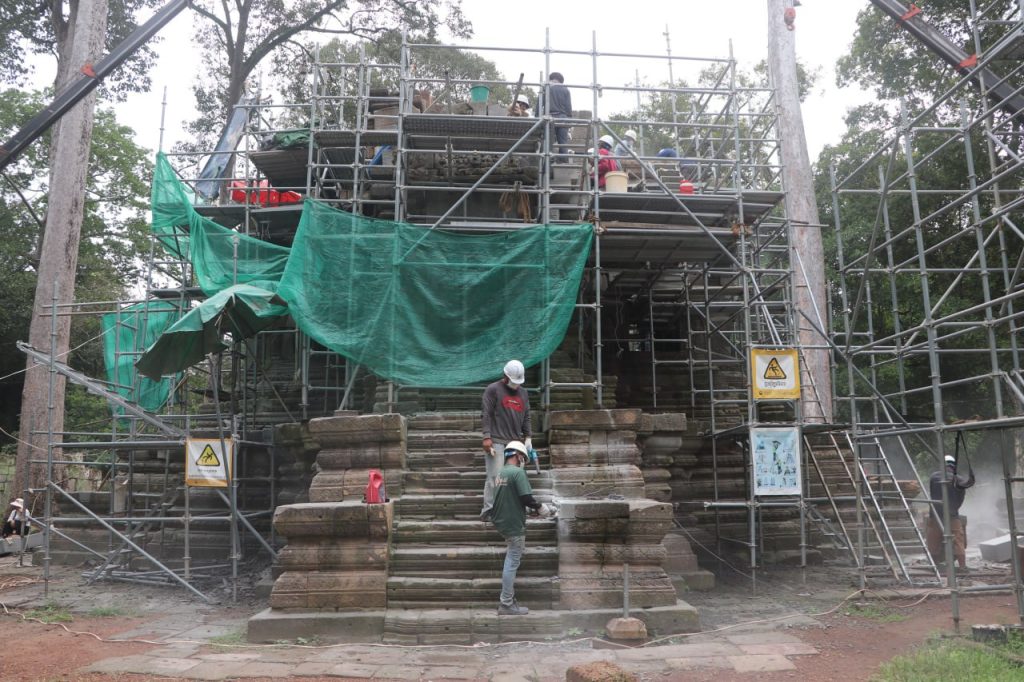
The temple’s foundation had been weakened, and parts of the structure had started to decay.
As a result, experts decided to move the entire temple to prepare a more stable foundation, a challenging task that has been carried out in stages.
“Before the renovation, Chorm Temple was highly dilapidated,” Jinkyu explained.
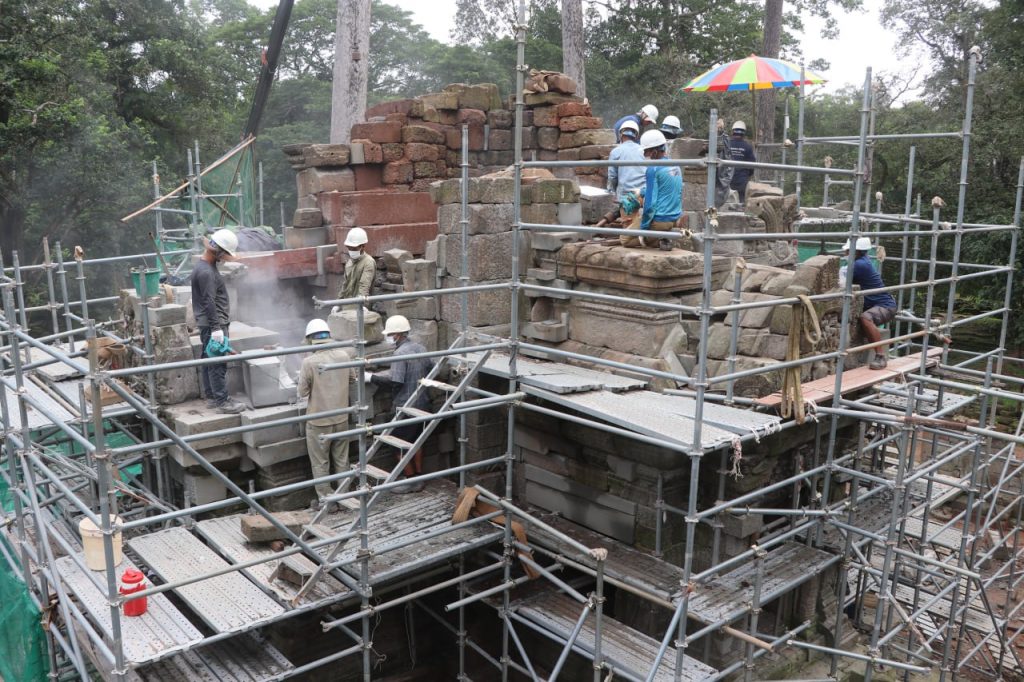
“The process involved moving the temple, assessing its foundation, and strengthening it with new materials to ensure its stability and longevity,” he added.
A team of South Korean and Cambodian experts, including architects, archaeologists and restoration specialists, have worked collaboratively on the project.
“The restoration is set to be completed in December 2025, with all hands-on deck to restore the temple to its former glory,” said the ministry.
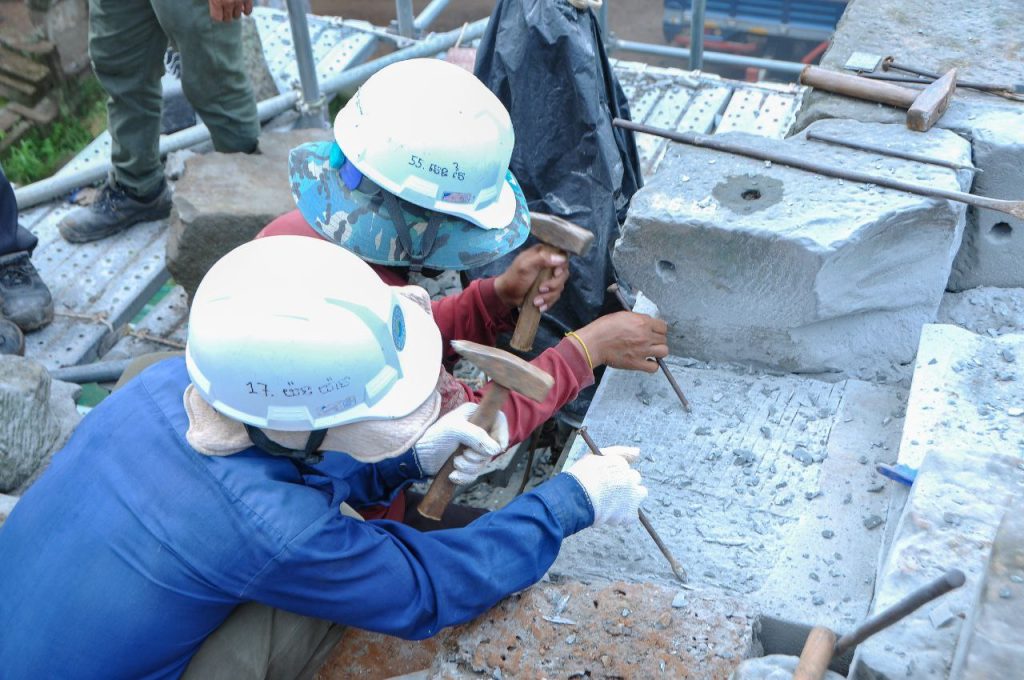
Park SungChul, a researcher and staff member of the Korea Cultural and Heritage Agency, elaborated on the challenges faced during the restoration.
After relocating the temple, it became apparent that the foundation had suffered severe damage. Some stones had decayed, and the structure was on the verge of collapse.
To remedy this, replacement stones were carefully chosen to meet the rice charter, a symbolic standard for durability in Cambodian temple construction.
“Certain parts of the temple had decayed over time, so it was necessary to replace some stones and add new layers to reinforce the structure,” SungChul added.
“The project is not just about rebuilding, but also about respecting the original architectural design and ensuring the temple’s strength for future generations.”
Cambodian experts also played an integral role in the restoration.
Thai Yamang, an architect with the Apsara National Authority, highlighted the contribution of Cambodian artisans, who were tasked with creating layout plans, identifying missing stones, and reassembling the temple’s scattered elements.
Over 200 stones have already been restored, with more being sought out for placement in the remaining gaps.
Yamang, a proud Cambodian restorer, shared his pride in contributing to the project.
“As a Cambodian citizen, it is an honour to help restore Chorm Temple,” he said.
“This temple, with its unique architectural style, will stand strong again, and I am confident that both Cambodian citizens and international visitors will come to appreciate its beauty and history once it is officially inaugurated,” he added.
Experts hope that the restored temple will draw tourists and locals alike, providing a deeper understanding of Cambodia’s ancient architectural feats and the dedication behind their preservation.
