The Cambodian Mine Action and Victim Assistance Authority (CMAA) has strongly rejected allegations made by the Royal Thai Army that Cambodia planted new landmines along the border near Ta Krabey Temple, after a Thai soldier was severely injured in a landmine explosion.
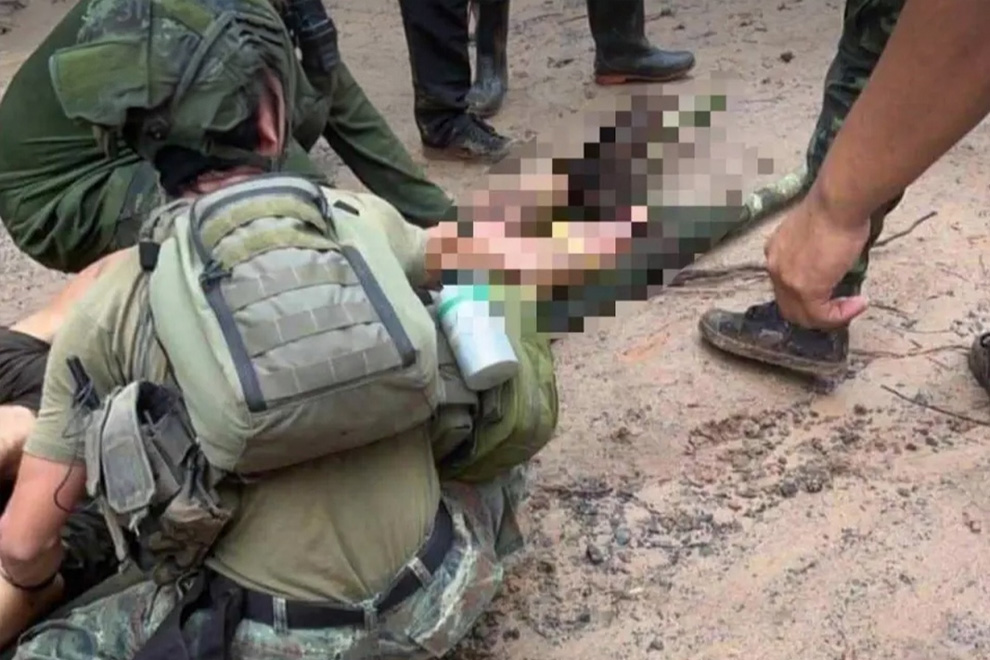
The latest incident, which occurred on August 27, resulted in the loss of part of the soldier’s lower right leg.
The Nation Thailand cited the Royal Thai Army as saying, “this marks the sixth such incident and the third since a ceasefire agreement was established between the two countries”.
The Thai Army spokesperson Winthai Suvaree accused Cambodia of deliberately violating both the ceasefire agreement and the Ottawa Convention, which bans the use of anti-personnel landmines.
“The deliberate planting of landmines to target our personnel is an intentional act with malicious intent,” he said.
“These recurring incidents in border areas reflect Cambodia’s hostile and continuous behaviour in threatening our side and violating Thailand’s territorial integrity, which is contrary to the ceasefire agreement reached at the recent GBC meeting,” he added.
Boonsin Padklang, commander of the Thai Second Army Region, also condemned Cambodia, asserting that Wednesday’s explosion represented a breach of international obligations and directly endangered Thai soldiers operating near the frontier.
The CMAA expressed sympathy for the injured soldier but firmly rejected the accusation as “baseless and lacking credible evidence”.
The authority reiterated that Cambodia has not used, produced or deployed new landmines since joining the Ottawa Convention in 2000.
“The area in question lies along the border near Ta Krabey Temple, which has for decades been heavily contaminated by landmines from past conflicts,” the CMAA explained.
“During the civil war and the Khmer Rouge period, millions of mines were laid across Cambodia’s northwest frontier, including in this very sector. The area is long known to be highly contaminated by various types of anti-personnel mines, including those with plastic casings,” it warned.
A plastic-cased mine escaping detection is consistent with the area’s legacy of contamination, not new planting. The Ta Krabey Temple area, cited by Thailand, is a well-known high-risk zone littered with war remnants, it explained.
It noted that mines with minimal metal content often evade detection, making incidents like this tragically consistent with legacy contamination rather than any new planting.
The CMAA called Thailand’s allegations premature and urged calm, cooperation and independent verification of any evidence.
“Both Cambodia and Thailand are States Parties to the Ottawa Convention and share a duty to clear old mines and prevent the use of new ones,” it said.
Cambodia also highlighted its progress in mine action since the 1990s, while acknowledging that then heavily contaminated border areas remain a persistent risk. Warning signs and humanitarian clearance operations continue across frontier zones.
The CMAA reaffirmed Cambodia’s commitment to the Ottawa Convention and the ceasefire agreement.
“We appeal to all stakeholders to resolve this matter responsibly, uphold peace along the border, and ensure the safety of both Cambodian and Thai citizens,” the statement said.
“We urge Thailand to strictly adhere to the ceasefire agreement by refraining from any troop movement during this period,” it added.