The Cambodian Mine Action and Victim Assistance Authority (CMAA) has emphasised that in order for Cambodia to achieve its goal of becoming “mine-free by 2030”, the country requires sustained political will, adequate resources and innovative methods, which must be supported generously by friendly nations and development partners.
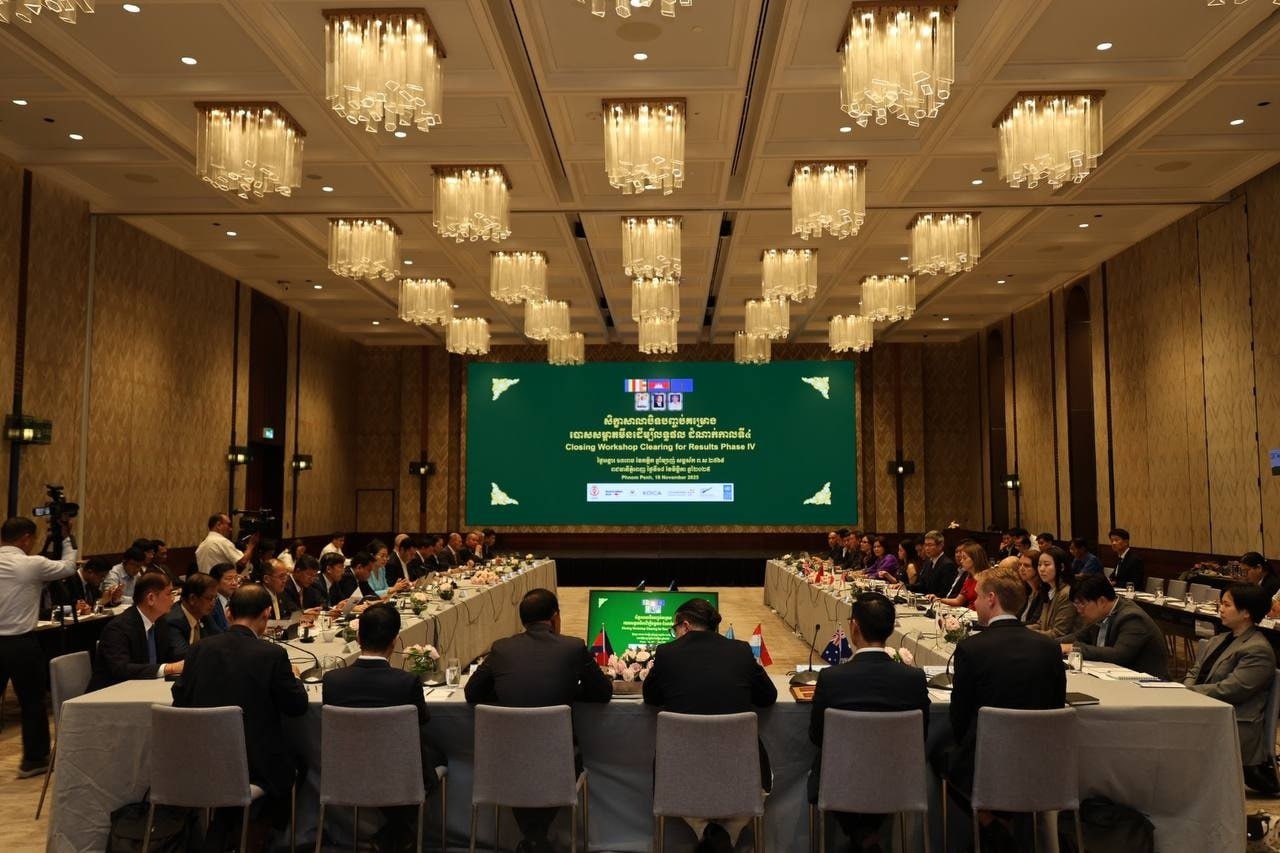
The remark was made by Senior Minister Ly Thuch, first vice-president of the CMAA, as he presided over the closing workshop of the “Clearing for Results – Phase IV” project on Tuesday, November 18.
According to Thuch, since 2020, more than 340,000 Cambodians saw their lives improved thanks to the clearance of over 174 square kilometres of mine-contaminated land by September 2025. These achievements also include progress in mine victim assistance, mine risk education and capacity building at both national and sub-national levels.
He added that Cambodia is now entering a critical new turning point — one that edges the nation closer to fulfilling a historic milestone: a mine-free Cambodia by 2030. This vision was reaffirmed in the new National Mine Action Policy 2026–2035.
“Through this goal, Cambodia will finally free itself from the deadly threats posed by landmines and explosive remnants of war, which for decades have taken lives, destroyed families and hindered Cambodia’s development potential,” Thuch said.
While celebrating present achievements, Cambodia must also recognise the scale of the challenges ahead. Landmines continue to turn fertile agricultural land into prohibited danger zones, threatening the safety and livelihoods of rural communities. Many minefields remain complex and require advanced technology, significant funding and skilled personnel for clearance.
These challenges form the basis for the launch of Clearing for Results – Phase V (2026–2030), which will require long-term commitment, strengthened cooperation and continued support from all stakeholders.
“Achieving a mine-free status will not mark the end of our work. It represents a transition into a new phase. Even after 2030, Cambodia will continue to face risks from remaining explosive remnants, requiring ongoing management,” said Thuch.
For this reason, he stated that CMAA must continue building sustainable national capacity to manage these risks effectively and ensure that mine action remains integrated into Cambodia’s broader development framework.
On behalf of the Royal Government and the people of Cambodia, he expressed deep appreciation for the progress made to date. He thanked CMAA’s key development partners, including UNDP, Australia, New Zealand, South Korea and Luxembourg, for their solidarity and global partnership in addressing humanitarian challenges and supporting a safer future for Cambodians.
He also extended his gratitude to many other countries and partners that have provided generous support to mine action in Cambodia, including the US, the UK, Japan, Germany, Norway, Switzerland, China, Ireland, Belgium and India, as well as development partners, civil society funds, the private sector and individual donors.
Thuch reaffirmed CMAA’s three core commitments: Ensuring every Cambodian can live and work safely, free from the threat of explosive ordnance; ensuring that no one is left behind; and expanding partnerships and cooperation to maximise the humanitarian and development impact of mine action in Cambodia.