



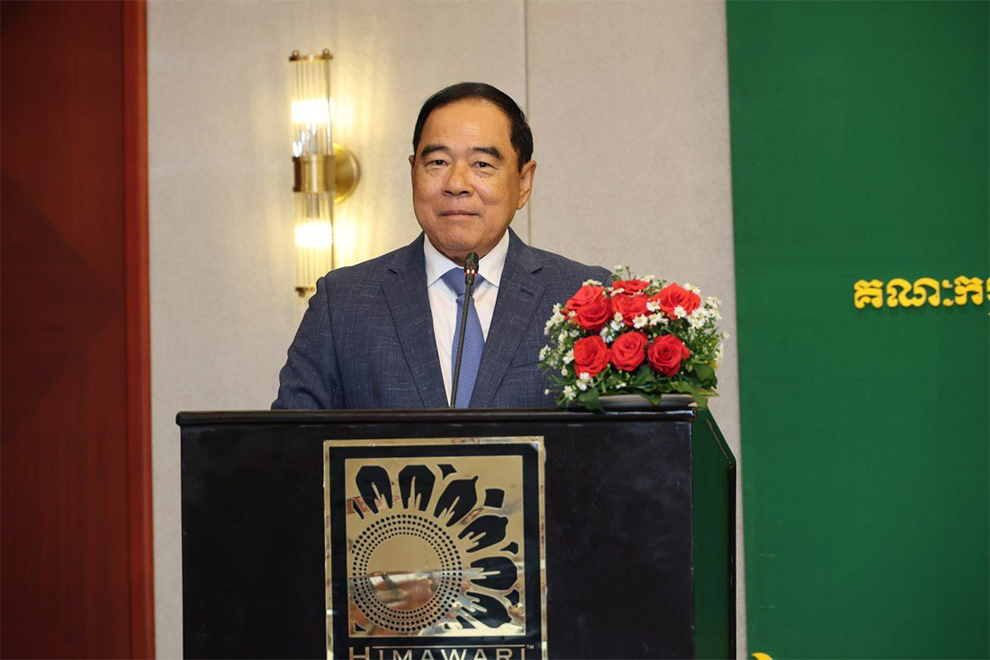
Senior Minister Ly Thuch underscored the existential threat climate change poses to the nation’s economy and livelihoods during the Policy Dialogue on Enhancing Climate-Responsive Macroeconomic Resilience in Cambodia, held today in Phnom Penh by the UN’s ESCAP and the National Committee for ESCAP.
The event saw the participation of policymakers, experts and development partners to chart a path toward a climate-resilient future.
“Climate change is not a distant concern — it is a present danger, a crisis that demands immediate action to protect our people and our economy,” Thuch said, highlighting Cambodia’s acute vulnerability.
He explained that because over 70 per cent of Cambodians are reliant on rain-fed agriculture, floods, droughts and erratic weather patterns are triggering macroeconomic shocks, inflating food prices, slashing incomes and straining public finances. He warned that climate impacts could shrink Cambodia’s GDP by up to 9 per cent by 2050, pushing more families into poverty.
He noted Cambodia has made strides in addressing climate risks by integrating climate resilience into national budgeting through the Climate Public Expenditure and Institutional Review, alongside a shift toward green growth, with renewable energy now comprising 44 per cent of the electricity mix. The National Adaptation Plan and updated climate strategies further aim to safeguard development goals.
Despite these efforts, he stressed that current efforts are insufficient. He outlined four priorities: adopting climate-smart fiscal tools, strengthening inter-agency coordination, mobilising more climate finance and building institutional capacity.
“We must transform vulnerability into strength by embedding climate resilience at the core of our economic policies,” he said.
“Climate resilience is about safeguarding livelihoods and ensuring the next generation inherits a nation ready for the challenges ahead,” he added, calling for deeper partnerships with ESCAP and global allies to deliver tailored policies and financing.
Thuch rallied stakeholders to translate ideas into tangible outcomes.
“Today, we have the chance to commit to action that will define Cambodia’s future,” he said.
