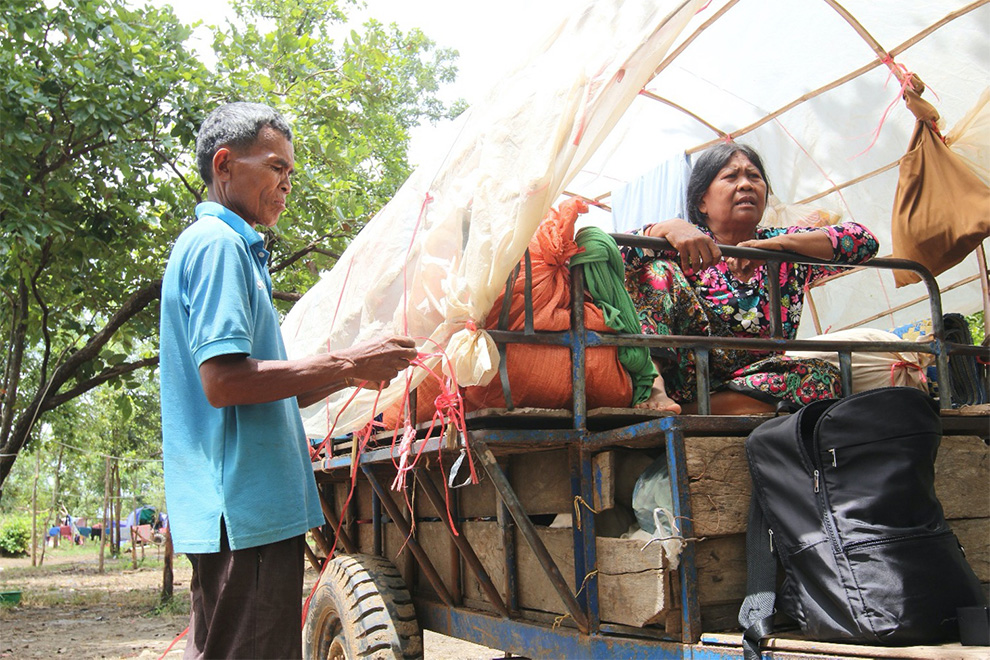
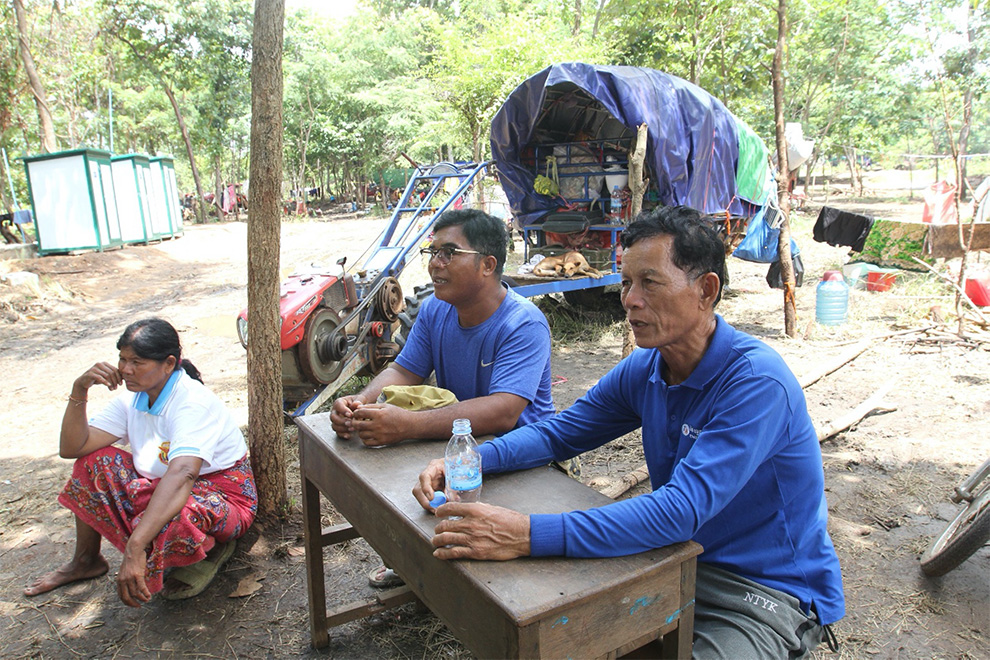
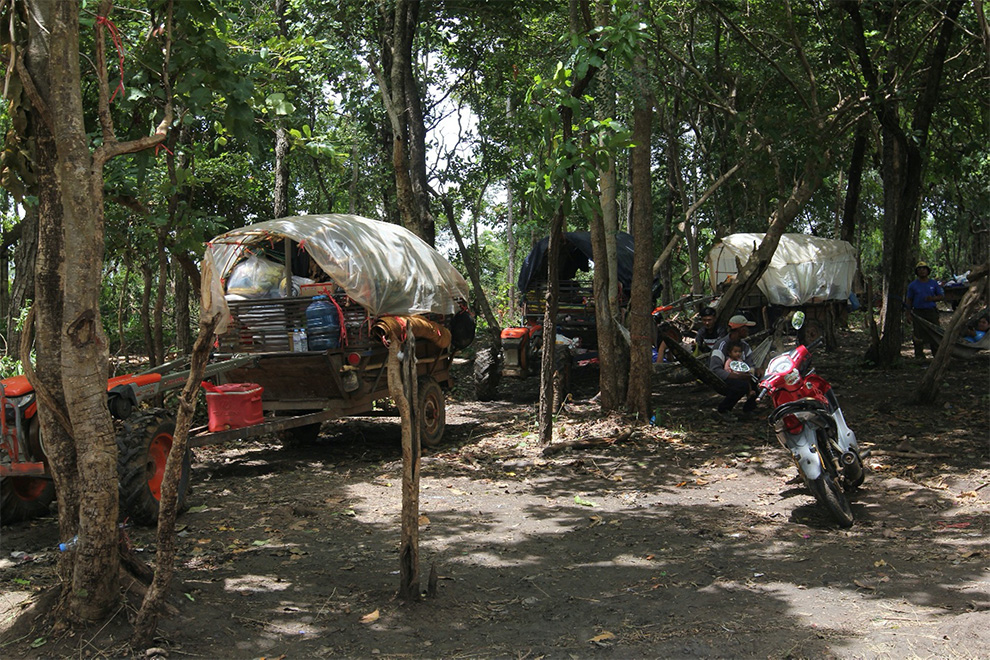
At the Phnom Thma Kambor sanctuary camp in Banteay Ampil district, thousands of displaced families wait anxiously for the sound of peace, not gunfire.
Established as the first refuge for those fleeing the most dangerous border villages, the camp now shelters people from near Ta Mone and Ta Krabey temples, as well as Thma Daun. Many of them left their homes with nothing but the shirts on their backs.
Met Measpheakdey, spokesperson for the Oddar Meanchey provincial administration, explained that the province was continuing diplomatic outreach and appeals to the international community.
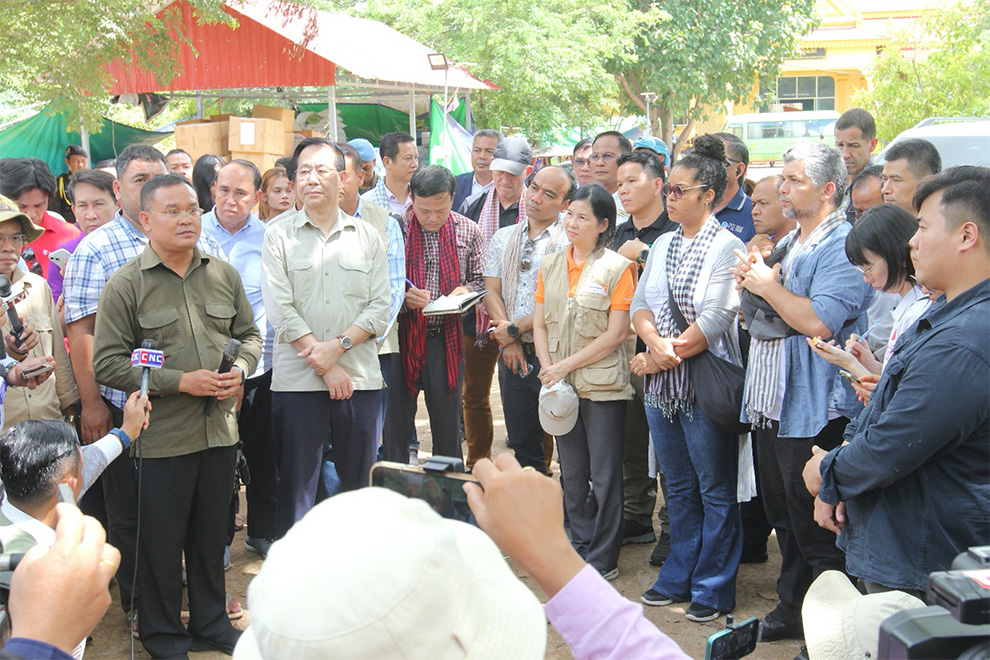
On a recent visit, nearly 100 representatives from 43 international NGOs inspected the camp’s conditions — just days after a similar mission on August 6.
“The border area endured five days and five nights of Thai assaults. The weapons they used included fighter jets and missile-equipped drones, as well as large infantry deployments,” he told the visitors.
“The shelling extended beyond the battlefield into civilian areas, displacing almost 40,000 people across seven camps,” he said.
“CMAC records indicate that the Thai military dropped 1,549 bombs on Oddar Meanchey province,” noted Heng Ratana, director-general of the Cambodian Mine Action Centre (CMAC).
The Thai air force dropped 10 MK-84 bombs, each weighing over 1,000kgs. Four of them exploded, while the other six failed to detonate.
Measpheakdey reported the destruction of more than 200 homes, monasteries, health centres, and public facilities, with hundreds more damaged.
“Our tireless work is to ensure safety, shelter, food and health care,” he said.
“But the ultimate goal is complete peace so our people can return to their homes without fear,” he added.

‘I just kept screaming and crying’
When artillery shells began falling near her home on July 24, Khun Saream, a resident of Pong Teuk village near the Chub Koki border crossing, fled with her husband and daughter.
“I screamed, I cried. There was so much gunfire. I couldn’t control myself; I was scared, and I just kept screaming and crying,” she recalled.
“When I am back home, I don’t know whether to be happy or not because I am worried. I don’t know when I will have to flee again. When I close my eyes, I only think about the shelling,” she told The Post.
Saream expressed her gratitude to the many organisations — both governmental and non-governmental — who provided her family with assistance. She explained that she had fled with nothing.
“We have enough food, vegetables and rice, and even a tent to protect us from the rain. It wasn’t that difficult,” said the almost 60-year-old.
Despite her gratitude, she pleaded for an end to the fighting.
“I only want peace so I can work in my fields and grow potatoes to make a living,” she added.
Ren Sam Oeuth, 65, from Ampil village, said she has already attempted to return home once, on August 7, but was frightened away by low-flying Thai aircraft.
“The Thai planes kept flying overhead, which made me so scared I couldn’t rest. I was so nervous because Thai soldiers dropped big bombs. It was truly cruel,” she said.
She described the attacks as “brutal” and unlike anything she had seen in decades of living near the border.
Villages on edge
Pong Teuk village chief Keo Hak said that out of 352 families, more than 300 were now sheltering at Phnom Thma Kambor, while others were staying with relatives.
“The situation is calm, but people still take risks going home. We keep supplies ready in case we must evacuate again,” he said.
He called on the prime minister and the international community to “ensure peace and prevent further conflict”.
Oddar Meanchey, he added, remains one of the most vulnerable provinces, having experienced repeated clashes with Thai forces over the years.
Tensions at the top
Far from the day-to-day concerns of the ordinary families who provide the front-line manpower for the army and worry about their abandoned crops and livestock, the political and legal ramifications of the conflict continue to play out, with Phnom Penh and Bangkok exchanging accusations and counteraccusations.
In the latest round, the Cambodian Ministry of National Defence has accused Boonsin Phatkhlang, commander of Thailand’s Second Army Region, of a premeditated plot to invade Cambodian territory.
Boonsin recently shared plans to seize control of the Ta Krabey Temple and block access to the Ta Mone Thom temple, both of which stand on sovereign Cambodian land.
He added that he intended to see objectives met before his retirement, due in 50 days. His statements reportedly received the support of Thailand’s speaker of parliament.
“The actions of the Thai commander of the Second Army Region are a violation of the ceasefire agreement reached at the special meeting on July 28, 2025, as well as the spirit of the extraordinary meeting of the General Border Committee (GBC) held on August 7, 2025, in Malaysia,” said a defence ministry statement.
Cambodia’s National Assembly shared their disappointment with the general’s statement, and its subsequent endorsement by Thai speaker of parliament Wan Muhamad Noor Matha.
Both the defence ministry and the National Assembly appealed to the international community to put pressure on Thailand to honour the current ceasefire.