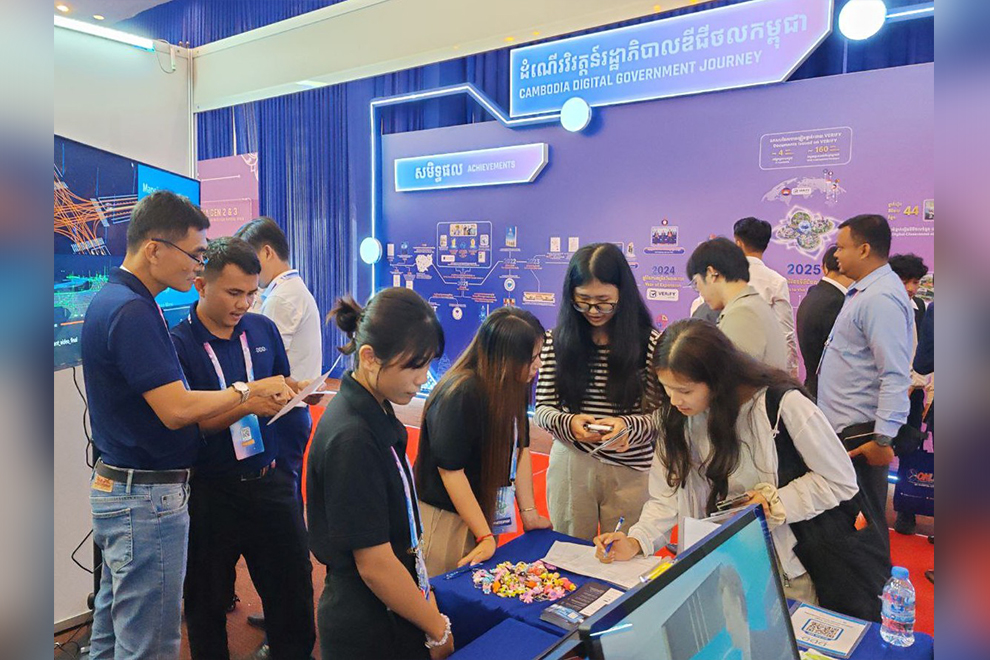
After 25 years of training and employing young people from low-income families, impact sourcing pioneer Digital Divide Data (DDD) says it is shifting toward artificial intelligence (AI)-driven services to ensure Cambodian youth remain competitive in a rapidly changing global digital economy.
The organisation, which began operations in Cambodia in 2001, has trained and employed more than 15,000 young people across Cambodia, Laos and Kenya, helping them transition from low-income backgrounds into professional digital careers.
As automation and AI transform the global outsourcing industry, DDD says its new focus on AI skills is aimed at protecting and expanding employment pathways for young Cambodians rather than replacing them.
“Their incomes on average are more than eight times what they earned before joining DDD,” said Michael Chertok, co-founder and advisor to the organisation, pointing to long-term employment outcomes rather than short-term skills training.
As global outsourcing is reshaped by automation and artificial intelligence, DDD says it has shifted decisively toward AI-driven services, with Cambodia playing a central role in that transition.
According to Chertok, teams in Phnom Penh are already supporting AI systems used in autonomous vehicles, providing data services for major international sports teams to value players, and building machine-learning datasets that enable artificial intelligence to function in the Khmer language.
“Today DDD delivers AI services to leading global brands,” he said. “We are becoming an AI-centric organisation.”
“Our team here in Phnom Penh enables the AI behind autonomous vehicles and supports major sports teams with the valuation of their players. We are also creating machine learning datasets to enable Cambodians to use AI in Khmer,” he told The Post.
The shift comes as Cambodia seeks to move up the digital value chain, amid persistent concerns over skills gaps and infrastructure constraints.
DDD will host a public panel discussion on “Cambodia’s Digital Future” on January 30 at the American University of Phnom Penh, bringing together policymakers, educators and private-sector leaders to examine how emerging technologies — particularly artificial intelligence — can support economic development.
Speakers include Chea Sereyvath, secretary-general of the Digital Government Committee; Dr. Seng Sopheap, president of the National Institute of Post, Telecoms and ICT; Mike Maceda, director of Corporate Partnerships and Open Innovation Asia Pacific at Plug and Play; and DDD chief executive officer Sameer Raina.
Chertok said Cambodia’s digital landscape has changed dramatically since DDD began operations more than two decades ago.
“So many young people today have smartphones and are knowledgeable about technology. We are seeing entrepreneurs launch new IT companies, and the government embracing information technology in many ways,” he said, adding that Cambodia’s prospects in the global digital economy over the next decade are “bright”.
The organisation also acknowledged the challenges of sustaining a social enterprise across multiple developing countries while meeting the expectations of global clients.
For much of its history, DDD’s social impact was limited by the pace of its business growth, Chertok said.
To address that constraint, DDD has expanded its Career Connect programme, which leverages its training model to help young people secure entry-level digital jobs beyond the organisation itself.
The programme, launched in Phnom Penh, is now being scaled to other locations in Cambodia, as well as to Laos and Kenya.
Looking ahead, DDD says its next phase will focus less on expanding headcount and more on deepening skills aligned with the AI economy.
“We are heavily investing in training our team to become an AI-centric organisation,” Chertok said, adding that the company is also exploring new destinations to complement the services it offers to global clients.