A major road project along Cambodia’s northeastern frontier is expected to transform access to one of the country’s most remote regions, opening the so-called “Dragon’s Tail Area” to tourism, cross-border trade and investment while strengthening infrastructure along the border.
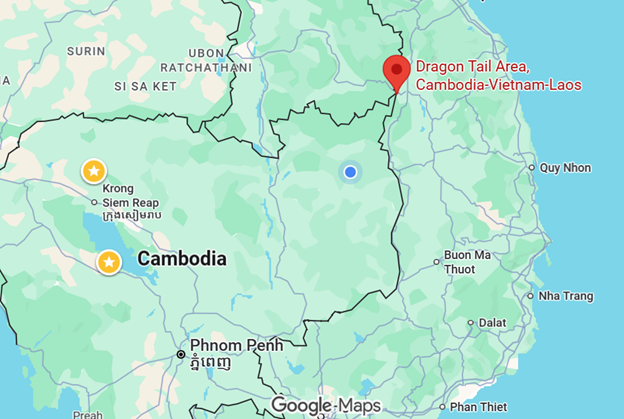
The Indochina T-Junction, popularly known as the Dragon’s Tail, marks the point where the borders of Cambodia, Vietnam and Laos meet.
The northeast border ring road, currently under construction across Mondulkiri and Ratanakkiri provinces, is designed to connect mountainous frontier zones that were previously difficult to reach, according to officials overseeing the project.
Kim Bunthan, chairman of the Foundation for Border Infrastructure Development (FBID) working group, said the project is progressing steadily despite the challenges of rugged terrain and unexploded ordnance left from past conflicts.
Constructed by military engineers, with funding from the Border Infrastructure Development Fund, the nearly $27 million project will construct around 250 kilometres of road — including 147.42km in Mondulkiri and 102.58km in Ratanakkiri. Nearly 60 kilometres of road have already been completed.
Construction began in October 2024 and is scheduled for completion in April 2027.
By late December 2024, engineering teams had cleared more than 1.4 million square metres of land and removed 23 unexploded ordnance items.
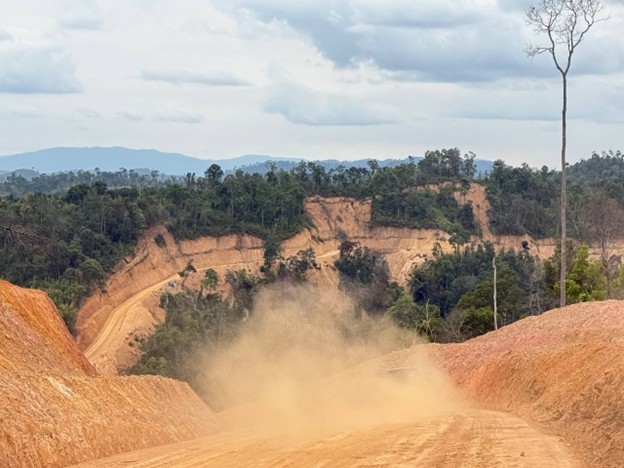

Six engineering units are currently working on the project, widening initial five-metre roadways and removing rocks along mountainous paths.
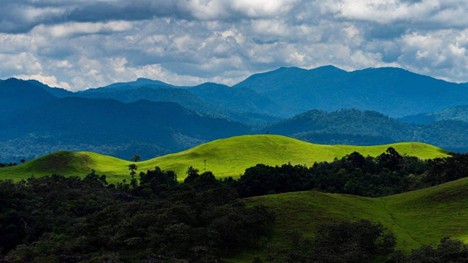
Officials say the road will significantly improve access to the scenic tri-border region known locally as the “Dragon’s Tail”, a remote area of forests and mountains near Virachey National Park.
Ratanakkiri provincial governor Nhem Sam Oeun said authorities have completed the paving of a ring road linking the O’Yadav international checkpoint to the Dragon’s Tail area, although some sections still require further improvement.
“We have paved the border ring road from the O’Yadav international checkpoint to the Dragon’s Tail. It is now accessible, but the conditions are not yet comfortable,” he explained.
According to the governor, Royal Cambodian Army engineering teams are continuing to upgrade the route, focusing on strengthening road quality and improving travel conditions.
“Before the upcoming New Year, people will be able to travel along this road to the tri-border area or the Dragon’s Tail, which has some of the most beautiful natural scenery and passes through Virachey National Park,” he added.
Sam Oeun said the improved connectivity could turn the remote frontier zone into a new destination for eco-tourism and adventure travel, with dense forests, wildlife habitats and mountainous landscapes attracting visitors.
Ratanakkiri is also home to several other natural attractions, including lakes and waterfalls. In Ban Lung town, tourists frequently visit Yeak Lom Lake, a volcanic crater lake considered one of the province’s best-known landmarks.
In 2024, Thon Soukhon, deputy director of the Virachey National Park office, explained that a road which was previously built by a company with economic land concessions in the area was no longer viable.
He explained that the area has not attracted tourists because it was designated for land concessions rather than tourism activities.
“Currently, visitors mainly travel to the Veal Thom area,” he told The Post at the time.
Governor Sam Oeun believed the road network would also strengthen economic links with neighbouring countries and support agricultural development in the northeast.
Located more than 580 kilometres from Phnom Penh, Ratanakiri shares a 176-kilometre border with Laos and more than 221 kilometres with Vietnam.
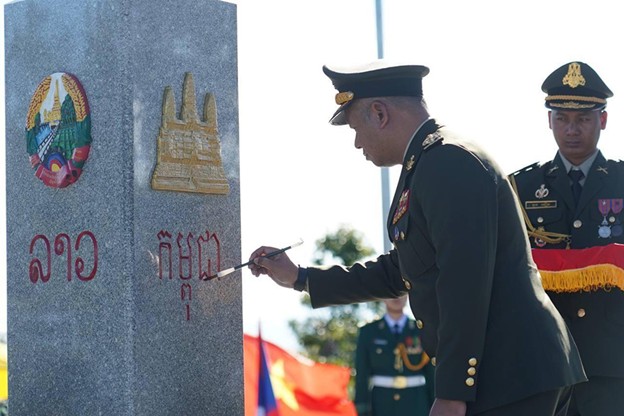
Cambodia has already established numerous border pillars along these frontiers, while additional international checkpoints with Laos and Vietnam are expected to open in the future.

The province is positioning itself as an agricultural production centre, with more than 80,000 hectares of rubber plantations and around 100,000 hectares dedicated to cashew cultivation. Other crops include bananas, pepper, cassava, cocoa and durian.
Sam Oeun said the province’s development strategy focuses on three key sectors — agriculture, tourism and mineral resources — while encouraging both domestic and foreign investment.
The governor said that authorities are also exploring additional infrastructure to support growth in the region.
A 1,900-hectare site in Lumphat district has been set aside for the potential development of an airport that would serve Ratanakkiri province as well as neighbouring Mondulkiri and Stung Treng.
Improved road and potential air connectivity, the governor said, could play a crucial role in attracting tourists and investors to the country’s northeastern frontier.
Although the region was once considered one of Cambodia’s most isolated areas, the ongoing infrastructure push is gradually opening the Dragon’s Tail frontier to travellers and businesses while strengthening links with neighbouring Vietnam and Laos.
Support for such development has also been emphasised at the national level. Prime Minister Hun Manet previously noted that building roads along Cambodia’s borders helps bring economic opportunities to remote communities while reinforcing the country’s territorial presence.