



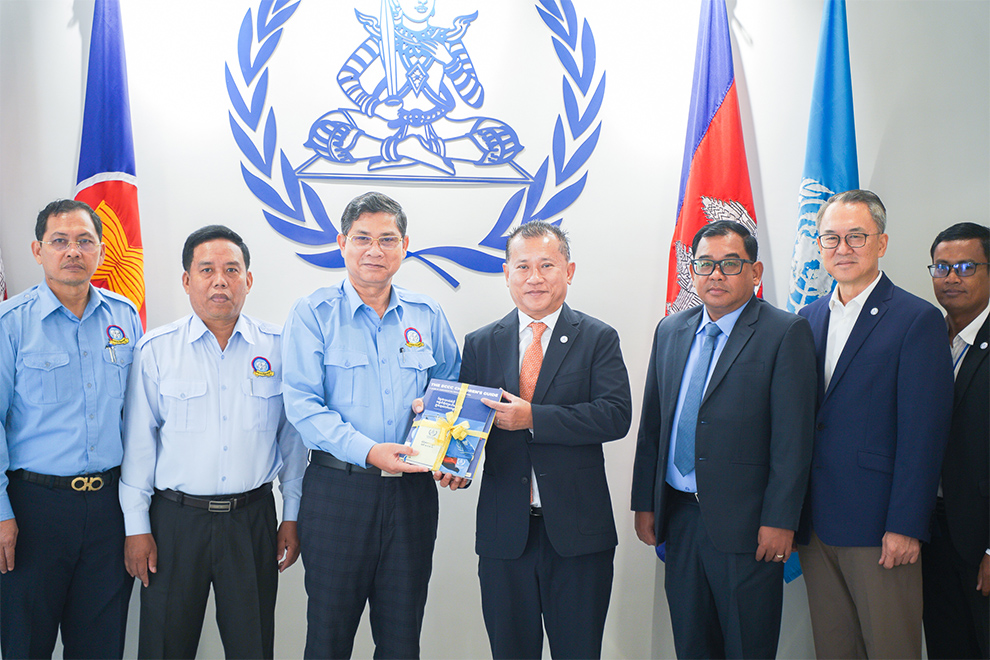
Following the conclusion of the trials of former Khmer Rouge leaders, the Extraordinary Chambers in the Courts of Cambodia (ECCC) is continuing its mission by sharing knowledge, legal experiences and historical truths about the Democratic Kampuchea regime.
Its latest effort involves a partnership with the Union of Youth Federations of Cambodia (UYFC). On July 9, both parties signed a memorandum of understanding aimed at promoting cooperation on disseminating knowledge about the history of Pol Pot’s regime and preventing the resurgence of genocide.
According to an ECCC press release, the two parties will collaborate through joint programmes, including training workshops, co-developed initiatives, legal and historical research, study visits, participation in the ECCC’s mobile unit programme and the dissemination of materials related to legal knowledge and history.
During the signing ceremony, Kranh Tony, acting director of administration at the ECCC, noted that the collaboration with the UYFC is a significant opportunity to enhance Cambodian youths’ understanding of the atrocities of the past, as well as the importance of justice and human rights.
He explained that this will focus on outreach programmes, youth participation, study visits and volunteer opportunities, each designed to bridge the gap between history and the present.
“These efforts align with the ECCC’s information dissemination and education programmes, which have established resource centres and mobile resource units, or mobile vehicles, to provide opportunities for students, youths, researchers and the general public to study and research the historical achievements of the ECCC,” he said.
Sos Mousine, UYFC vice-president, noted that understanding history is a fundamental basis for building a peaceful, just, democratic society that does not forget the lessons of the past.
He said the collaboration between the UYFC and the ECCC aims to engage youth in preserving the memory of the past and safeguarding peace in the present for future generations.
According to the ECCC release, both institutions expect that this cooperation will not merely be a document but a commitment with tangible actions in education, participation and inspiration.
“Let us all join together to ensure that the painful lessons of the past are never forgotten, but instead serve as a guide for a Cambodia filled with justice and compassion,” it said.
