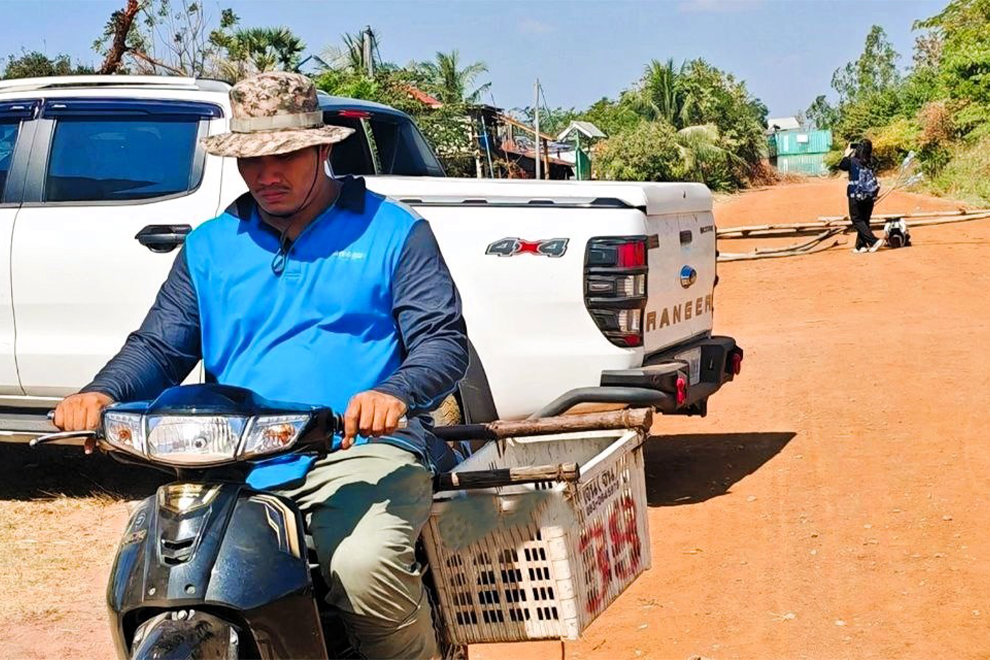
For Thol Dalit, returning home is no longer an act of belonging. It is an act of fear and pain of losing.
The 35-year-old truck driver from Chouk Chey village says he now enters his own house “like a thief” — quietly, cautiously, watched from the sky — ever since fighting erupted along the Cambodia–Thailand border late last year.
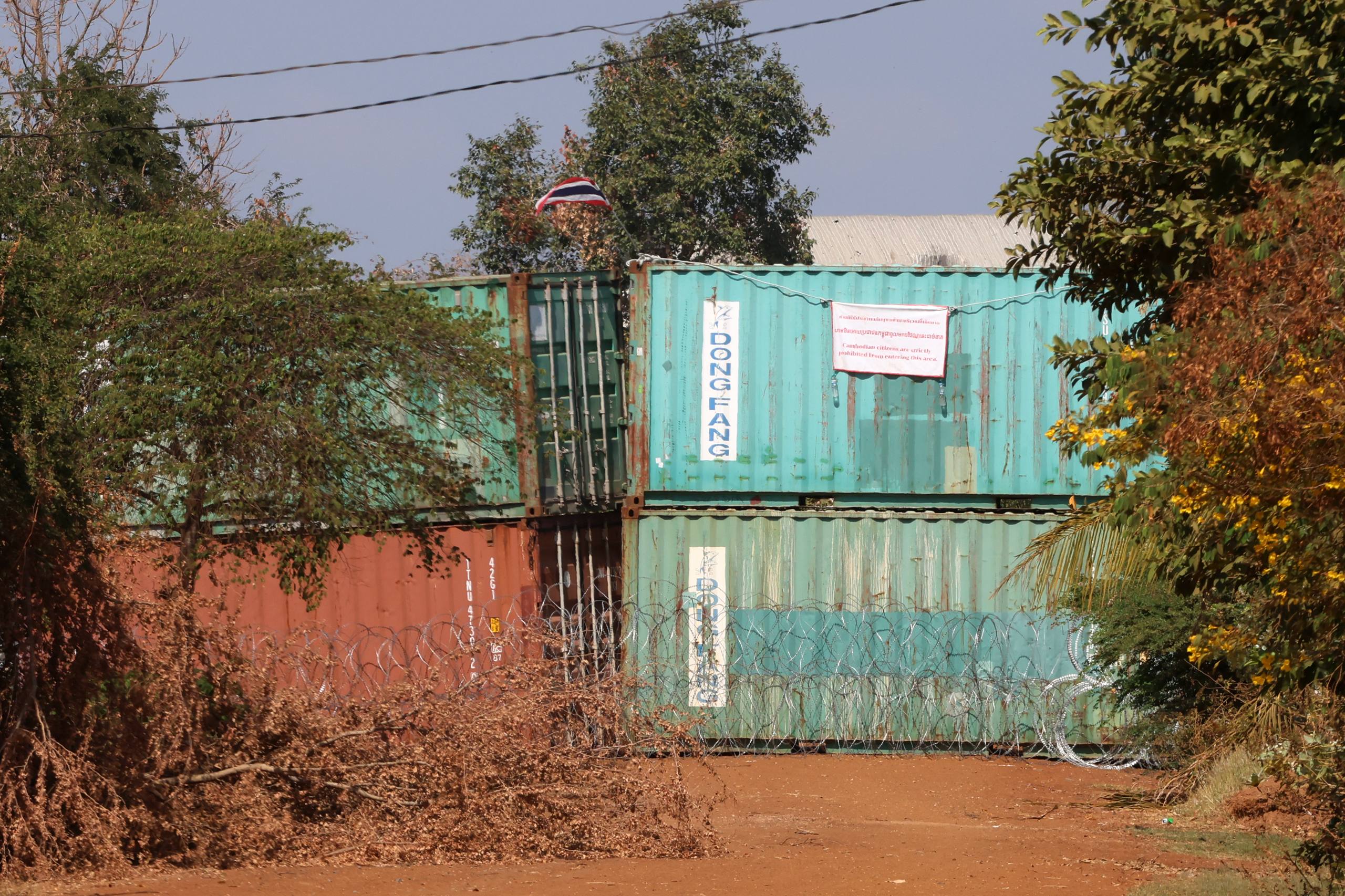
His home, once a place of routine and pride, now sits beside barbed wire and shipping containers that the Thai military claims mark a “new border”.
“This is my house, built with my bare hands,” Dalit said. “But every time I go back, I am afraid. If they shoot me, I would die for no reason.”
Dalit’s ordeal began on December 7, 2025, when Thai artillery shells landed just 200 metres from his home in Chouk Chey village, O’Bei Choan commune, O’Chrov district.
That morning, he was feeding around 200 chickens that had just laid a new nest. Then the ground shook.
“I heard the shelling and felt the earth move,” he recalled. “I didn’t think about anything else. I grabbed my motorbike, took my wife, and we fled just to save our lives.”
Their two young sons were already living with their grandmother in Kampong Cham.
Dalit and his wife left everything behind, joining hundreds of villagers who fled immediately to Chan Si Temple, which had been turned into a safety centre in nearby Kop commune.

They arrived with nothing.
“When we reached the temple, we had no clothes, no pots, nothing,” Dalit said.
That same evening, as fighting continued, he took a desperate risk.
With no money to buy essentials, he rode his motorbike back toward the village under the sound of gunfire to retrieve cooking pots and pans.
“There was a tricycle that could transport things, but the situation was too dangerous. I couldn’t even pull it out,” he said.
After several days, even the temple was no longer safe. Thai shells began landing nearby, forcing most displaced villagers to scatter again to other locations.
When a ceasefire came into effect at noon on December 27, Dalit waited anxiously. It was not until December 29 that he dared to approach his home for the first time since the shelling stopped.
What he saw left him numb.
“The first thing was shock,” he said. “Then horror.”
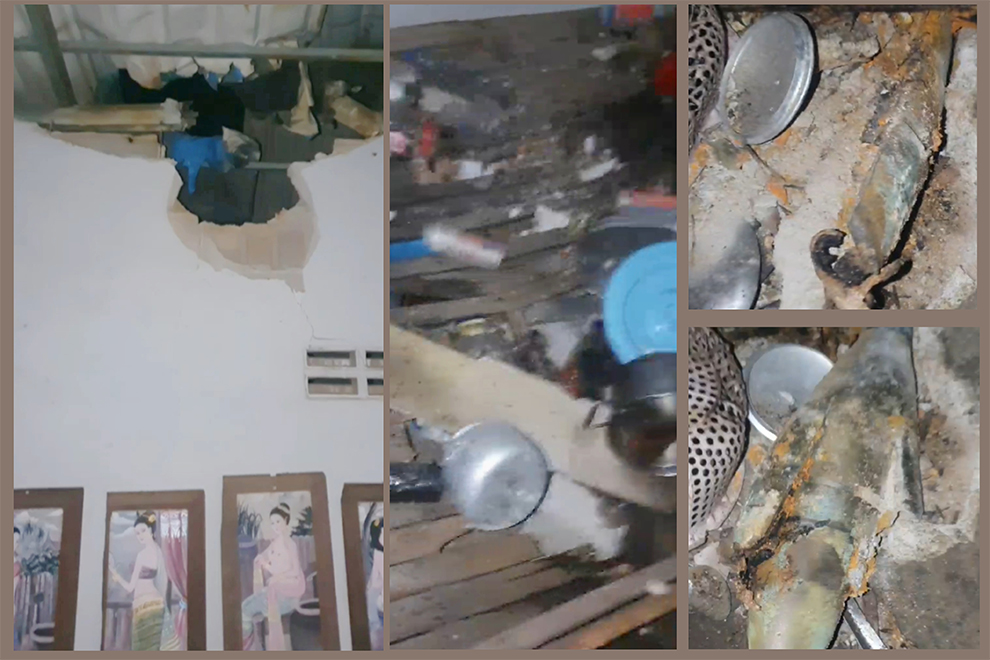
His house had been riddled with bullets.
Nearby, barbed wire snaked across the land, reinforced by shipping containers placed just metres from his property — a sight that has haunted Chouk Chey villagers for months.
The Thai side considers the fenced area a new border line.
“At first, there were no containers,” Dalit said. “When I came back, they were laying barbed wire. I couldn’t speak. I missed my house so much.”

The house was only partly standing. Sitting among the damage, Dalit and his wife cried, unsure what to do next.
Despite seeing Thai soldiers adding more barbed wire, the couple went inside to collect what little they could and fled again to a safe camp.
Two days later, on December 31, the Thai army began stacking more containers atop the existing fence.
Dalit’s 9-by-60-metre home and plot of land now lie just 20 metres from the barbed wire and containers.
That narrow strip includes his uncle’s machinery warehouse, several metres of which were demolished by Thai forces.
The losses were severe. Clothes were scattered or gone. A three-wheeled motorbike disappeared. A new chicken coop lay ruined. All 200 chickens were dead.
He dared not take photos of his house for fear of Thai snipers.
“When I go back every three or four days to water my crops — coconuts, mangoes, longans — my chickens are all rotting,” Dalit told The Post. “I don’t know if they died from the gunpowder smoke, but none survived.”
Each visit carries risk. Thai soldiers monitor his movements, and drones often hover above him until he leaves.
“A few days ago, a drone stayed above my house the whole time,” he said. “I just watered my crops and left. When I left, the drone flew away too.”
He keeps his head down, avoids noise and leaves quickly.
“I have to enter my own house like a burglar,” he said quietly.
Dalit estimates that the Thai military now controls nearly one kilometre of Cambodian territory inside the border line.
His house is about 300 metres from Road 58 and the Road is roughly 500 metres from the border.
“What we thought was temporary has become long time,” he said. “We believed that even if houses burned, we would still have our land. But now everything is gone.”
Others in the village have fared worse.
“I am lucky I can still see my house standing,” Dalit said. “Many villagers had their homes completely destroyed or demolished. Everyone is crying.”
Chouk Chey village chief Pen Rithy confirmed the scale of the devastation.
Speaking on January 4, he said the village of 807 families — 3,022 people — has effectively been surrounded by Thai forces. A total of 707 families, more than 87 per cent of residents, have been affected.
“This illegal occupation of Cambodian territory is extremely serious,” Rithy said.
“Villagers still hope that our government, including the prime minister, will resolve this issue,” he added.
According to Rithy, 98 per cent of homes in Chouk Chey have been completely destroyed, and no residents dare return due to security concerns.
He said he has repeatedly demanded the removal of barbed wire and shipping containers, stressing that borders cannot be redrawn by force.
At the national level, Cambodia has formally demanded that Thailand withdraw its troops, accusing Thai forces of illegally seizing territory in Banteay Meanchey, Pursat, Preah Vihear and Oddar Meanchey provinces.
In a January 2 statement, the Ministry of Foreign Affairs and International Cooperation said Thai incursions continued between December 7 and 27, even after the ceasefire took effect.
Satellite imagery, the ministry said, shows the destruction of civilian homes and infrastructure in areas including Prey Chan, Chouk Chey and Boeung Trakuon.
Cambodia described the actions as unlawful occupation and a gross violation of international humanitarian law, calling for an immediate withdrawal to the legally recognised border and adherence to joint boundary mechanisms.
Meanwhile, the humanitarian toll remains heavy.
As of January 13, the Ministry of Interior reported that 490,000 people have returned home out of more than 640,000 displaced by the border conflict.
However, 155,506 people are still living in safe camps.
In Banteay Meanchey alone, authorities are arranging temporary shelters for 2,735 families who cannot yet return home, while working to restore electricity and telecommunications.
For Dalit, aid is not enough.
“We receive food, and we are grateful,” he said. “But we have no jobs, no income. If this continues, life will be very difficult.”
His hope is simple and urgent: that the land he fled to save his life will one day again be a place where he can live without fear — not as a trespasser, but as a homeowner.