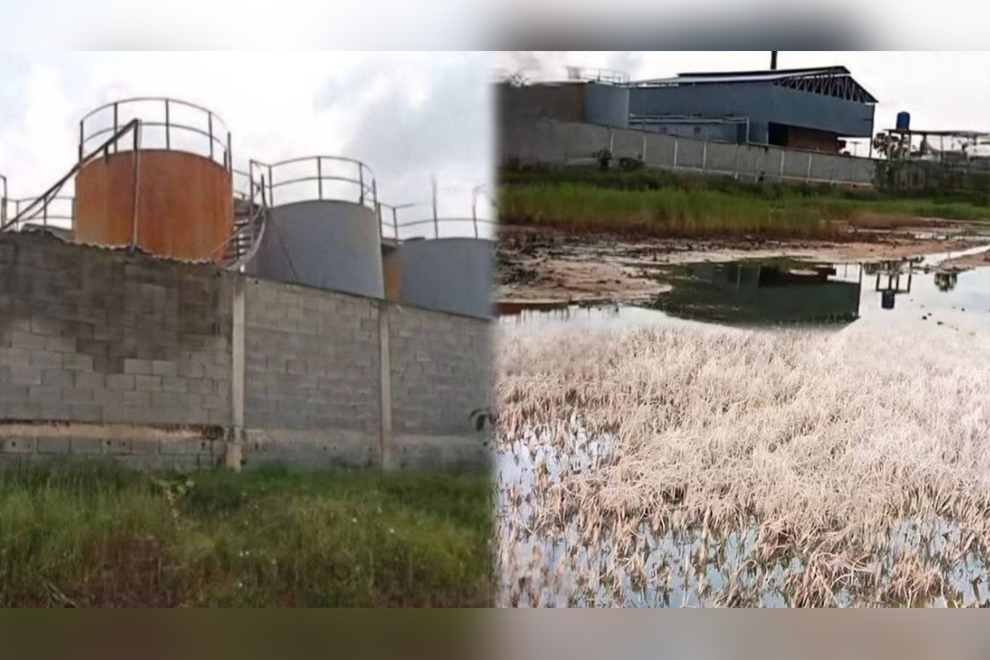
The Kampong Speu Provincial Department of Environment has fined XINSHENGTONG Energy (Cambodia) Co Ltdv100 million riel (approximately $25,000) for leaking black oil waste into public areas, damaging rice crops across seven households and impacting local biodiversity.
In a statement issued on January 5, the Ministry of Environment said the company, located in Damnak Vang commune, Samaki Meanchey district, had failed to comply with the country’s environmental laws and standards. A joint inspection team found that oil waste from the factory had leaked onto approximately two hectares of farmland, affecting rice crops, seedlings, water and soil quality, and biodiversity. These violations fall under Articles 206, 268, 298 and 668 of the Environmental and Natural Resources Code.
To prevent future discharge of hazardous substances into farmland, biodiversity systems and public spaces, and to ensure compliance with technical and legal standards, the department imposed legal measures on the enterprise’s owner, Su Lixin. The administrative fine was issued under Article 826 of the Environmental and Natural Resources Code: 50 million riel for the unauthorised discharge of black oil waste into public areas and another 50 million riel for operating without an environmental protection permit.
In addition to the fine, the company was ordered to cease all discharges of hazardous waste immediately. The owner is required to take full responsibility for compensation and restoration, including the complete cleanup and remediation of environmental damage caused by the waste leakage.
The ministry urged all factories, enterprises and businesses involved in potentially polluting activities – such as laundry services, dyeing operations and chemical-related industries – to strictly comply with environmental laws to prevent harm to ecosystems and public health. It said non-compliance may result in severe penalties, including technical corrective measures, environmental restoration and compensation for damages.
Environment minister Eang Sophalleth said the Environmental and Natural Resources Code was established to protect the country’s environment and manage its natural resources while promoting a culture of environmental responsibility in business practices.
“To date, the [ministry] continues to strengthen enforcement of the [code] to prevent pollution from factories, enterprises and companies that persist in violating the law and causing harm to the environment and public health,” he added.