Air quality across Cambodia has not been affected by pollution and does not cause pollution to neighboring countries, while measures to prevent and reduce it have been widely disseminated and strengthened nationwide, said Khvay Atitya, spokesperson for the Ministry of Environment, on January 22.
He shared his comments during a ceremony to promote a campaign encouraging action for cleanliness and the implementation of measures to prevent and reduce public air pollution in Pursat Province.
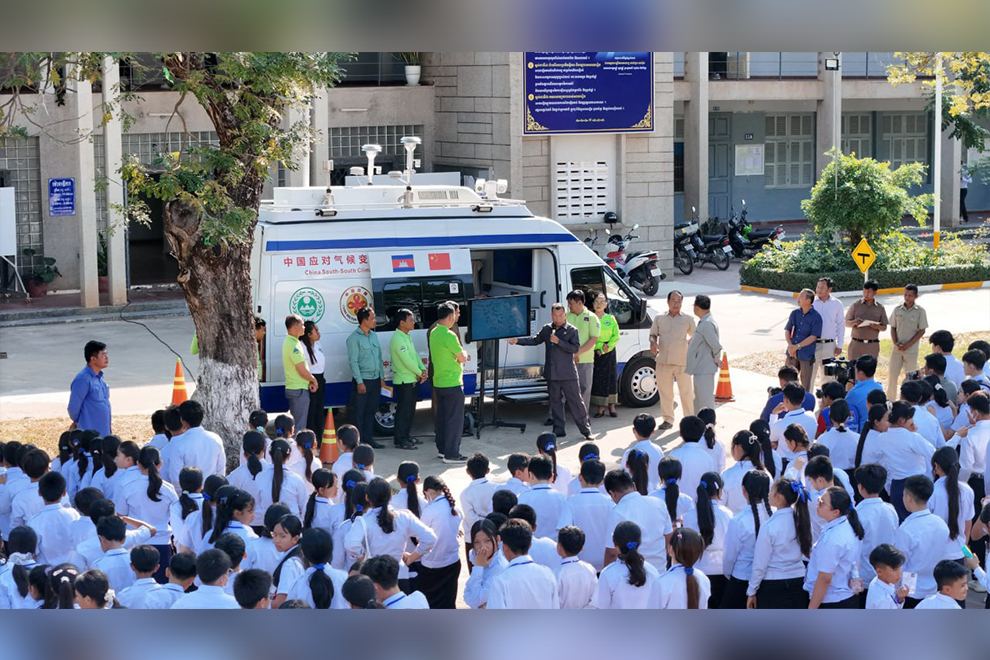
The event was organised by the Department of Air Quality, Noise and Vibration Management under the General Directorate of Environmental Protection of the ministry, in cooperation with the Pursat Provincial Department of Environment, with participation from ministry officials and representatives of the provincial and municipal administrations, as well as teachers and students from Pursat High School.
Atitya noted that environment minister Eang Sophalleth launched the “Clean Sky” campaign, including the “Blue Sky” initiative, which began in November 2023. The campaign promotes the implementation of the Environmental Circular Strategy, which is based on three pillars: cleanliness, greenness and sustainability. In terms of cleanliness, the ministry has continuously taken measures to monitor air quality at factories and other potential sources of air pollution.
“The results confirm that air quality in Cambodia is not polluted and does not cause pollution to neighbouring countries,” he said.
In fact, he added, over the past week, Cambodia has only experienced fog, due to weather changes, not smog or polluted air in the atmosphere.
The ministry continuously monitoring public air quality through monitoring stations at 59 locations, including 12 in Phnom Penh and 47 sites across the provinces, as well as one satellite-based monitoring system. In addition, the ministry operates three mobile air quality monitoring vehicles to conduct inspections throughout the country.
All equipment and monitoring stations indicate that air quality in Phnom Penh and other provinces is good and complies with national public air quality standards. The average 24-hour concentration of fine particulate matter (PM2.5) ranges from 10 µg/m³ to 37 µg/m³, while the national standard is set at 50 µg/m³.
Furthermore, Cambodia has never concealed information on public air quality, said Atitya.
Air quality information is published regularly and in real time, 24 hours a day, via the ministry’s website and the CGS SPA mobile application, as well as social media pages.
The current public outreach activities to promote action against air pollution are part of efforts to improve air quality and ensure public health and environmental protection in Cambodia–Thailand border provinces and several other target provinces from January to April 2026.
The ministry called for public participation, particularly regarding measures to prevent forest fires; stop burning agricultural residues, crop stubble, shrubs, and forest undergrowth; and prohibit the burning of garbage, solid waste, and plastic, which are sources that degrade air quality and harm public health.